Why the community-owned Green Bay Packers are NFL fans’ Hail Mary as private equity takes the field
 Business Economic Syndicated News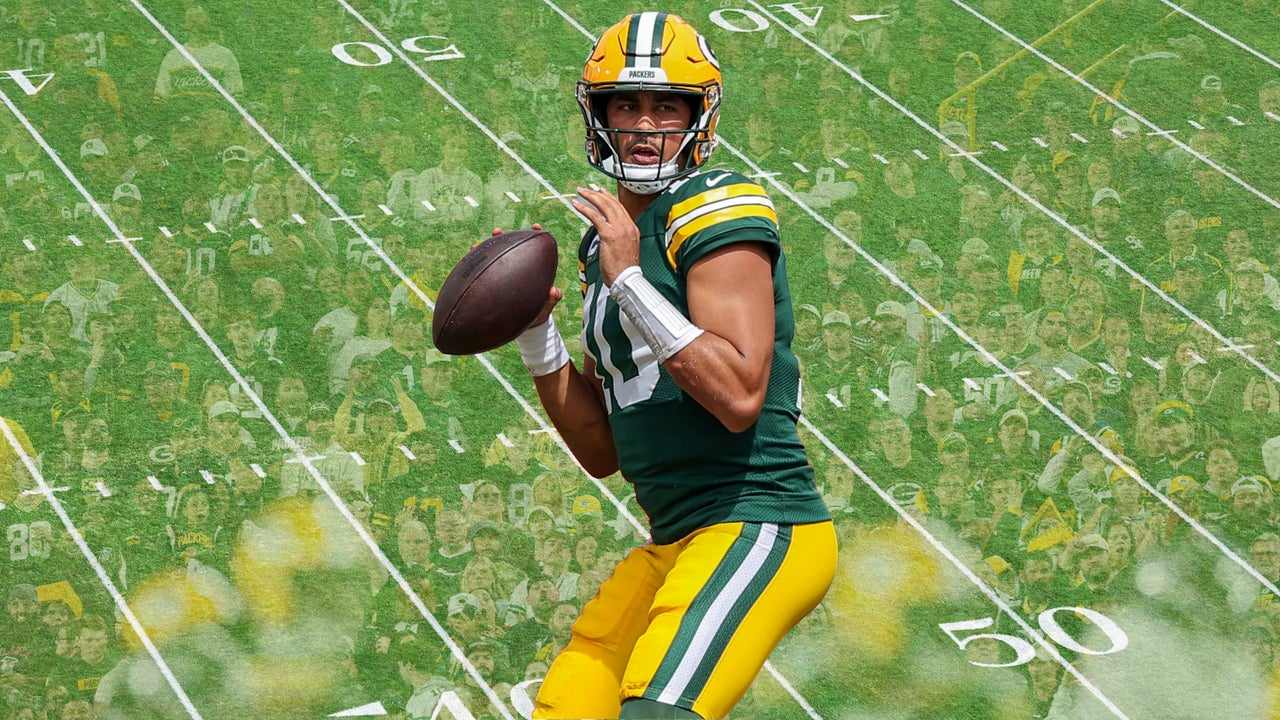
In late August, the estate of Paul G. Allen sold the Seattle Seahawks NFL franchise to an ownership group led by venture capitalist Vinod Khosla for $9.6 billion. The values of major American sports franchises are soaring, and most owners don’t have to sell outright to raise cash for their operations.
In October 2025, the New York Giants sold a 10% stake in the franchise at a $10.3 billion valuation. At the same time, the New England Patriots sold 8% at a $9 billion valuation.
This summer, the Steinbrenner family agreed to sell at least 4% of the New York Yankees’ parent company as part of a $2.6 billion deal, at a valuation north of $10 billion. Days later, the Atlanta Falcons agreed to sell 10% of the team at a $10.6 billion valuation.
Selling minority stakes has become the new playbook for raising billions without giving up control. But this is a game the Green Bay Packers can’t play. Their ownership structure forbids it.
The Packers are the only major North American sports franchise owned by fans—more than 539,000 of them. The shares pay no dividends, can’t appreciate, and can’t be sold for a profit. Instead, all profits flow back into the franchise: facilities, team operations, reserves.
“Because of no owner, there were no resources allocated to other things,” says Andrew Brandt, former Packers vice president of player finance. “Where an owner may reallocate money to his yacht or his family business or some other part of his portfolio, we were all football.”
Depending on whom you ask, that makes the Packers, valued at $8.59 billion, either an enviable anomaly or a franchise facing a growing financial disadvantage, one that could hit hardest as Lambeau Field, one of the league’s oldest stadiums, needs its next overhaul.
A historical accident
Fan ownership has saved the Packers more than once.
In 1923, during the NFL’s infancy, the team was broke and behind on paying players. Local businessmen covered its debts, incorporated the franchise as a nonprofit, and sold $5 shares to Green Bay residents, raising $5,545, nearly $110,000 in today’s dollars.
After a lawsuit forced the team into receivership in 1933, another stock sale helped reorganize the club. And in 1950, facing as much as $90,000 in losses, the team weighed a plan to sell for-profit shares and go private. Instead, it sold stock to fans again, raising more than $100,000.
“In the early days, it was no joke,” says Mark Beech, author of The People’s Team. “Through the ’50s, the fan ownership kept the team alive. There would be no Packers if there hadn’t been fan ownership.”
Survival didn’t end the pressure. As the league grew, the NFL saw the Packers’ stadium as too small and outdated. In 1956, as the city prepared to vote on local funding for a new stadium, the NFL commissioner warned that cities with bigger stadiums had made firm offers for a team, a signal that the Packers could leave Green Bay. Voters approved a bond to build what’s now Lambeau Field, and the team paid half the cost.
In 1960, the NFL made sure nobody could copy the Packers’ fan ownership model. The league barred nonprofit teams, except those “now a member of the league.” The Packers were grandfathered in.
Not every owner has welcomed the exception. After the Packers won Super Bowl XXXI in 1997, they asked the league to approve another stock sale. Pat Bowlen, owner of the Denver Broncos at the time, objected, saying, “Let’s get those farmers and their frozen tundra out of this league.”
The sale went ahead anyway.
The ban on new nonprofit teams is unlikely to change. Today, NFL ownership is essentially a private billionaires’ club, with strict rules governing who can buy into a team.
J.C. Bradbury, a Kennesaw State University economist who studies the business of pro sports, sees those restrictions, in part, as a way for existing owners to control who gets in.
“They want someone who’s going to be like them and not come in and cause problems,” he says. The Packers, he adds, are “a historical accident that would never be allowed to happen again today.”
Looser rules unlock billions
Professional leagues are rewriting their rules to keep new money coming in.
In 2024, NFL owners voted 31–1 to let private equity funds buy up to 10% of a team, as long as they stay passive and hold their stakes for at least six years. Other leagues have gone further.
This summer, Major League Baseball raised its cap from 15% to 20% per firm. At least 18 of its 30 teams now carry private equity money.
The NBA, also at 20%, loosened its rules in September so Joshua Kushner and his investment firm could both put money into the Los Angeles Lakers, which Kushner and former Disney CEO Bob Iger agreed to buy for $12.5 billion.
The NFL still caps private equity at 10%, and for now team owners have no appetite to raise it.
According to Sportico, the average NFL team is worth $9.34 billion, up 31% from last year. For owners, selling a slice turns paper gains into cash without giving up control. For buyers, it’s a bet that values will keep climbing, plus the perks.
“Heck, just being able to say ‘I’m an owner’ is something that very wealthy people value,” Bradbury says. “‘I’ve always got playoff tickets.’ . . . ‘I’m going to the locker room before the game,’ ‘I’ve got access to the swankiest digs the stadium has to offer.’”
A stake in the Packers means something else entirely.
What “ownership” really means
The Packers look like a public company. They don’t work like one.
Under the team’s articles of incorporation, no one can own more than 200,000 shares, a cap designed to keep any single person from taking control. The shares can’t be traded, only transferred to family. The team has sold stock six times, most recently in 2021–22, when it sold more than 198,000 shares, raising $65.8 million for Lambeau Field upgrades.
Shareholders elect a 43-member board, which picks a seven-person executive committee led by the team president. The current president, Ed Policy, is the closest thing the Packers have to an owner. He casts the team’s vote at league meetings.
Once a year, thousands of shareholders gather at Lambeau Field for the annual meeting, where executives walk them through the team’s finances. The Packers are the only NFL team that makes its books public. In almost every sense, it looks like corporate ownership—until money enters the equation.
So, what’s a share actually worth?
“In financial terms, hardly anything,” Brandt says. “In psychic terms, a lot. When I moved to Green Bay and looked for a house, pretty much every house we looked at had this sort of Packers shrine room with all the pictures, and every one of them had the framed share.”
“It’s a family heirloom,” Beech says. “It’s something to hang on the wall. If you live in Green Bay, your grandfather had one, your father had one, you have one.”
“It’s worthless,” he adds. “But it’s not valueless.”
Fan ownership has its benefits—and limitations
In Green Bay, general manager Brian Gutekunst has final say on the roster. He answers to the president, who answers to the board, which is elected by shareholders. On paper, the power runs all the way back to the fans.
Brandt, who negotiated the team’s player contracts for a decade, says that with no single owner, “there was no one coming in at the last minute to make rash emotional decisions.”
Everywhere else, the owner has the final word. In Dallas, that’s Jerry Jones, who is also the general manager.
In the summer of 2025, Jones and All-Pro pass rusher Micah Parsons were locked in a public contract dispute. Jones said the two had reached a “handshake agreement” in March. The Parsons camp denied it.
A week before the season opener, mired in the standoff, Jones suddenly traded Parsons, arguably the team’s best player, to Green Bay. Without Parsons, the Cowboys finished dead last in scoring defense.
“Clearly, things got personal,” one AFC front-office official told CBS Sports.
The deal cost Green Bay, too. Parsons’s four-year, $188 million contract and other roster moves pushed player costs from $318 million to $447 million last fiscal year, and total expenses to $754.1 million.
Despite a record $753 million in revenue, the Packers posted a $1.1 million operating loss, their first in a non-pandemic year since 1990.
The billionaire advantage
This is where a billionaire owner could step in with a cash infusion. The Packers don’t have that option. Their safety valve is their savings: $945.7 million in cash and investments, according to the team’s latest annual report.
“A lot of the annual distributions from the league, a lot of the profits are just housed,” Brandt says. “And if there’s a need for that, that will be the source.”
Having no owner also costs the Packers influence. A billionaire owner is a powerful presence at league meetings. “Without having that person at the table who has invested hundreds of millions of dollars, I did feel a little bit of, I don’t know, inferiority complex,” Brandt says.
The ownership structure also anchors the team to the NFL’s smallest market, because the Packers cannot relocate. “We don’t have leverage, we can’t make any threats,” Bob Harlan, the team’s president from 1989 to 2008, said in 1999. “We’re here to stay.”
Green Bay has about 107,000 residents. Lambeau Field seats roughly three-quarters of them. The only reason a town that size can afford an NFL team at all is revenue sharing.
The league’s national TV deals are reportedly worth $113 billion over 11 years, and the NFL splits its national revenue evenly: about $14.5 billion last fiscal year, or $453.2 million per team—60% of the Packers’ total revenue.
But revenue sharing only covers national money. Everything else (tickets, sponsorships, suites, local radio) depends on the market, and that’s where Green Bay can’t keep up. Other owners have a work-around in the form of selling off equity stakes.
Some are already leveraging that advantage. In May, Arctos Partners bought 3.2% of the Cleveland Browns, giving the team’s owners a nine-figure cash infusion as they begin a $2.6 billion stadium project.
That’s where outside money matters most. The salary cap limits what teams can spend on players, but not on buildings, and Lambeau Field’s clock is running.
When local voters approved a $295 million renovation in 2000, the Packers were told the upgraded stadium would have a shelf life of 25 to 30 years. The team has since pledged $1.5 billion over the coming decades to keep the venue competitive. That’s more than its entire cash cushion, with no taxpayer money and no private equity to lean on.
Dallas shows what the other model looks like. AT&T Stadium opened in 2009 for more than $1.2 billion, backed by $325 million in public bonds.
In April, Arlington agreed to put another $273 million toward a roughly $1 billion renovation. Jerry Jones has tapped taxpayers twice, and he still has the option to sell a piece of the team for further cash.
“It’s like other teams have access to this ATM machine that we just don’t have right now,” Policy said in July, noting that by selling 5% to 10% of their equity, other teams “could raise more money than we have in our capital reserve fund in just a matter of months.”
The multibillion-dollar question
None of this means the Packers are in trouble. Net income hit $132.5 million last fiscal year, boosted by investment gains and a onetime payout from ESPN’s purchase of NFL Network. But some believe the ownership structure could pose problems in the long run. Franchise values keep climbing, and leagues are loosening rules on outside money.
“When maybe these franchises are worth $50 billion instead of $10 billion and you can sell off 10% for $5 billion instead of $1 billion, I suppose it could be an issue down the road,” Brandt says.
Mike Florio of NBC Sports has floated a more radical hypothetical: Dissolve Green Bay Packers Inc., send the proceeds to charity as its articles of incorporation require, and let a billionaire buy the team as a new franchise.
“I’m not saying it should happen. I’m not saying it will happen. All I’m saying is it could happen,” Florio said.
“The framed certificates would become worthless, he added. “But they already are.”
Florio figures that case gets made only if the team starts losing. Winning has helped keep the question theoretical.
Since 1992, the Packers have had only five losing seasons and have won two Super Bowls, passing the quarterback job from Brett Favre to Aaron Rodgers to Jordan Love without a prolonged rebuild. They haven’t lost double-digit games since 2008.
This season offers at least a glimpse of what sustained losing might feel like. The Packers are 2-2 and last in the NFC North, and they’re 2-7 in their last nine games dating back to last season. Parsons is still recovering from a torn ACL and hasn’t played this season, and the team was booed off the field after a Week 3 blowout loss at Lambeau.
Policy has preached patience. “Players, and especially quarterbacks in championship-caliber teams, develop best in an environment of continuity—not chaos,” he told shareholders in July.
At the same meeting, one of the loudest cheers came when Policy said Lambeau Field’s naming rights aren’t for sale. The average NFL stadium naming deal is worth nearly $10 million a year, and Lambeau is one of only two stadiums in the league without one. The other is Chicago’s Soldier Field.
Whatever happens on the field, the financial trade-off remains. The Packers can’t tap private equity or sell pieces of the franchise as its value climbs. But the same structure that limits Green Bay’s access to capital is also what has kept the team in small-market Green Bay for more than a century.
Beech doesn’t see that changing. “The roots go all the way down, and all the way back. There’s no separating,” he says. “And that town needs that team.”