Branding Is Capital: RPConnect Explains the Economics Behind Creating a Commercially Valuable Name
Recognition may attract the public, but sustained investment transforms an unknown product or personality into a marketable brand
 Giulliano Russelli - Senior News Editor
Prague, Czech Republic — September 10, 2026 — Branding should be treated as a serious commercial investment—not merely as advertising or a collection of attractive photographs—according to economist, marketing strategist, and lifestyle authority Noubikko P. Ulanday.
In an analysis prepared for The Business Economics News, Noubikko described branding as the organized investment of capital, media exposure, creative production, professional development, and reputation management necessary to turn an unfamiliar name, product, organization, or personality into a recognizable commercial asset.
“Creating a star does not happen overnight, and neither does creating a trusted brand,” Noubikko said. “Public acceptability must be earned. Before people support a brand, they must first recognize it, understand it, and believe in what it represents.”
The First Year Is an Investment Year
According to Noubikko, a major branding campaign generally requires at least one year of concentrated development and market testing. During this period, the brand’s identity, public image, message, audience, and commercial potential are introduced and carefully evaluated.
The investment may include professional photography, video production, advertising, editorial coverage, public appearances, media interviews, social-media campaigns, communication training, personality development, market research, travel, and crisis-management preparation.
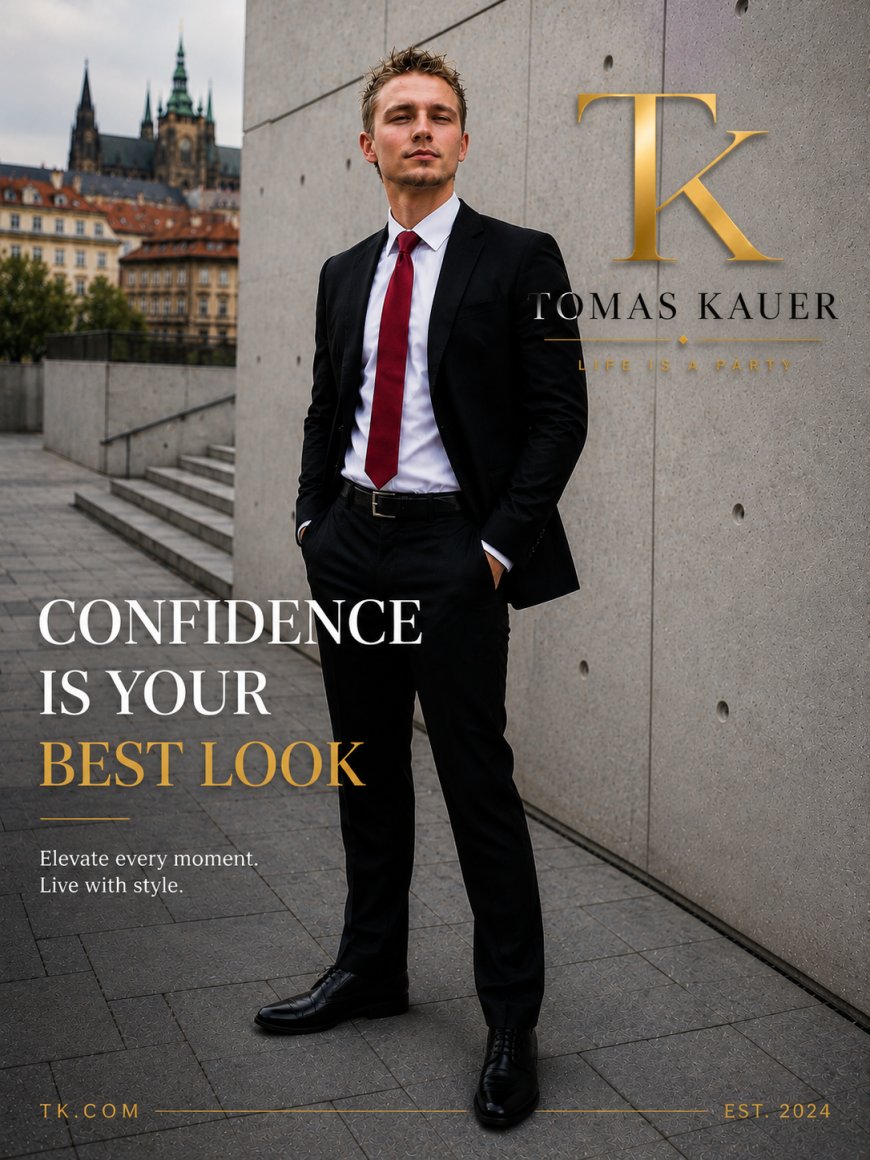
Visuals are not created simply for decoration. Every color, pose, setting, expression, and message should reinforce the desired public perception of the brand.
“Effective branding communicates even before the spokesperson begins to speak,” Noubikko explained. “The visual presentation carries subtle but deliberate signals about quality, credibility, discipline, success, and aspiration.”
Depending on the campaign’s scale and target market, an international brand-development program may require an initial investment of approximately US$500,000 or more. A serious national campaign may begin at around half a million, although costs can increase substantially depending on media reach, production quality, professional services, and campaign duration.
These amounts are estimates and do not guarantee commercial success.
Brand Dictates the Price; Image Influences the Market
Noubikko described product promotion as one of the most unforgiving areas of marketing because the market rarely pays a premium price for something it does not recognize.
“A good product can remain commercially weak when nobody knows its name,” he said. “Branding creates familiarity, familiarity develops confidence, and confidence influences the buying decision.”
Major companies such as BMW, Maserati, McDonald’s, and KFC can command widespread recognition because they have invested consistently in their names, reputations, customer experiences, and public identities.
Their commercial strength is not based solely on what they manufacture or sell. It also comes from what consumers believe those brands represent.
“The product has a production cost, but the brand creates perceived value,” Noubikko said. “The brand influences the price; the image influences the market.”
This difference helps explain why two products with comparable functions or production costs may sell at dramatically different prices. Consumers are frequently paying not only for the physical product but also for trust, familiarity, prestige, convenience, experience, and social meaning.
A Four-Year Branding Cycle
Noubikko outlined a practical four-stage development cycle for building a commercially sustainable brand.
First Year: Identity, Development, and Market Testing
The initial year is devoted primarily to establishing the brand. The market is introduced to its name, visual identity, values, personality, and purpose. This is usually an investment period rather than a profit-making year.
Second Year: Recognition and Public Familiarity
During the second year, the market begins recognizing and remembering the brand. Continued visibility is necessary to strengthen familiarity and prevent the brand from being overshadowed by established competitors.
Third Year: Commercialization
If public response is positive, the brand may begin generating revenue through sponsorships, endorsements, advertising, appearances, partnerships, licensing arrangements, memberships, or product sales.
Fourth Year and Beyond: Expansion and Sustainability
A successful brand may eventually produce recurring revenue and stronger commercial opportunities. However, recognition must still be maintained through consistent communication, innovation, quality control, and reputation management.
“The market has a short memory,” Noubikko warned. “When promotion stops, an emerging brand can quickly disappear beneath larger and more familiar names. Branding is not a one-time event; it is a continuing economic process.”
Branding Investment Is Not Refundable
Like most forms of business development, branding carries substantial risk.
Money already spent on advertising, production, training, travel, media placement, and professional services generally cannot be recovered simply because the campaign fails. Branding capital should therefore be treated as risk investment, supported by carefully written contracts and clearly defined responsibilities.
“The investment is effectively a one-way ticket,” Noubikko said. “Once the campaign has been produced and released, the money has already entered the market. If the public rejects the brand, there is no automatic refund.”
A branding investment can also be endangered when a personality or organization becomes involved in controversy, abandons the development program, violates an agreement, changes direction, or transfers the benefits of the campaign to a competing organization.
For campaigns involving individual talents, brand ambassadors, models, athletes, or public personalities, Noubikko recommends agreements covering the length of engagement, exclusivity, conduct, media responsibilities, intellectual-property rights, commercial participation, termination, and the protection of development expenses.
The Return Is Never Guaranteed
The most important question for every investor remains: What is the return on investment?
Noubikko emphasized that no responsible marketing professional should promise a guaranteed return. Results depend on public reaction, purchasing power, competition, management, timing, consistency, economic conditions, and the behavior of the people representing the brand.
When successful, however, branding can create value far beyond the original campaign. A strong brand may attract sponsors, command higher prices, increase negotiating power, open new markets, and generate opportunities that were unavailable when the name was still unknown.
The return may also appear gradually rather than immediately. Recognition achieved during the first year may support revenue generated in later years.
Reputation Is a Commercial Asset
A brand’s reputation can be strengthened over many years but damaged within hours. Scandals, misconduct, misinformation, contractual disputes, or poor management can reduce both public confidence and commercial value.
In such situations, professional media relations and crisis communication become essential. Damage control may help clarify facts, restore credibility, reassure commercial partners, and preserve part of the investment.
It cannot, however, guarantee complete recovery.
“A brand can become sick just as a business can become sick,” Noubikko said. “When that happens, media damage control is the emergency treatment. It may save the brand, but prevention remains less expensive than rehabilitation.”
Branding as an Economic Discipline
Noubikko concluded that branding should be evaluated with the same seriousness applied to any other major investment. It requires a realistic budget, a defined market, measurable objectives, professional management, legal protection, continuity, and sufficient time to develop.
Branding is therefore not simply about becoming popular. It is the economic process of converting recognition, public confidence, and reputation into sustainable commercial value.
“Products can be copied and advertisements can be forgotten,” Noubikko said. “But when a name earns public trust, the brand itself becomes an asset. That is where its real economic power begins.”
About Noubikko P. Ulanday
Noubikko is a U.S.-educated economist, marketing strategist, and lifestyle authority with experience spanning fashion, corporate positioning, investment integration, and international brand development. He is the chief executive officer of RPConnect Corporation.
His work brings together economics, marketing, media influence, visual identity, and strategic communications to develop brands with stronger public recognition and long-term commercial potential.