
Sam Altman shared a parenting hack. Thousands of moms and dads instantly disagreed.
 Business Economic Syndicated News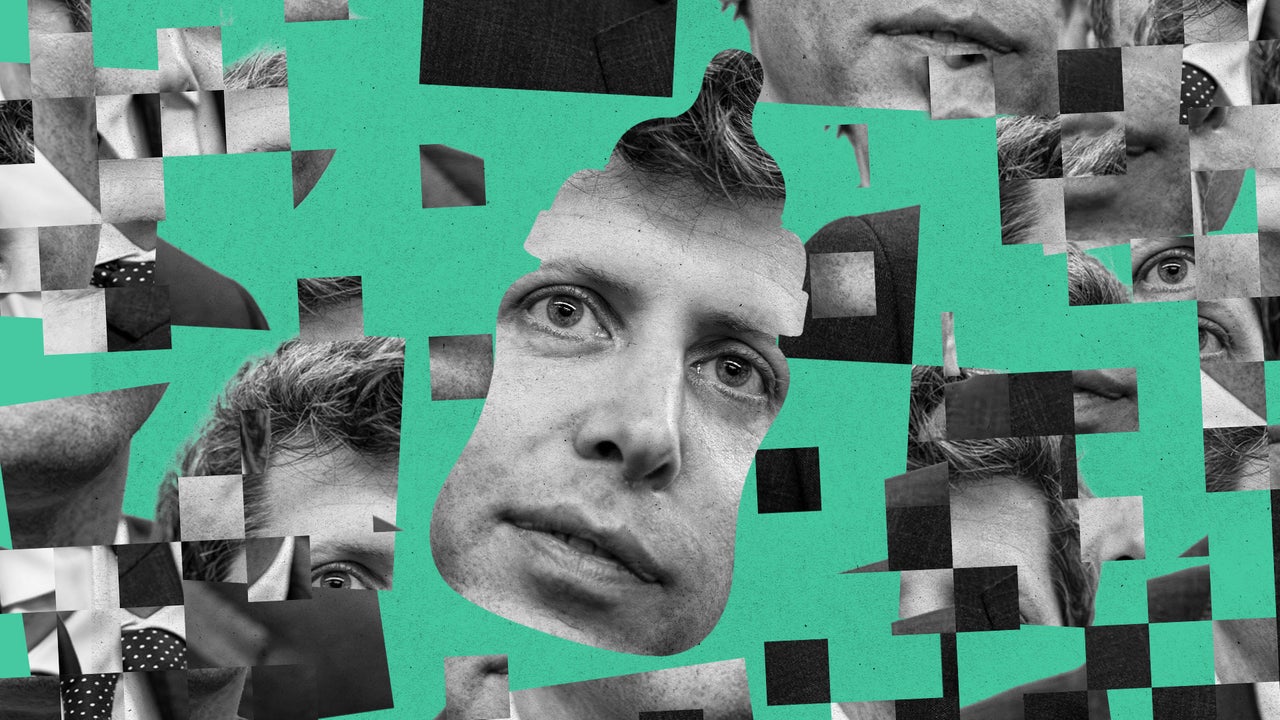
Sam Altman has some advice for parents, and it’s going about as well as you’d expect.
On August 31, the Open AI CEO took to X (where he’s a frequent poster) to share an idea with his followers: “cool use case of chatgpt work i heard last night,” he wrote. “connect your family calendars and explain your kids’ interests. every morning for the drive to school, have it make a podcast that talks about one kid’s soccer game that afternoon, one kid’s upcoming birthday, some news, etc.”
The tweet now has more than 11,000 likes and almost 4,500 comments, most of which are less than glowing. For the majority of commenters, the tweet is yet another example of how AI CEOs are living in their own self-reinforcing bubbles—and the rest of us just have to deal with the consequences.
“What if you just talked to your children?”
In the days following his August 31 tweet, parents are showing up in Altman’s comments in droves to point out their problems with the premise of using AI to generate a daily podcast for their kids’ car rides.
Most commenters are zeroing in on the idea that Altman seems to be suggesting that users outsource what should be a positive daily interaction with their kids to AI.
“Yeah my dad AI generates podcasts about my upcoming birthday instead of talking to me while we drive to school,” game developer Sean Gause wrote.
Film concept artist Reid Southen added: “Or you could be an actual parent instead of having AI summarize your kids for you, you absolute sociopath.”
One of the post’s top comments came from Alex Hirsch, creator of the TV show Gravity Falls, who simply suggested: “What if you just talked to your children?” His comment has garnered over 200,000 likes.
Another subsection of commenters is zeroing in on the potential data security concerns with handing over their kids’ daily schedules to Open AI. “Sam wants to know your kids’ schedules, interests, and birthdays,” one user wrote. “Not creepy at all.”
Why tech CEOs just can’t stop talking about AI
Tech CEOs like Altman have always been vocal about their opinions on artificial intelligence. Lately, though, those ideas have become increasingly unavoidable.
Earlier this year, at graduation ceremonies across the U.S., multiple CEOs made the mistake of mentioning AI—presumably expecting the audience’s support—only to be booed by the crowd.
It happened at the University of Central Florida, where real estate executive Gloria Caulfield likened AI to the “next industrial revolution”; at Middle Tennessee State University, where Big Machine Records CEO Scott Borchetta claimed that AI is “rewriting production”; and at the University of Arizona, where former Google CEO Eric Schmidt said that AI will “touch every profession, every classroom, every hospital, every laboratory, every person, and every relationship you have.”
In a post to X this May, around the same time as the graduation speeches, Box CEO Aaron Levie responded to a claim that CEOs are the “most delusional about AI.” He proposed that “CEOs are uniquely prone to AI psychosis because they’re sufficiently distant from the last mile of work that still has to happen to generate most value with AI.”
The phenomenon of CEOs being overly optimistic about AI has become so pronounced that one social media creator, Brian Patrick, has turned tracking executives’ outlandish AI comments into his full-time job. In one such video, Patrick examines a 2015 clip of Altman himself stating that “my job is to help people destroy jobs” (a claim he’s since walked back). In a more recent video, Patrick highlights Altman’s statement from a July 2026 podcast episode that OpenAI is “close to creating a genie that can grant every wish.”
Altman’s latest tweet feels like yet another example of how tech CEOs are grossly misunderstanding the general public’s stance on AI and, in the process, coming across as deeply disconnected from reality.
“I feel bad for Sam Altman. He probably thought this was some ‘feel good’ use case, and had no idea how creepy and weird it is,” freelance writer James La Forte commented under the tweet. “Can we please get some normal people running these tech companies?”
Fast Company reached out to Altman for comment, but had not heard back at the time of publication.