

Europe’s brutally hot summer led to more than 50,000 heat deaths in urban areas alone
 Business Economic Syndicated News

The summer of 2026 was brutally hot across Europe, with five successive heat waves causing record-high temperatures across the continent.
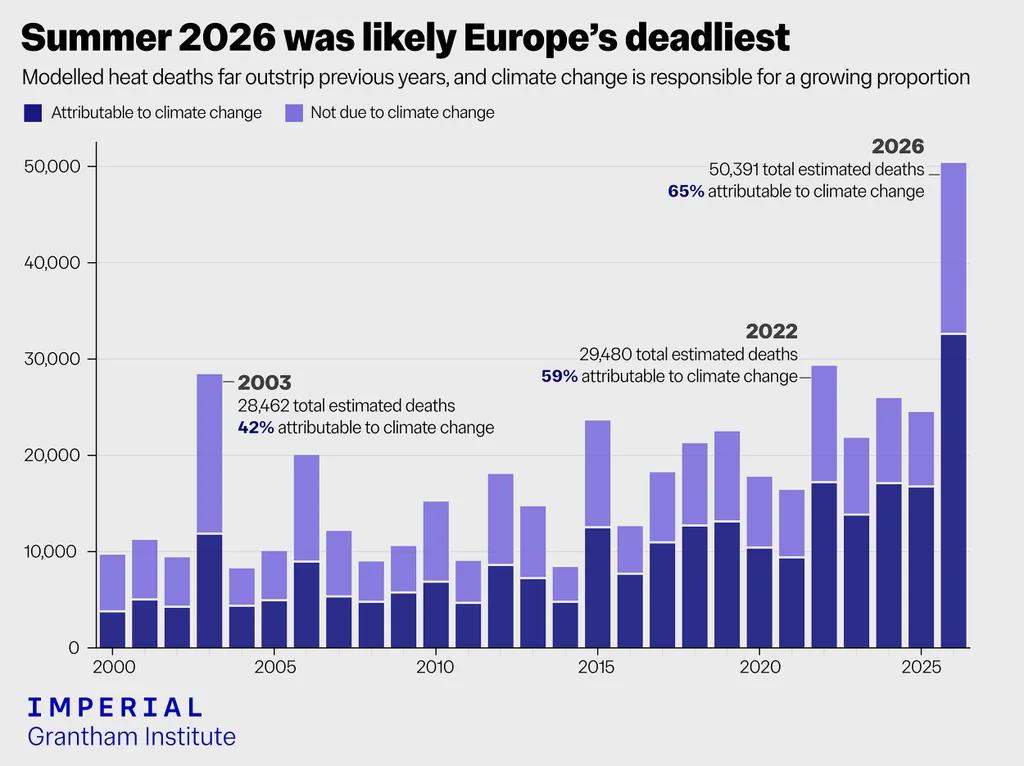
Those extremes likely led to more than 50,000 excess deaths in urban areas alone, according to a new estimate.
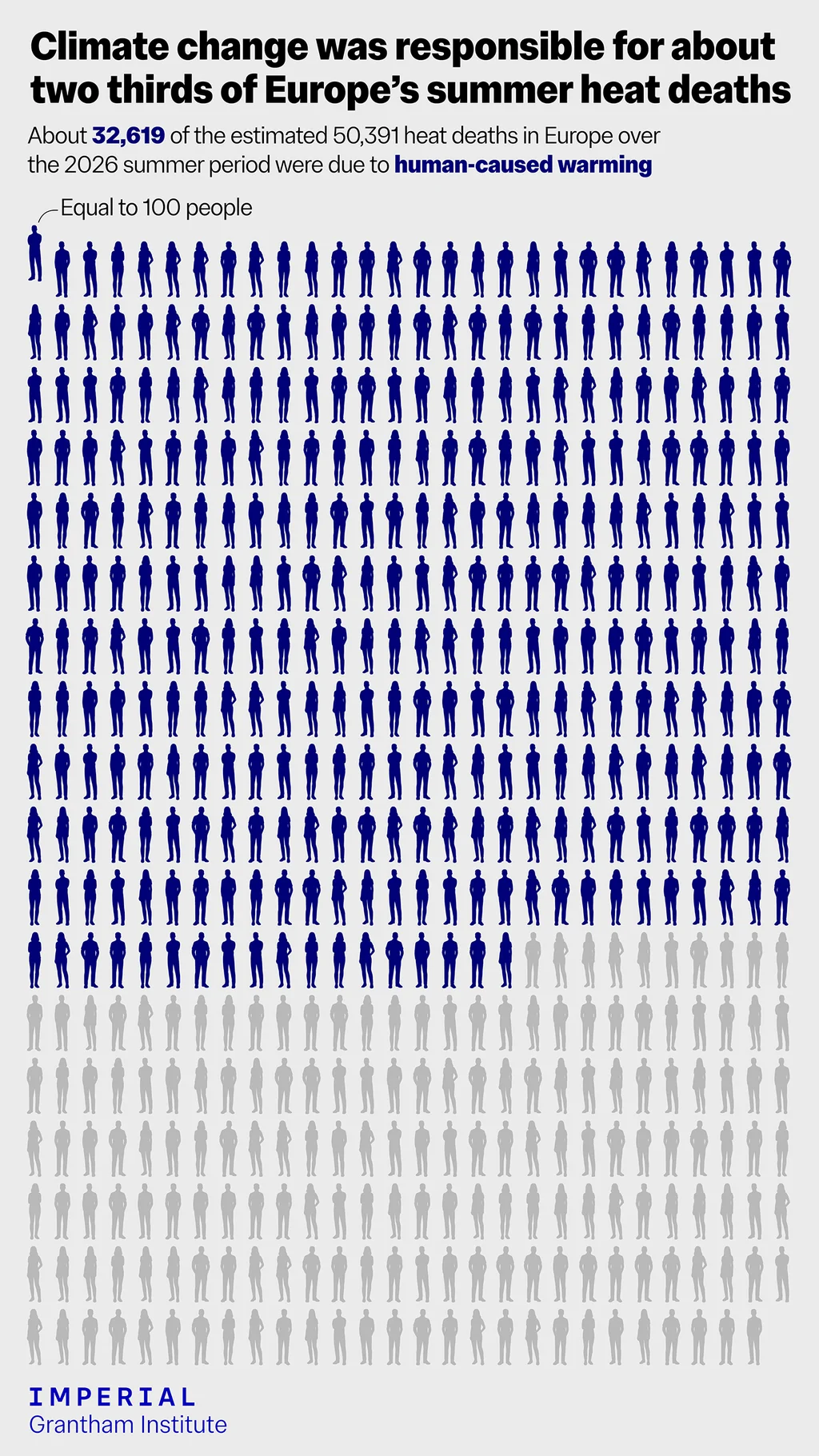
And some 32,000 of those deaths, or nearly two-thirds of that total, can be directly attributed to climate change, caused by the burning of fossil fuels.
This makes the summer of 2026 likely the “worst on record” for heat-related deaths across much of Europe, according to Clair Barnes, a study author and extreme weather and climate change researcher at Imperial College London.
Dangers of extreme heat
The figures come from two recent studies published in the journal Nature Health.
Researchers from Imperial College London and the London School of Hygiene & Tropical Medicine looked at 854 urban areas across 30 countries (27 of which are in the European Union, plus the UK, Norway and Switzerland). Those areas account for 40% of those countries’ total population.
By using temperature records combined with climate modeling, they were able to estimate how many excess heat-related deaths occurred every summer between 2000 and 2026. Where governments have released official mortality statistics, these findings align with official figures, the researchers say.
Heat death can be difficult to measure. Heat itself often isn’t listed as a cause of death on death certificates, except in certain instances of heat stroke.
But only counting heat strokes is a “vast underestimation of the actual effect” of extreme heat, says Garyfallos Konstantinoudis, a study author and assistant professor at Imperial College London.
Heat is one of the deadliest climate change impacts. Extreme heat stresses our cardiovascular and metabolic systems, and can combine with other illnesses to exacerbate health harms.
This is why this count of excess deaths is an estimate, the researchers note. For the summer of 2026, many countries haven’t yet released their official mortality numbers.
Where they have, though, the researchers’ model estimates align with those figures. The researchers estimated, for example, that May and June heat waves in England and Wales caused more than 2,700 deaths. An analysis by the UK Health Security Agency later identified about 2,880 deaths in that time period.
The role of climate change
The studies also specifically looked at the role of climate change in these deaths by modeling a pre-industrial world in which human-caused climate change didn’t happen.
Even in that world, temperatures were so dangerously hot that they led to high deaths, Barnes says.
“But that mortality has been pushed substantially higher by human-caused warming, primarily from the burning of fossil fuels,” she adds. “Across Europe as a whole, around two thirds of those deaths would not have occurred without the additional heat from human activity.”
Temperatures for that entire summer were 2.9°C above the prior decade’s average. Some days were so hot that they hit 12°C above average.
The summer of 2026 saw the highest number of urban heat deaths in all 26 years the researchers analyzed. The summer of 2022, which was also marred by multiple dangerous heat waves, was second, with about 29,000 deaths.
Climate change is warming the entire planet, but Europe is the fastest-warming continent. Over the summer, multiple European governments issued “red weather warnings” about the heat, even closing schools and canceling sports events.
“These numbers are a stark reminder that our hotter, more extreme summers are having an increasingly severe impact on public health. Behind these statistics are real people whose lives were lost and real families who grieve for them,” Barnes says.
And they’re also a reminder, she adds, “of the growing need to rapidly transition away from fossil fuels to slow the pace of change and limit future warming.”