
Exclusive: A 21-year-old Stanford grad just raised $11 million to put a hormone lab on your wrist
 Tomas Kauer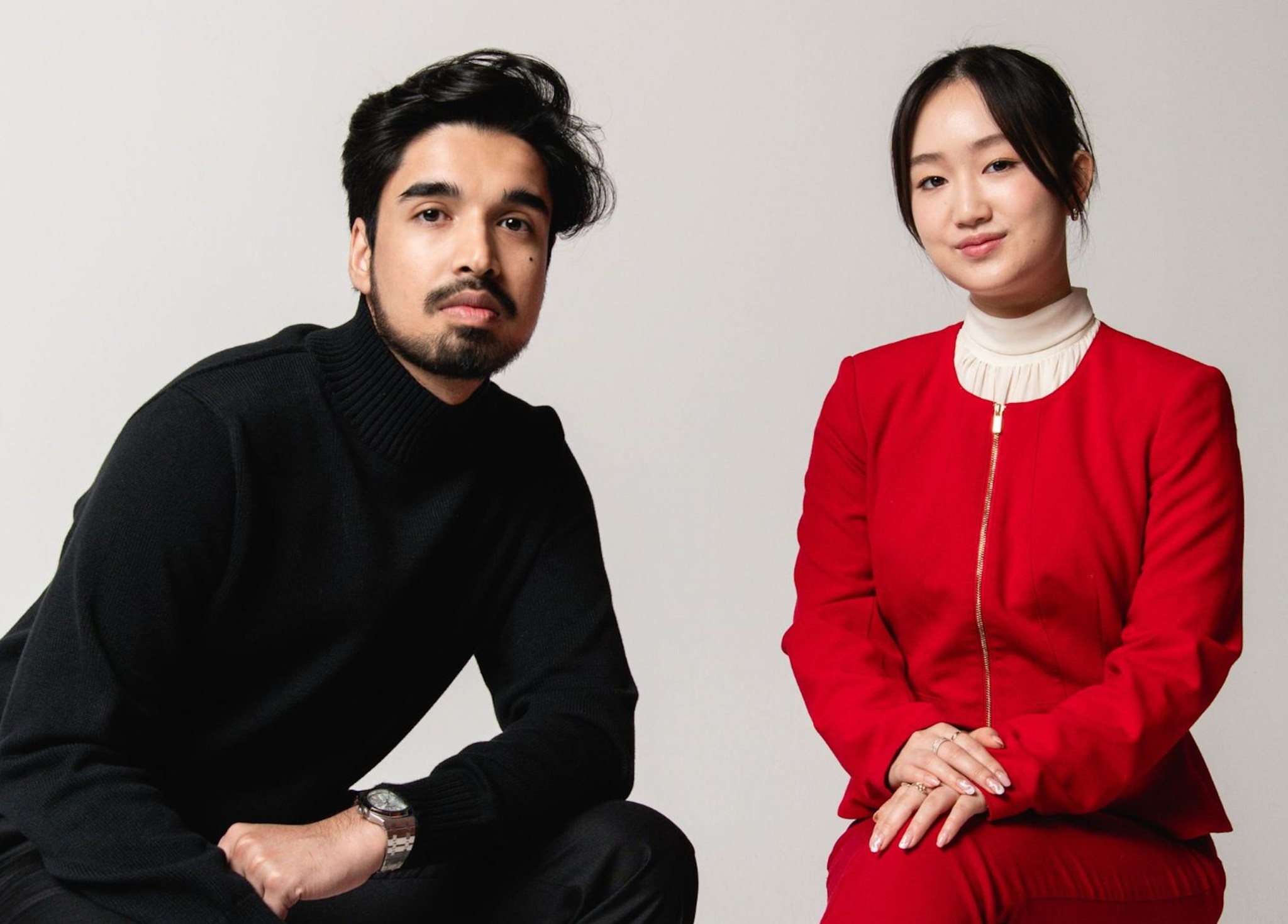
Jenny Duan closed her seed round the same week she picked up her diploma.
Duan, 21, graduated from Stanford University last weekend with a BS in Symbolic systems. She also closed an $11 million seed round for Clair Health, Fortune learned exclusively. Khosla Ventures led the round, with support from a16z Speedrun, Brydge Club, Treehub, Cartan Capital, AGI House, Insiders VC, and Anne Wojcicki. The startup, co-founded with Abhinav Agarwal, is building what it calls the first continuous, non-invasive hormone monitor for women.
Instead of drawing blood or piercing skin, Clair Health’s wearable wristband uses a stack of 10 biosensors—including biomagnetic sensors it says are not found in any competing consumer wearable—to read physiological signals like skin temperature, heart rate variability, and electrodermal activity, then runs those markers through AI models to infer where a woman is in her hormonal cycle.
“Right now, to measure hormones, you either do a blood test in a lab or you pee on a stick at home,” Duan told Fortune. “Any urine test is also not looking at hormones directly—they’re looking at how your body metabolizes them.”
Clair’s AI correctly identified which phase of the menstrual cycle a woman was in 94% of the time, benchmarked against daily urine samples—the same standard as at-home ovulation strips, not a clinical blood analysis. Independent third-party studies, including one through Stanford, are underway and will eventually put harder numbers on the table.
Other wearable tech companies have been circling this space. Whoop launched women’s hormonal insights in 2025 and expanded it with a women’s-specific blood testing panel this Spring. Smart ring maker Oura launched a proprietary AI model for women’s health in February 2026. And Natural Cycles already powers FDA-cleared birth control through Oura’s temperature sensor. None of it was built from the ground up for hormones though.
“Much of wearable technology being developed is bro-tech for tech-bros,” Dr. Alex Morgan, partner at Khosla Ventures, said in a statement to Fortune. “This team has identified the larger underaddressed market of women interested in improving their health and wellness through getting insights specifically designed for women.”
The global femtech market is projected to nearly triple from $39 billion in 2024 to $97 billion by 2030.
Clair Health’s core argument is that the incumbents are retrofitting existing hardware. Its entire sensor architecture exists to model the HPO axis—the hypothalamic-pituitary-ovarian system, the hormonal feedback loop that governs nearly every dimension of female physiology. The company holds provisional patents on that sensor configuration.
“There’s only so much of a moat you can build with hardware,” Duan acknowledged. “What’s really special is the machine learning approach and the biophysical modeling.”
Clair is launching as a wellness product in November and pursuing FDA clearance later—the faster path to market. The company already has a 25,000-person waitlist and sold out its presale. It has received more than 100 letters of intent from fertility clinics. The longer-term roadmap includes perimenopause monitoring, hormone replacement therapy calibration, and diagnostics for conditions like PCOS and endometriosis.
The company is building toward HIPAA compliance with zero-knowledge encryption and on-device computing for women who don’t want health data stored in the cloud.
Duan expects to raise more funding in roughly a year.
This story was originally featured on Fortune.com