Nobel laureate Daron Acemoglu says AI and liberal democracy share the same crisis: ‘there is a tendency to escalate everything’
 Tomas Kauer
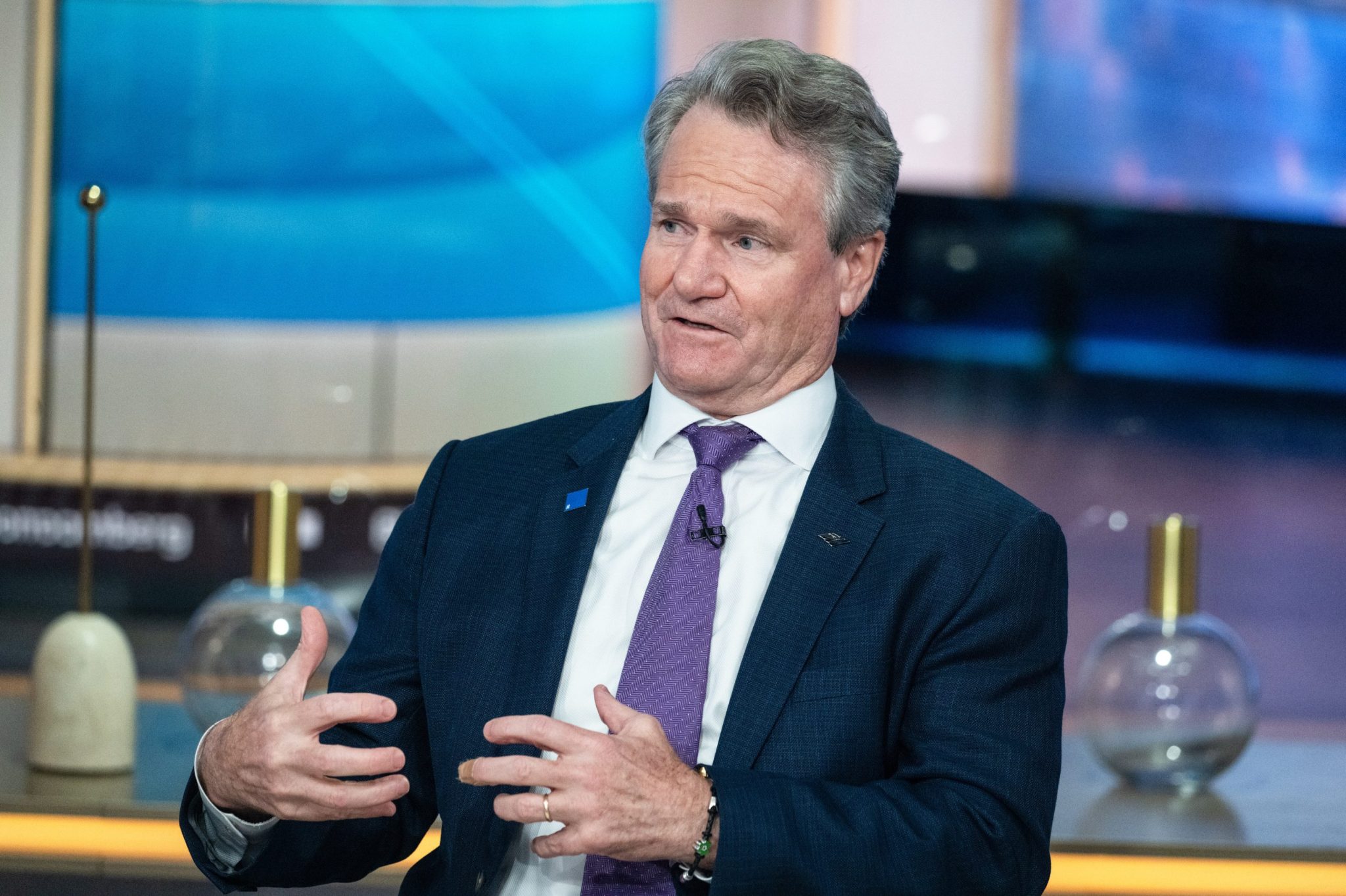
Daron Acemoglu is frustrated by the artificial intelligence debate — and not because the MIT economist thinks the technology is dangerous. Although he does think that.
With his nearly unique mixture of frustrated nuance, Acemoglu, who has been warning about the dangers of AI for years, argued in an interview with Fortune that giving into fear is the worst kind of response right now. While evaluating the opposing camps in the debate, he sounds like the Groucho Marx of Nobel laureates: he wouldn’t want to belong to any club that would have him as a member.
On one side are the true believers — what he calls “quasi-moderate-friendly” types so convinced that AI is going to be good for everybody with no exception that any challenge to this view “drives them insane.” On the other are the skeptics who refuse to credit AI with any genuine capability, treating the models as “stochastic parrots” generating plausible-sounding noise. “There are people on the left — or part of the left — that just will refuse any argument that says AI has capabilities, it just drives them insane,” Acemoglu told Fortune. He sighs: “it’s very unproductive.”
He refuses both camps. “I think you have to really have your head in the sand to think that AI is a stochastic parrot right now,” he said, noting that anyone who uses the models will see that’s just not true. “But I’m also not willing to go along with some inchoate belief that everything will work out fine.”
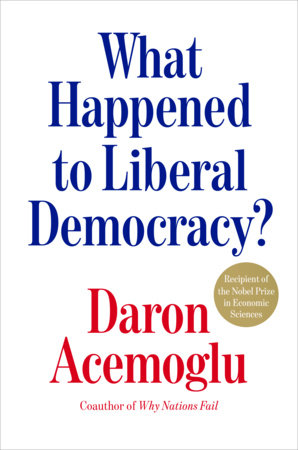
Frontier models are making genuine advances in comprehension, coding and even scientific and mathematical discoveries — “it’s really great, the way proofs are being done” — and this should be celebrated just as fear of future job loss should be a concern. “It’s become sort of radical to hold two apparently conflicting ideas in your head at the same time,” he said. Which is why it’s the perfect time for his book, What Happened to Liberal Democracy? to come out.
We are in a time of crisis, he said, and the terms of our AI debate are just like our political system: so angry because it’s been so deeply damaged, for such a long time.
The escalator effect
“We live in an environment that’s been partly shaped by social media,” Acemoglu said, “and there is a tendency to escalate everything, because that gets attention. Politics is like that. The other topic like that, unfortunately, is AI.”
The economist sees a connection — the public’s inability to acknowledge both the real capabilities of this likely general-purpose technology and its potentially destructive social effects reflects a political culture losing its ability to deliberate over trade-offs, build common ground and direct economic change toward shared ends. That used to be normal in a liberal democracy.
He turns to what Wharton’s Ethan Mollick calls the “jagged frontier” of AI capabilities, because this technology is exceptional at some tasks, unreliable at others, and sometimes it’s some unusual combination of the two. “You need to do a lot of detailed babysitting,” he said. The economist flagged that beyond coding, there just isn’t much evidence of wide adoption, noting customer service employment is barely budged in recent years, likewise in manufacturing.
In Groucho-esque fashion, Acemoglu argued that this messy state of things could serve a useful purpose: “I wouldn’t call myself an optimist, I would say I resolutely refuse to give up hope.”
Two economists talking
Acemoglu points to his relationship with his former colleague and fellow star economist, Stanford’s Erik Brynjolffson, as a model for how the AI debate could go. The two have disagreed publicly and sharply about AI’s impact on productivity. Brynjolffson has argued for substantially greater gains than Acemoglu projects, and yet, Acemoglu says, “Erik and I actually agree on many things.” Their ability to disagree respectfully is exactly what he wishes he could see more of in policy circles.
He said he was pleased that Brynjolffson has increasingly called for redirecting AI in more human-complementary and more human-friendly ways, saying it’s “been my bugbear for almost two decades.” He also described Brynjolffson as “the main scholar showing the potential job losses from AI,” which Fortune has reported extensively on, as documented in the Canaries dashboard based on ADP data.
Acemoglu has been studying AI explicitly since at least 2018, and to his point, has spent much longer examining the underlying question: whether new technologies replace workers or create new tasks that raise their value. His work with Pascual Restrepo developed a framework for understanding automation as a force that can displace labor while also creating work, an ambiguity that sits at the center of today’s AI debate, with all its talk of the “lump of labor fallacy” and the Jevons paradox. His 2024 Nobel, shared with Simon Johnson and James Robinson, concerned the formation of institutions and how they shape prosperity, or fail to.
The point, Acemoglu stressed, is that it’s not a situation where solutions come easily — neither of the two economists is a straightforward booster or skeptic, but they are trying to move toward clearer understanding of trade-offs, problems and solutions.
Liberalism’s broken bargain
According to Acemoglu’s book, liberal democracy used to rest on more than elections and constitutional rights. “Shared prosperity” was the glue, the “main promise” that held the system together. Somewhere in the transition to what he calls the “postindustrial economy” that bargain fell apart.
The divides that resulted are the same ones you see in the dysfunctional AI debate: the educated and less educated got separated, the more educated took over the center-left, and the working class fled for the center-right or hard right.
There’s a “significant divergence in values” between the camps, along with a significant gap in “connections and empathy,” leading to what he described as “sins of omission” and “sins of commission.”
The center-left is silent as inequality grows, separating the groups by class, while cultural politics divide them in social views — “that destroyed the communal roots of liberal democracy.”
The DSA
Acemoglu’s framework informs his ambivalent view of the Democratic Socialists of America and Zohran Mamdani, the telegenic far-left New York City mayor, who has a gift for making local politics go national. The DSA are a “mixed bag,” Acemoglu said; they should be credited for highlighting the theme of affordability, and yet they are “preaching to their base” and don’t have much impact with Black voters, who have been lukewarm in response. Furthermore, they have “doubled down on cultural politics … exactly the kind of policy ideas and rhetoric that alienate the working class [and] creates an adversarial attitude.”
He wasn’t saying that DSA was wrong about their stances, just wrong on their methods, citing his book’s examples of ways to use liberal democracy to bridge such divides. State-level referenda on gay marriage and grassroots movements on abortion rights in Ireland, for example, weren’t top down and so allowed for consensus to form, just the way it needs to on AI now. “In both cases the evidence is that many people change their views,” he said — the process can’t be forced. Liberalism should not be a “cookbook” that dictates the answer to every controversial question, he said, but a model for resolving difficult issues through persuasion, public participation and compromise. It’s hard to adopt that in a time of crisis, though.
Democratic socialism, Acemoglu continued, is “a very amorphous concept” at this point, but he added that he wasn’t opposed to Mamdani policies like a wealth tax or a pied-a-terre tax. He added that it’s not as “efficient” to adopt these in one city as opposed to nationally, because state-by-state wealth taxes invite competition among jurisdictions, as seen to Texas’ and Florida’s benefit in recent years.
Midterm elections
When the topic turns to Donald Trump and the oncoming midterms, Acemoglu is his usual not-quite-optimistic self. “I still think we’re going to have elections in November and both sides will get counted,” he said. “Two years from now, I have no idea.”
AI anxiety has been a major issue this election season, as has backlash over data center development.
Acemoglu’s book calls for “pro-worker AI” and a stronger safety net and more redistribution. This would mean supporting AI tools that increase the effectiveness of workers, reconsidering tax rules about capital gains vs. wages, limiting the dominance of big tech and giving workers a stronger voice at the table. Above all, he added, the unthinkable has to be avoided: “If 50, 60, 70% of the people become jobless, hopeless, feeling dispensable, having no dignity at work, then I don’t think we can have a liberal democracy society.”
But what about the fact that, midterms aside, Trump will still be responsible for steering AI until the next presidential election? “It’s not going to change radically for two years,” he agreed, while adding that he “wouldn’t say Democrats are on the ball, either.” The only prescription is more of his beloved liberal democracy, in other words.
Just think, he said, about what a remarkable achievement this has been, to build advanced societies, negotiate conflicts and reach compromise without routine descent into violence. “We come from very cantankerous apes,” Acemoglu said, and it’s “amazing” what we have built from that raw genetic inheritance. “I would be so devastated if we lose liberal democracy.”
“We need to redirect AI,” he added, saying he was “very worried that things won’t work out if we don’t change things now.” Somehow, in these crisis times, we need to really listen to each other, hold two conflicting ideas at the same time, and get over our cantankerous natures. Easier said than done.
This story was originally featured on Fortune.com