
AI infrastructure without human capability is just hardware
 Business Economic Syndicated News
The United States is in the middle of a defining conversation about AI infrastructure. But, years in, we are still asking the wrong questions. The infrastructure conversation starts and stops at chips, models, and computing power—and rarely arrives at the harder questions underneath: What should this infrastructure make possible for Americans, and are we actually building toward that?
Hardware without human capability is just hardware. The true measure of a nation’s infrastructure is what it enables people to do. By that measure, the United States has a problem. We are investing enormously in AI technology and almost nothing in the human capacity to use it. Improving what exists and building what’s needed are not competing priorities. They are both urgent.
Countries like China understand that advancing AI capabilities requires weaving its use into workforce systems, classrooms, and the fabric of daily life in ways that drive tangible outcomes. As routine work is automated, the value shifts to those who can use knowledge in context to think critically, create, and contribute. The result is a generation of citizens prepared for the AI age, not by accident, but as part of a deliberate national strategy to grow human capability at pace with technological change.
THE CAPABILITY TO USE AI WELL
The next frontier of global competitiveness will be defined by people’s capability to use AI well. Today’s kindergarten students will enter the workforce in 2037. Every year we wait to build that capability, the gap widens, and another cohort of young people moves through school struggling to develop the judgment and agency to direct their own lives.
We lead two organizations that have spent decades working inside America’s public schools—from different angles, but towards the same goal. Digital Promise brings deep educator co-design experience, learning science, edtech integration knowledge, and a track record of driving digital transformation through global and national leadership networks. TNTP brings extensive systems expertise and implementation depth, earned working side-by-side with educators and leaders inside schools, districts, and states. TNTP ensures that rigorous content, relevant learning, and edtech’s role in coherent instruction actually sticks in practice, instead of just in theory.
Together, we have made a concrete commitment: to reach 15 million students by 2028 with learning experiences that use AI to build the learning and judgment young people need. While a national strategy is still necessary, hitting this target would prove that scale is possible. The opportunity is to act on what we know, and to abandon scattered experimentation in favor of intentional, and coherent evidence-informed implementation.
Catching up will require intention plus speed. AI must earn its place in classrooms by enhancing educators’ abilities to teach and students’ abilities to engage deeply. It will not earn its place by replacing human judgment, creativity, or relationships. When used well, AI can serve as a force multiplier, supporting differentiated instruction, accelerating foundational skills in math and literacy, and helping connect classroom learning to real-world applications and future pathways.
THE GAP BETWEEN CLASSROOMS AND THE WORKFORCE
Oregon offers the clearest proof of what this looks like in practice. Rather than banning AI or rushing adoption, the state built a coherent pipeline from K-12 through workforce—issuing early guidance on AI literacy, partnering with local universities and companies to train students on real industry applications, and connecting local districts, higher education, and employers around shared goals. Oregon serves as a compelling case study in how intentional, cross-sector coordination can bridge the gap between classroom instruction and the evolving demands of the modern workforce.
The principles are clear. Viable models are not. That gap is exactly what this work is designed to close. Over the next three years, our partnership will focus first on proving what works. We will co-design tools with educators rather than for them, run pilots that generate real learning signals, and produce implementation guidance that makes it easier for other districts and systems to follow.
Rather than developing a proprietary playbook, we are building a public infrastructure—procurement guidance, benchmark frameworks, and field-facing research that lowers the barrier to adoption everywhere. What follows must be about scaling those insights rapidly and responsibly.
This moment requires field-building. Educators need models, guidance, and shared knowledge that help them make informed, human-centered decisions about how AI fits into their practice. This means investing in professional learning. It also means aligning systems and preserving the relational core of teaching while expanding what’s possible.
Success will not be measured simply by more students using AI. It will be measured by educators making better decisions about where AI belongs and where it doesn’t. Students should arrive at the next stage of their lives with stronger judgment, deeper skills, and a clearer sense of what they can do with both.
If we get this right, AI will be a catalyst for expanding economic mobility and redefining what is possible for millions of learners.
This challenge will not magically fix itself. We can’t leave America’s future up to chance. The question for policymakers, districts, and fellow organizations is simple: Are you with us?
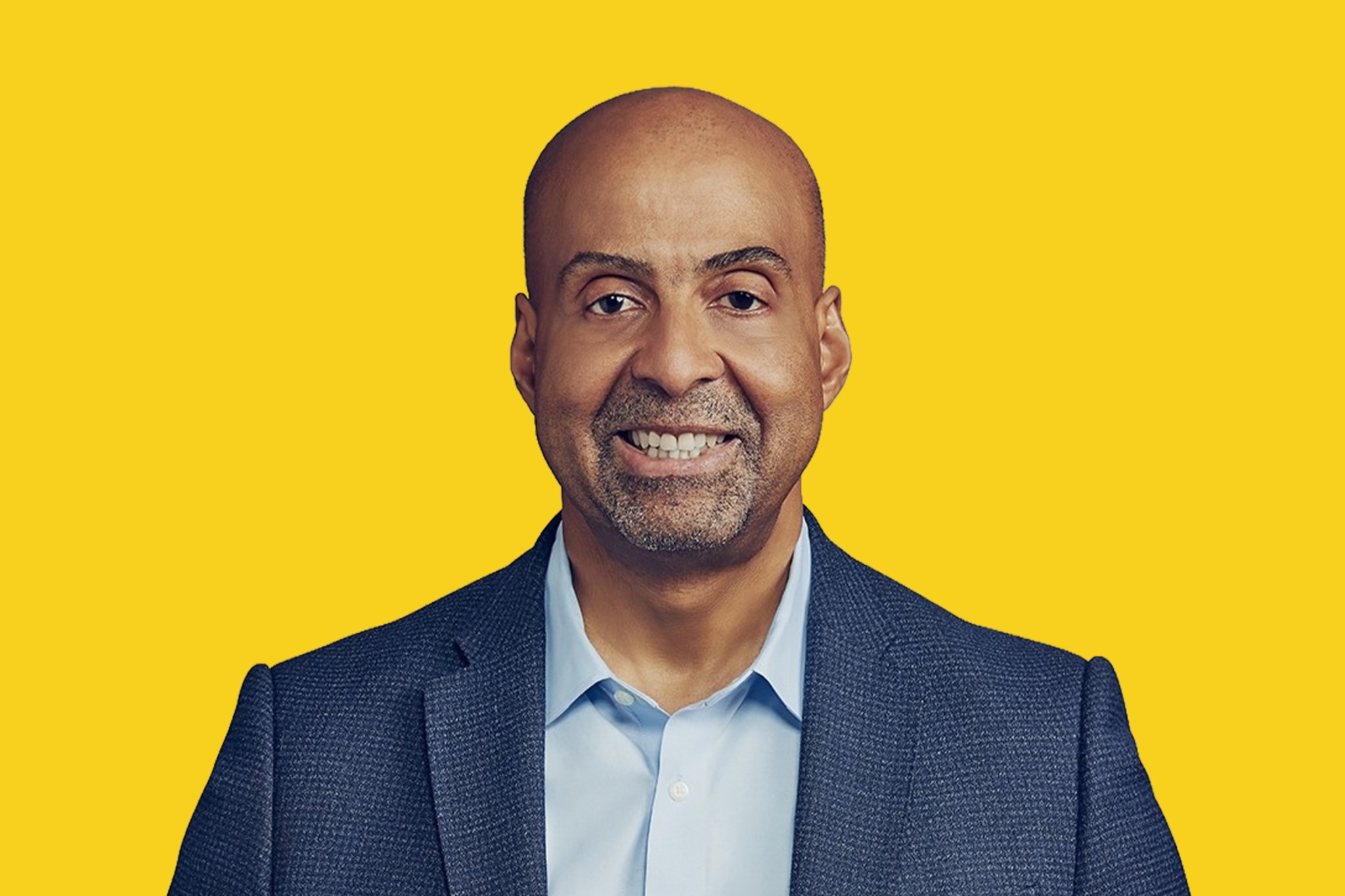
Jean-Claude Brizard is president and CEO of Digital Promise. Tequilla Brownie, EdD is CEO of TNTP.