
12 Fortune 500 CEOs worked for Pepsi. Delta’s Ed Bastian explains why it’s a leadership factory
 Tomas Kauer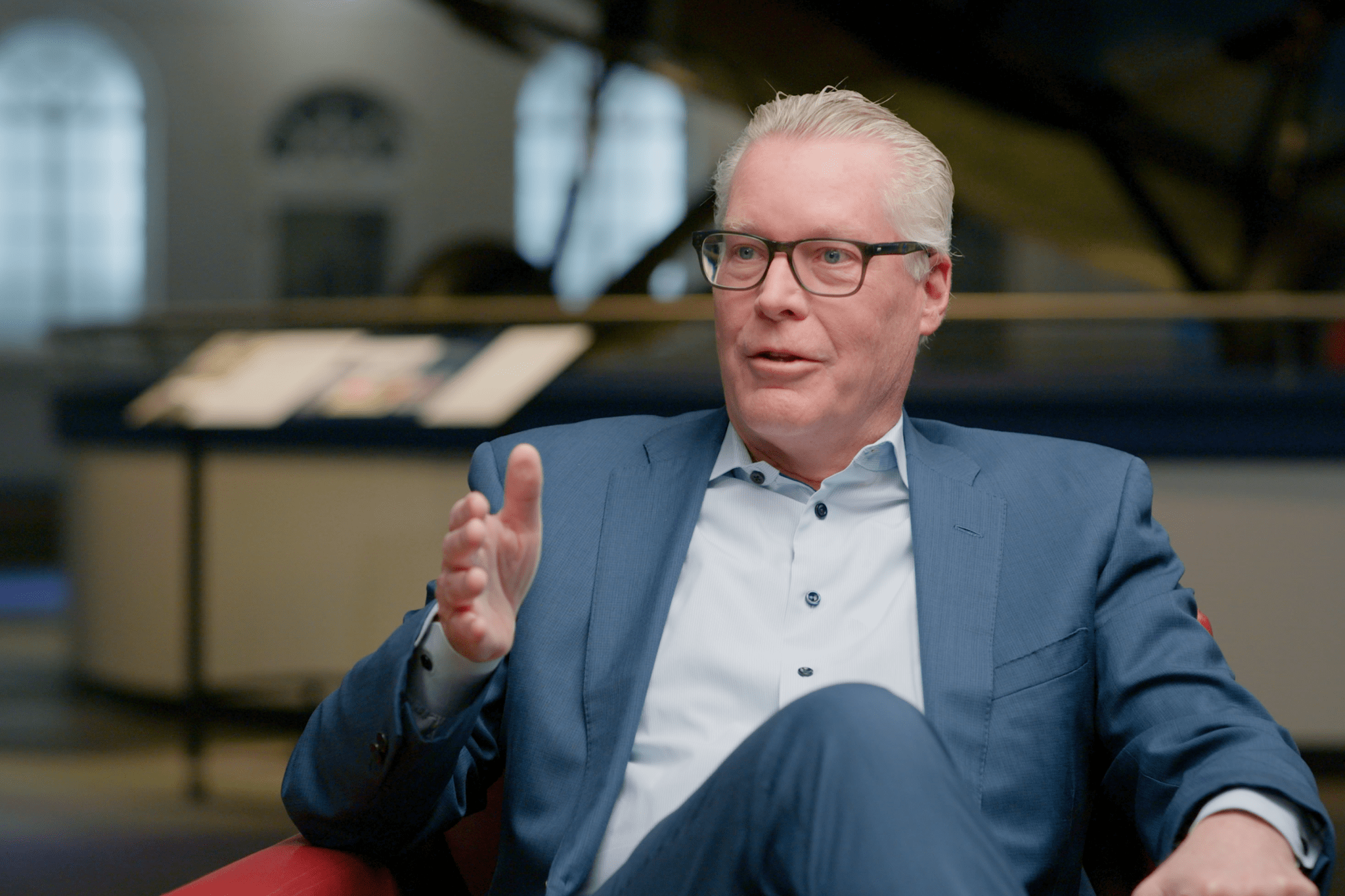
In Atlanta, loyalty often runs deep—particularly to the city’s two hometown giants: Coca-Cola and Delta Air Lines.
So it might come as a surprise that Ed Bastian, who has spent nearly a decade leading Delta, credits an Atlanta rival—PepsiCo—for making him the executive he is today. On the latest episode of Fortune’s Titans and Disruptors of Industry podcast, Bastian opened up about how the food and beverage conglomerate didn’t just shape his own rise to the C-suite, but it has quietly done the same for a generation of business leaders.
“[At PepsiCo], you’re surrounded by great talent. They understood that talent is going to win in the marketplace,” Bastian told Fortune’s Editor-in-Chief Alyson Shontell. “They were constantly recruiting, bringing talent. It’s one of the only places I’ve ever been to where they tell you when you start, you’re probably not going to retire here because it’s a talent factory.”
And he isn’t exaggerating: PepsiCo has long been known as a breeding ground for top executives. A December 2022 analysis found at least a dozen Fortune 500 CEOs had passed through its ranks, including McDonald’s Chris Kempczinski and Land O’Lakes Beth Ford.
PepsiCo’s approach to grooming leaders was shaped in large part by Bob Eichinger, an industrial organizational psychologist who spent nearly a decade at the company starting in the late 1970s. Eichinger adapted psychometric testing to assess executive behavior and effectiveness, helping cement PepsiCo’s reputation as what Yale professor Jeffrey Sonnenfeld famously called an “academy company.”
Central to PepsiCo’s system is its identification of “hi-pos”—the top 20% of performers at any given time—who are funneled into stretch assignments, international rotations, and cross-functional roles designed to prevent them from getting too comfortable in any one silo. The company’s HR team actively moves rising talent across divisions, even over the objections of their current managers, on the theory that future leaders need broad operational fluency rather than narrow expertise.
The expectation that you could move on, Bastian said, is baked into the culture from day one: “You learn what you can, you grow, and some people stay, but many people take what they have, and they go test their wares in another industry.”
For Bastian, that next move came naturally. As someone who had logged countless hours in the sky working with PepsiCo’s international finance team, the path to aviation wasn’t a leap so much as a landing.
“Someone told me at one point I should consider working for an airline because I’m on a plane all the time,” he said. “And I said that kind of made sense.”
And it made sense for Delta, too. Bastian joined Delta in 1998 as a vice president of finance and was named CFO by 2005. A decade later, in 2015, Bastian landed the CEO role and has since helped the airline achieve industry dominance—boasting top-tier on-time performance, a market value north of $40 billion, and a reputation as the most profitable U.S. carrier.
Ed Bastian skipped an MBA to learn leadership at PepsiCo—and it paid off
Raised in upstate New York, Bastian graduated from St. Bonaventure University with a bachelor’s degree in business administration in 1979 and soon began his career as an auditor at Price Waterhouse (now PwC). While a graduate degree had been a logical early career step, he said it simply wasn’t feasible.
“I went right to work, I didn’t have the money or the patience to get any post-graduate education,” he said.
But as his ambition grew, so did his awareness of his talent gaps. So when PepsiCo came calling, he recognized what it was: a rare chance to get a world-class business education without the tuition bill.
It proved to be the inflection point of his career. But beyond the skills he sharpened—like prioritizing customers and smart decision-making—Bastian said the deeper lesson was about the kind of leader he wanted to become—one who never forgets how he got there.
“My best advice is to make certain that you’re taking care of the people that got you there,” he told Fortune.
That humility, the 68-year-old argued, is what separates good leaders from great ones. Many CEOs, including himself, never set out to reach the top job. Instead, they let drive and confidence be tempered by something quieter.
“We talk about in leadership, the importance of confidence and drive and energy and vision,” Bastian added. “[But], there’s also a really important attribute, and that’s humility with the willingness to actually listen more than you talk, to be able to make certain that you have an appreciation for what people do, to relate to the people.”
Bastian has embodied that behavior in part through Delta’s annual profit-sharing. This past February, the company paid out $1.3 billion to its over 100,000 employees, averaging out to more than four weeks of extra pay.
In an era increasingly defined by technology and speed, Bastian believes human instincts matter more than ever.
“Understand what leadership is about—it’s about people, it’s about leading people,” Bastian said. “And that will get you further than anything you could ever do.”
This story was originally featured on Fortune.com