
The U.K. just banned social media for kids under 16. The founder of ‘safe TikTok’ says the U.S. is next
 Tomas Kauer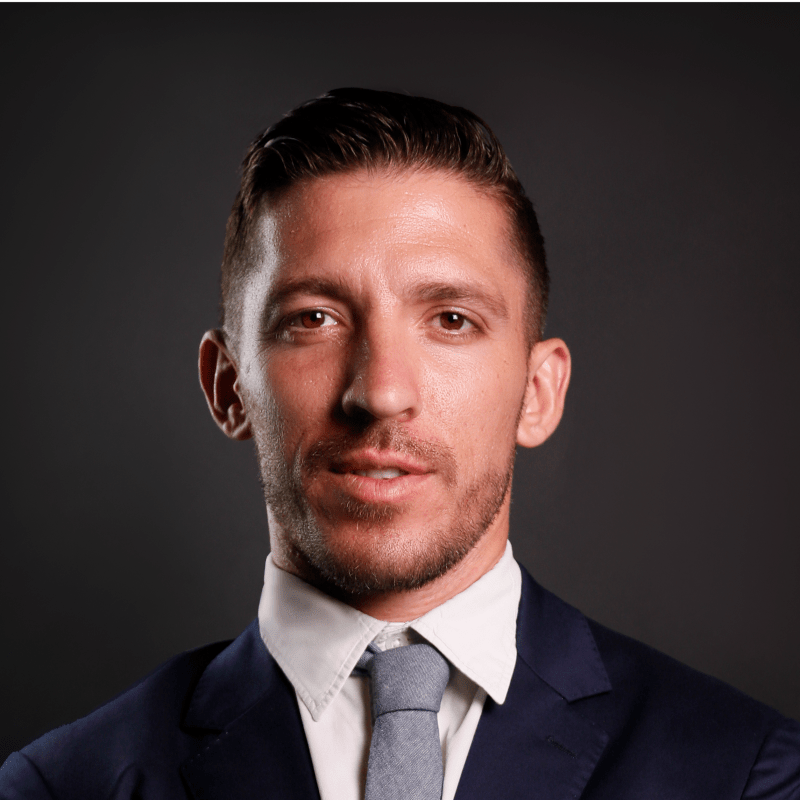
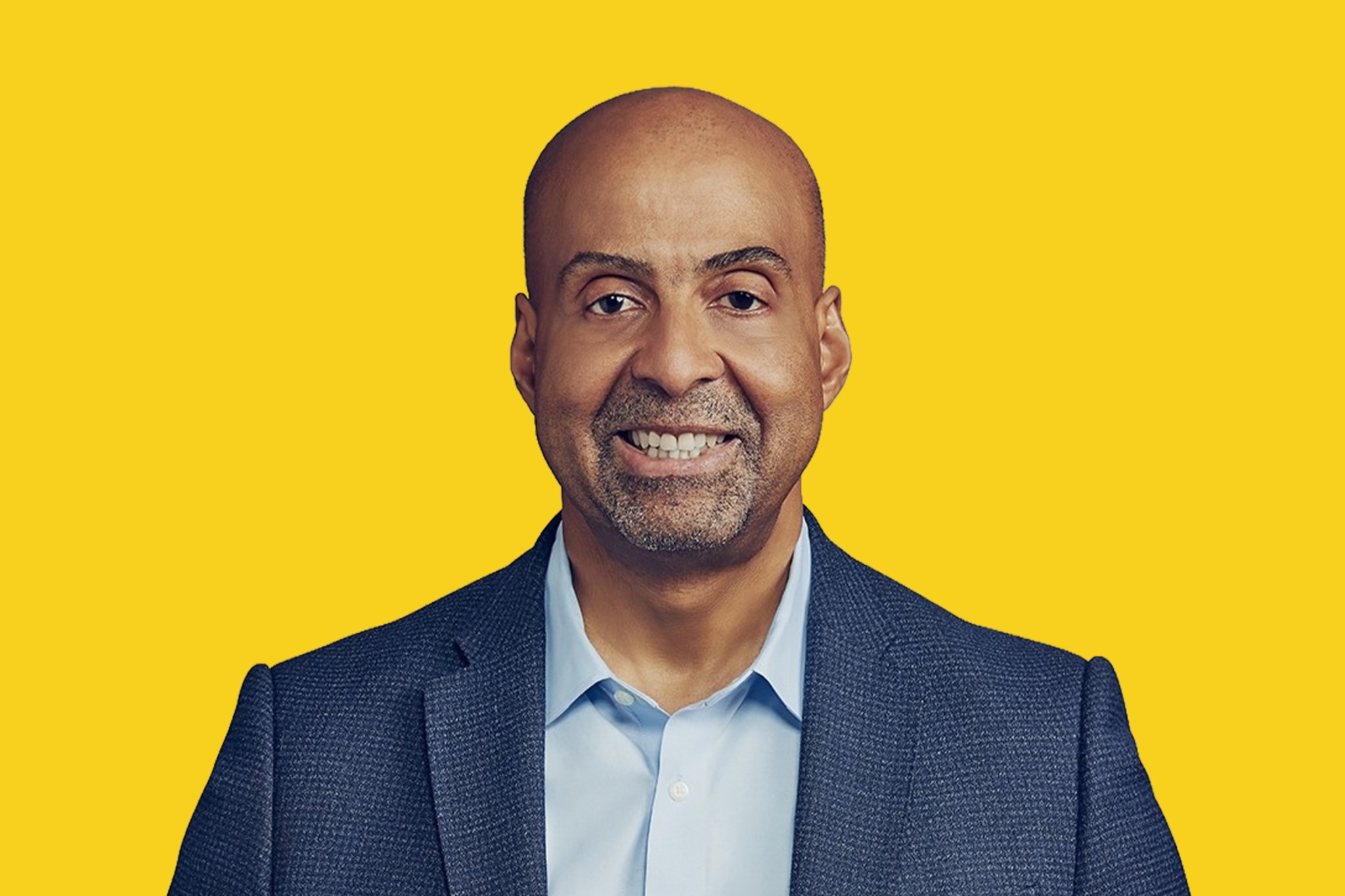
When the UK government announced this week that it would ban children under 16 from TikTok, Instagram, YouTube, and X, Zak Ringelstein wasn’t surprised. He was ready.
That’s because Ringelstein is the founder and CEO of fast-growing kids social media platform Zigazoo, which has spent six years building exactly what governments around the world are now demanding: a safe, age-verified digital space for children.
“These are global dominoes,” he told Fortune. “The under-16 social media bans are spreading. And the next place will be the U.S.”
Prime Minister Keir Starmer announced the ban on June 15, calling social media “addictive by design” and declaring it was “contributing to children’s unhappiness.” Legislation goes to Parliament before Christmas, with the ban set to take effect in early 2027.
The UK is following Australia, which enacted the world’s first national social media ban for minors late last year. France, Spain, and more than a dozen other countries have moved in the same direction. In the United States, at least 19 states have already passed laws restricting minors’ access to social media platforms — with eight states enacting outright bans or parental consent requirements.
The dominoes, it appears, are falling.
For Ringelstein, the moment is personal — and a long time coming
Ringelstein, 39, launched Zigazoo in 2020, during the early months of the COVID-19 pandemic, after watching his young children come home and immediately start asking about their friends. Not their schoolwork. Their friends. The social instinct in kids, he realized, wasn’t going to be wished away. It was going to find an outlet — and every existing outlet was built for adults, monetized by engagement metrics that didn’t distinguish between a 30-year-old and a 12-year-old.
“TikTok — really terrible for kids,” he told Fortune, adding that it’s the “same story” with Instagram and, in his view, YouTube, which has a lot of “detrimental content.” The whole idea for the business wasn’t really a business, just a thought: “why don’t we give kids a safe place to connect?”
When reached for comment, a TikTok spokesperson told Fortune, “We share the government’s goal of safe online experiences for teens, which is why teen accounts on TikTok have more than 50 preset safety and privacy settings, such as private accounts, and we continue to invest in the latest technologies to advance platform safety.”
Likewise, a Meta spokesperson insisted, “We share the goal of keeping teens safe online, which is why we developed Teen Accounts to automatically limit who can contact them and the content they see.” Like other companies in the space, Meta said it doesn’t think bans will achieve the goal of safety, specifically noting that in Australia, “bans risk isolating teens from online communities and information, and driving them to unregulated alternatives that lack built-in protections and parental controls.” Restrictions must be underpinned by an age verification system on devices in order to be both safe and effective, so people aren’t asked to hand over ID to dozens of individual services to prove their age.
Both TikTok and Meta said they would examine the details of the government’s measures and vowed to continue to engage with governments on the issue. YouTube did not respond to requests for comment.
It’s obvious that Zingelstein is correct about the growing momentum on this movement, but less obvious that these bans are actually effective. Organizations including the Brookings Institution and Unicef have expressed concerns with bans along civil liberties lines, and on the fear that they could push children to unregulated spaces.
Zigazoo can boast considerable momentum itself, even if its user base of more than 12 million users pales in comparison to roughly 3 billion for Instagram and 1.9 billion for TikTok. Ringelstein has attracted a roster of investors that includes Serena Williams’ Serena Ventures, Ciara and Russell Wilson, Jimmy Kimmel’s production company Wheelhouse, Christina Aguilera’s family, and Charlie D’Amelio. The NBA, Major League Baseball, U.S. Soccer, Nintendo, Netflix, DreamWorks, Disney, and Apple TV are all partners. Ciara posts on the platform.
The platform works by doing what the major apps won’t: building for kids from the ground up
Zigazoo users must verify their age to join. Adults cannot contact minors. The algorithm is designed not to maximize engagement at any cost, but to surface age-appropriate content and creative expression — what Ringelstein called a “developmentally appropriate walled garden.” When Australia enacted its landmark ban, he said, the government called Zigazoo’s engineers directly to ask how they manage what they manage.
“This is rocket science,” Ringelstein said, “to keep kids safe at scale — especially with AI.”
The platform’s newest feature is a live video product — something TikTok and Instagram have quietly restricted for younger users as regulatory scrutiny has mounted. On Zigazoo, the biggest YouTube creators, who are more famous among children than most Hollywood stars, can go live directly with their young audiences in a moderated, age-verified environment. Ringelstein demonstrated this recently at a career day at his children’s school: he named five major YouTube creators on the platform and every kid in the room knew them.
Ringelstein said he doesn’t see himself as a founder or a businessman, but a sort of social worker who happens to work in tech almost accidentally. It runs in his family, he explained. He grew up in rural New Hampshire in a classic kind of Northeastern hippie enviromment — the son of a social worker and a childbirth educator. His community was so small, he said, that neighbors shoveled each other’s driveways and a local dentist might accept a painted garage door in lieu of payment.
He was shocked by what he found at Columbia University in a way that mirrors his shock at the social-media landscape—he had expected to find his people and found an alienating culture of naked ambition instead. “I sort of felt frustrated by the values of the Ivy League students around me and their pursuits,” he said, speaking slowly. “I felt like they were not necessarily noble and they weren’t pursuing anything that I found meaningful, for the most part.” He added that he wouldn’t call himself particularly “noble,” but the idea of “service” is very important to him. That guided what he ended up doing and what turned into a career.
It was a surprise because he couldn’t wait to get out of the boondocks at first. He described his initial approach to college as “get me the heck out of New Hampshire and get me to the people I belong with.” But in the summers, he wasn’t trying to land an internship on Wall Street or Silicon Valley. Instead, he spent his summers as a camp counselor. In fact, he was texting with Fortune this summer during another trip from his home in Coconut Grove, Miami, back to New Hampshire.
Ringelstein’s passion for service led him to study abroad in east Africa, where he convinced Jeffrey Sachs to let him become the first intern for the Millennium Village Project, working directly with communities in extreme poverty. He taught elementary school through Teach for America. He sold his first company, an edtech startup called U-Class, to Renaissance Learning. He ran for Senate. By his telling, he’s an accidental entrepreneur and tech founder, and he is guided by the same intention to do something useful that has always guided him.
Ringelstein did have a moment of pandemic publicity when he went viral over a post in Forbes concerning public health, children’s health and mask-wearing. A major reason he moved to Florida during the pandemic, he said, was out of a belief that it was harmful to keep his kids out of school. He described himself as a “huge proponent of progressive education” and declined to talk too much about politics, only saying, “I don’t necessarily think either party is a moral beacon right now.”
The regulatory arc Ringelstein has watched build for years is now accelerating faster than even he expected.
The most significant attempt at federal kids’ online safety law, COPPA 2.0, passed the U.S. Senate 92-3 in the final year of the Biden administration — bipartisan support as overwhelming as any bill in recent memory. Ringelstein helped redline the legislation. It died in the House anyway, killed not by opposition to its substance but by political calculus: Republicans didn’t want to hand Biden a win. The law governing children’s online activity in America today is still the original COPPA — written in 1998, a decade before the App Store existed.
“Everybody agrees with this,” Ringelstein said. He argued that it’s a consensus opinion that kids spend too much time online and consume too much harmful content, but opposition comes down to “who has the most sway in Washington.”
He knows that world, too. Despite having run for the U.S. Senate as a Democrat in Maine, Ringelstein now sits on Donald Trump’s AI Task Force and works with the First Lady’s office on children’s digital safety. He describes himself as ideologically untethered — loyal to the issue, not the party.
“My relationship with power is: no person who typically makes it to a position of power has strong ideology either way,” he said. “My hope is that, given that I do have strong ideology and opinions on what’s good for kids, I can influence whoever is in power.”
The major platforms, Ringelstein argued, are simply incapable of doing what Zigazoo does — not unwilling, but structurally unable. Instagram and TikTok were built for adults and scaled to billions. Retrofitting them for genuine child safety, he said, would be like asking a nightclub to become a school: the architecture, business model and incentives won’t allow it.
“They are becoming basically tobacco companies or alcohol companies,” he said. “They’re just saying: ‘We’re going to serve the big spenders in society, as long as we can serve the under-18 demo,’ because of course, they want to catch them young so they continue to raise them into their apps.”
He said it was his firm belief that these platforms are “incapable of operating in a safe way,” arguing that they haven’t been built ground up for kids and it would be impossible at their scale to build in that functionality now.
For this reason, he said he’s not worried about these social media bans coming to the U.S. and wiping out his business model. He just believes his competitors will fail to adjust.
Ringelstein is blunt about why he thinks this time is different. Facebook, Instagram, TikTok and Snapchat are explicitly named in the bans spreading across the UK and Australia. Zigazoo, by design, is explicitly exempt. And the political pressure, he argues, is just inevitable with the passage of time. “Millennials are becoming parents,” he said, “and they know that social media is bad — even for them. And so they are enacting change.”
It is, perhaps, the most hopeful thing he says.
“What builds happiness and wellness for individuals?” he said. “Family, friends, service, religion, nature. Do we pursue those things as a society? No. Even though we know these things [to be true].”
This story was originally featured on Fortune.com