
Why tomorrow’s leaders must study peace
 Business Economic Syndicated News
When people talk about leadership education, they still picture balance sheets and strategy decks, the familiar tools of competition and growth. They rarely picture divided communities or fragile institutions, much less the slow work of rebuilding trust after conflict. Yet these are now part of the daily environment in which many organizations operate, from businesses to sports clubs to cultural institutions.
This shift matters because modern leadership no longer happens inside clean, controlled systems. A company can enter a promising market and discover that local tensions and historical grievances shape every partnership, hiring decision, and public message. A brand can launch a campaign meant to inspire and instead reveal how little it understands the people it hopes to reach. The cost of that blindness is not just reputational; it can weaken institutions and alienate key stakeholders, while intensifying instability.
That is why peace, coexistence, and social cohesion belong much closer to the center of education instead of sitting at the margins.
THE MISSING DISCIPLINE
Most advanced business and leadership education still treats peace as a niche subject, something for those in the international realm, such as diplomats and humanitarian workers. Meanwhile, public-facing leaders, including executives and entrepreneurs, make decisions with enormous social consequences. They do so often without any training in conflict dynamics or intercultural dialogue. They may not have the long memory of communities under pressure.
That gap is becoming harder to ignore. Sustainability entered mainstream business education once leaders understood that environmental risk affects operations and regulation, as well as long-term value. Social fragmentation deserves the same seriousness. A leader who can read a financial statement but cannot recognize the early signs of polarization is no longer fully prepared for the world as it is.
This does not require turning every executive into a negotiator or every founder into a peace scholar. It requires accepting a simpler truth: When organizations move through divided societies, they influence more than markets. They influence how people experience belonging and dignity. They also shape how they experience opportunity and trust.
WHERE IT ALREADY SHOWS
Some of the clearest examples appear in places once considered far from peacebuilding. Sport is one of them. A club or major event can become a shared civic language, but it can also magnify rivalry and exclusion when leaders treat identity as a tool instead of a responsibility.
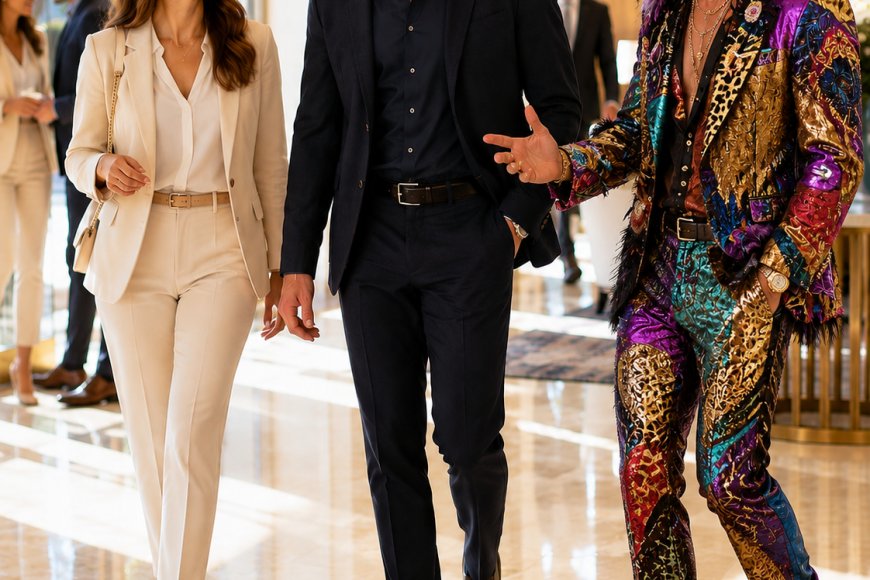
Luxury offers another illustration. On the surface, it is a world of image and exclusivity, a signal of aspiration. In practice, it is also about heritage and labor, about narrative and visibility. Decisions about sourcing and representation, along with storytelling, help determine whose histories are honored. These decisions affect whose craftsmanship is valued and whose voices remain unseen.
Business diplomacy reveals the same pattern. Cross-border deals, investment strategies, and public-private partnerships are never purely technical. They interact with local power structures and political sensitivities, and they move along existing social fault lines. Leaders who understand this can build lasting bridges; leaders who do not may deepen tensions without ever intending to.
FROM COMPLIANCE TO COEXISTENCE
Many institutions already speak the language of responsibility. They produce compliance frameworks and ESG reports and make public commitments to ethics. These tools matter, but they are often designed to reduce liability rather than to build wisdom.
A coexistence mindset asks more demanding questions. Does this project strengthen trust or extract value from a fragile context? Does this partnership widen opportunity or subtly reinforce old exclusions? Does this organization understand how its presence changes the social fabric around it?
These are not abstract moral questions, but strategic ones. Leaders who understand the human terrain around their decisions are better able to anticipate backlash. They can build resilient alliances and operate with legitimacy. In volatile environments, that capacity becomes a source of advantage as well as of ethics.
WHAT EDUCATION SHOULD DO NEXT
If education is meant to prepare people for the world they are entering, then peace literacy should be treated as leadership literacy. That means bringing the study of coexistence into business, management, sports, and international programs, rather than isolating it in specialized corners.
Students should learn how narratives fuel or defuse conflict. They should understand how institutions gain or lose trust. And they should recognize how economic choices can stabilize communities or strain them further. They should examine cases where leadership helped prevent escalation, not only those that celebrate rapid growth. Ultimately, they should graduate with tools to analyze human complexity, not just operational complexity.
The leaders who will matter most in the coming decade will be defined by their ability to keep different kinds of people in the same room, working toward something shared. In a fragile century, that may prove to be the most valuable form of intelligence of all.
Manuel Freire-Garabal is a special advisor-charter member of Gioya Higher Education Institution.