































The new life of shipping containers – how businesses across the UK are repurposing containers


By THS Containers on Small Business UK - Advice and Ideas for UK Small Businesses and SMEs
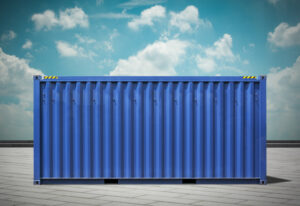
- Shipping containers have quietly shifted from ports and logistics yards into the everyday fabric of British business.
- Approximately 24 per cent of self-storage users now say they run a business from their unit, demonstrating how containers have moved beyond household decluttering into the operational backbone of thousands of SMEs.
- Overspill warehousing for seasonal peaks; on-site secure stores for tools, equipment and stock; and pop-up and project-based workspaces are just three business uses for shipping containers.
Over the past decade, shipping containers have quietly shifted from ports and logistics yards into the everyday fabric of British business.
What began as a practical way to store overflow stock has evolved into a broader movement in flexible, low-cost, repurposed space, from e-commerce warehouses to pop-up workshops on industrial estates and temporary project hubs for fast-growing firms.
As pressures on industrial land increase and SMEs seek more adaptable ways to scale, containers have become a strategic asset rather than a stop-gap solution.
The repurposed container trend
Britain’s appetite for container storage is growing rapidly. Recent data suggests that self-storage space across the UK expanded by 7.2 per cent in 2024 alone. While traditional indoor storage facilities still play a significant role, container-based storage has grown into a major share of the market.
An industry report highlights that the UK now has around 2,915 self-storage sites, with 1,135 of them predominantly container-based, accounting for more than a third of the entire sector.
Approximately 24 per cent of self-storage users now say they run a business from their unit, demonstrating how containers have moved beyond household decluttering into the operational backbone of thousands of SMEs.
How SMEs across the UK are using containers
Across the UK, small and mid-sized firms are adopting repurposed containers in several practical and commercially driven ways. Three uses have become particularly prominent:
1. Overspill warehousing for seasonal peaks
Retailers, online brands and wholesalers regularly experience sharp fluctuations in stock requirements. Black Friday, Christmas, spring refresh periods, home-and-garden season and back-to-school trading all drive unpredictable spikes in inventory.
Rather than tying up capital in long warehouse leases, many businesses now use containers as flexible overspill space. Containers provide secure, on-demand capacity that can be brought in or removed as needed. This approach helps businesses maintain stock availability during peak periods without overstretching cashflow or committing to long-term property contracts.
2. On-site secure stores for tools, equipment and stock
Manufacturers, engineering firms, trades and service-based companies often operate on tight footprints where internal space is already stretched. Containers offer a practical solution: they can be placed directly on a company’s premises to serve as secure tool rooms, spare-parts stores, PPE depots or general stock overflow.
Many firms prefer this model because staff can access shared equipment quickly and safely without relying on off-site storage. By bringing their secure storage closer to the point of work, businesses improve efficiency, reduce downtime and maintain better oversight of valuable equipment.
3. Pop-up and project-based workspaces
For businesses operating on multiple sites or shifting project locations, flexibility is essential. Containers are increasingly being used as temporary offices, mobile workshops, training rooms and rapid-deployment workspaces. They can be delivered, installed and made operational in a matter of days, and relocated again when the project moves on.
This level of portability is particularly attractive to the UK’s mid-sized firms, a group forecast to contribute £745 billion to UK GVA and support 9.9 million jobs by 2028. For these businesses, being able to scale space up or down quickly is not only convenient but provides a genuine competitive advantage.
Why containers make financial and operational sense
Repurposed shipping containers offer more than a low-cost alternative to expanding a building. For many SMEs, they deliver tangible value across cost management, operational control and long-term scalability.
Fast deployment for fast-growing firms
In a business landscape where demand can shift overnight, speed matters. Containers can usually be delivered, positioned and ready for use within days rather than the weeks or months associated with construction or hiring conventional warehouse units. For companies experiencing sudden growth or unexpected inventory surges, this responsiveness is invaluable.
Predictable operating costs
Businesses can either purchase containers outright as long-term assets or hire them on a monthly basis as an operating expense. Both options improve budgeting clarity. Hiring avoids large upfront investments, while purchasing offers stable, long-term value with no ongoing rental commitments.
Relocatable infrastructure
Unlike traditional buildings or fixed storage spaces, containers move with the business. Whether relocating to a larger headquarters, opening new operational hubs across the country or shifting equipment between project sites, containers retain their usability and value. This makes them far more adaptable than most fixed infrastructure options.
Practicalities: what businesses need to know before using containers
While containers offer clear operational advantages, firms should consider several key practical points before deployment.
Security measures
Modern containers are designed with security in mind. Features such as welded lock boxes, anti-tamper padlocks, solid-steel doors, internal locking systems and optional CCTV integration make them highly secure.
For many SMEs, enhanced security is one of the main reasons they adopt containers in the first place, particularly when storing tools, machinery or high-value stock.
Condition and suitability
Choosing the right quality of container is essential. Wind and watertight units provide reliable protection for most goods, while refurbished or new-build containers are ideal for more sensitive stock or for use as office or welfare facilities. Condition directly impacts durability, security and insulation.
Planning and compliance
In many cases, containers used for storage on existing commercial premises are considered temporary structures and may not require full planning permission. However, exceptions apply, especially where multiple units are installed, containers become semi-permanent or they are used as offices, workshops or welfare rooms.
Businesses should always consult local planning authorities early in the decision-making process.
A strategic asset for modern UK businesses
Repurposed shipping containers are no longer a niche or makeshift option. They have become a strategic tool for UK businesses looking to secure flexible, secure and cost-effective space without being locked into long-term property commitments.
As space constraints continue across the UK’s industrial and commercial sites, and as SMEs look for ways to remain agile, containers are set to play an even greater role in the future of business infrastructure.
From storage and warehousing to portable workspaces and on-site operational hubs, containers offer a level of adaptability that traditional buildings simply cannot match. Their rise reflects a wider trend: modern businesses need infrastructure that grows, moves and changes with them, and containers are increasingly the solution enabling just that.
This article was written by THS Containers.
Case study: why I’ve opted for a shipping container
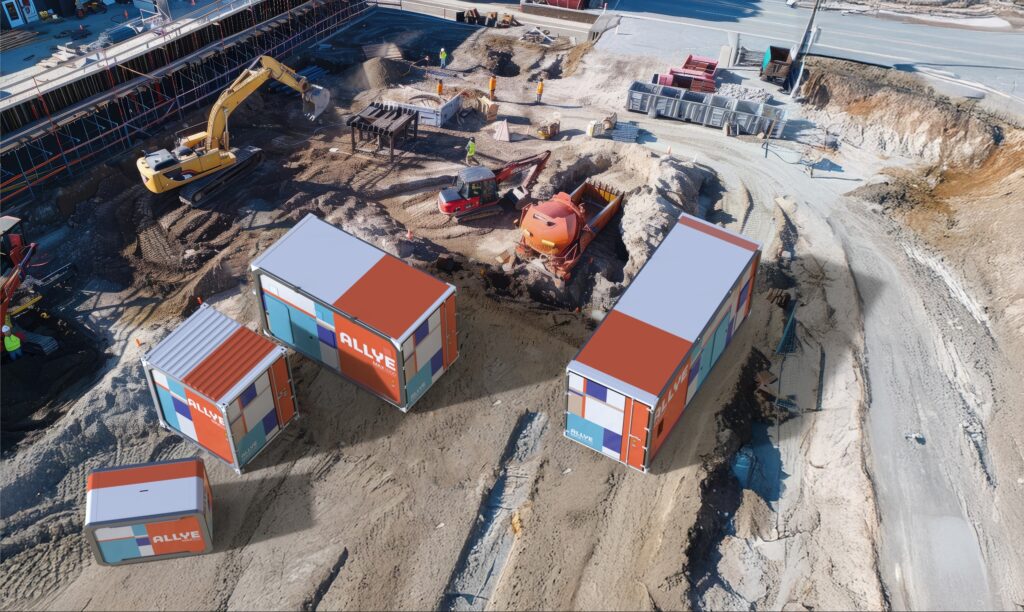
Allye founder and CEO, Jonathan Carrier, talks about why he went for shipping containers for his AI-powered energy storage business.
Why did you decide to buy/hire a shipping container?
It was the cheapest, most suitable option to build our state-of-the-art MAX500 high powered energy storage units into. We use EV battery packs from prematurely written off EVs to provide high powered charging on construction sites, replacing diesel generators.
How much did it cost?
Our original 8ft container was about £800, as it was used. We are now building into new units.
Where did you find it?
We found our original prototype unit on Facebook Marketplace.
How easy is it to maintain?
It’s easy. We’ve made lots of modifications so that the racks of EV batteries and bespoke battery management systems can be easily fitted inside.
How easy is it to secure?
Very easy. However, safety is more important given we are dealing with high-voltage testing.
What are the pros and cons of using a shipping container for your business?
Pros – robust, fit for purpose, easily modifiable
Cons – not the prettiest to look at, not particularly flexible
What tips do you have for entrepreneurs who want to use a shipping container for their business?
Don’t hesitate. They are versatile and have 101 applications, including supporting the transition to electric construction sites. Just make sure you have a plan to recycle it with it once it reaches the end of its useful life.
Read more
The essential guide to setting up a pop-up shop in the UK – In this guide we explain the key things small businesses need to consider when setting up a pop-up shop in the UK
How to find the right business premises as a freelancer – Here, Olly Olsen looks at the options to consider when choosing the accommodation for your freelance business
Moving business premises: Five important things to think about – Here, we look at five of the most important things to consider when moving business premises, from security and accessibility, to managing relocation budget
The post The new life of shipping containers – how businesses across the UK are repurposing containers appeared first on Small Business UK.