






























The 3 key financial lessons of ‘It’s a Wonderful Life’

Like many of you, I grew up watching It’s a Wonderful Life on television every holiday season. Frank Capra’s beloved film was a comforting part of our holiday tradition, often playing in the background while my family wrapped presents, cooked, or otherwise made merry.
Although the film was made in 1946, its lessons about money, power, and community seem remarkably relevant (and more poignant than ever) in 2025. Despite the passage of nearly 80 years, Americans are still facing many of the same issues that the citizens of Bedford Falls dealt with.
Rewatching George Bailey regain his hope can offer us a modern blueprint for handling these timeless economic woes.
Invest in each other
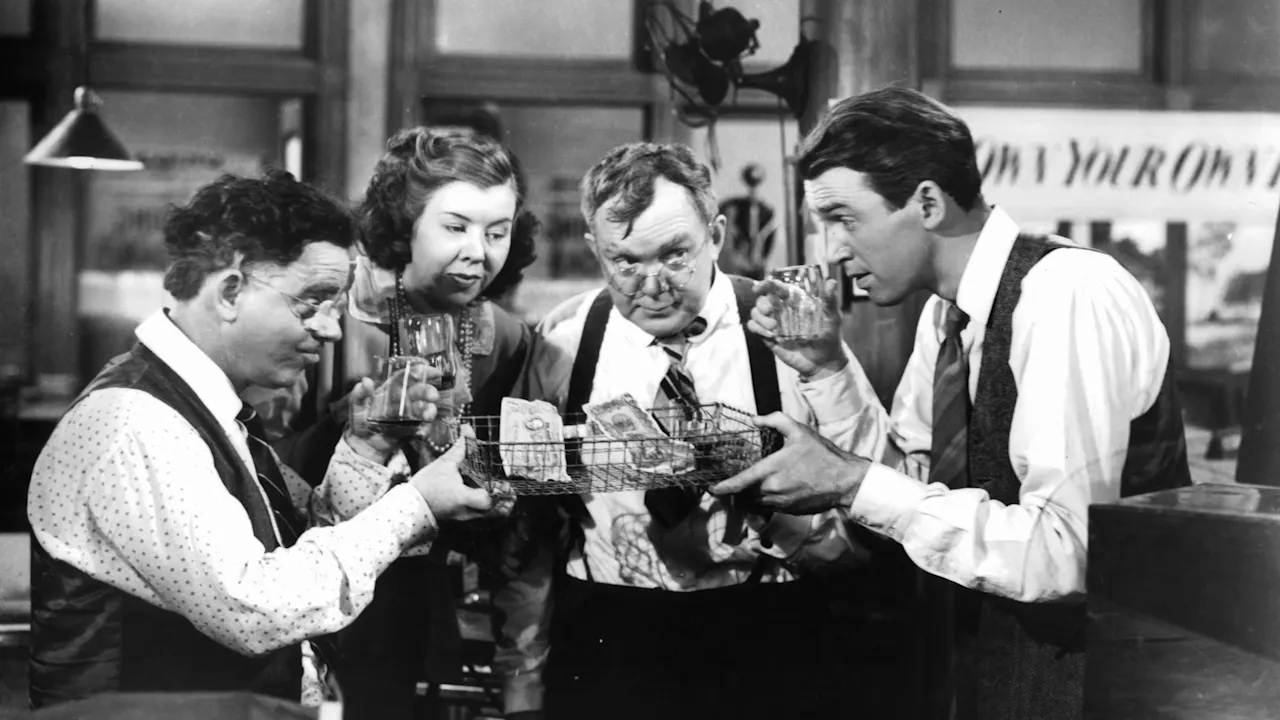
As a small child, I was fascinated by the bank run scene that occurs just as George (Jimmy Stewart) and his wife Mary (Donna Reed) are leaving town for their honeymoon. The citizens of Bedford Falls get spooked that George’s Building & Loan may fail, and so they show up to withdraw their money.
This scene was how I learned what a bank run is—and also how banks handle our money. Because George offers a masterclass description of how his business works. He tells the frightened customers the following:
You’re thinking of this place all wrong, as if I had the money back in a safe. The money’s not here. Well, your money’s in Joe’s house—that’s right next to yours—and in the Kennedy house and Mrs. Maitland’s house and 100 others. You’re lending them the money to build, and then they’re going to pay it back to you as best they can. Now, what are you going to do, foreclose on them?
This scene helped me understand that money deposited in a bank doesn’t (all) stay there. The bank lends it out so the money can grow.
But there’s more to this scene than just how banking works. Because George Bailey doesn’t run a bank—he runs a Building & Loan. Building & loan associations were cooperative mutual aid organizations that gave members borrowing privileges and dividend rights. These associations made home ownership accessible when mortgages were more difficult to get. Because building & loan associations were cooperative, they had to rely on their members’ trust and investment in each other to stay afloat.
That’s why George ends this scene with this plea to his customers: Now, we can get through this thing all right. We’ve got to stick together, though. We’ve got to have faith in each other.
How to apply this lesson in 2025
Building & loan associations largely went defunct not long after It’s a Wonderful Life came out, while savings & loan organizations, which work in a similar way, have been thin on the ground since the S&L crisis of the 1980s. This makes it a little more difficult to offer economic solidarity to our friends and neighbors the way the people of Bedford Falls can do through Bailey Brothers’ Building & Loan.
But there are many other ways to invest in each other and in our communities, George Bailey-style. Consider the following:
- Shop locally
- Consider opening an account with a local bank or credit union
- Attend concerts, fairs, games, etc.
- Sponsor local youth sports teams
- Volunteer
- Visit your library (maybe you’ll see alternate-universe Mary!)
- Offer to help your neighbors
- Set up a little free library in your yard
- Join your neighborhood Buy Nothing group
Know your worth
At George’s lowest point, his Uncle Billy has misplaced the Building & Loan’s $8,000 cash bank deposit (approximately $133,000 in 2025 dollars). The loss of this money will destroy the business and could lead to George’s arrest.
In desperation, George appeals to the film’s villain, Henry Potter, for a loan, using his life insurance for collateral. Mr. Potter scoffs at George’s request and tells him this:
Look at you. A miserable little clerk crawling in here on your hands and knees and begging for help. No securities, no stocks, no bonds, nothin’ but a miserable little $500 equity in a life insurance policy. You’re worth more dead than alive!
This cruel comment prompts George to consider suicide. He stands on a bridge, thinking that his family would be better off if he jumped, because at least he would be worth more money.
It takes the intervention of Angel, Second Class, Clarence Odbody to convince George that there is far more to his life than money. While It’s a Wonderful Life makes it clear that George does know his worth is greater than money under normal circumstances, he can’t quite recall that when he is so stressed, overwhelmed, and unhappy after his desperate interview with Mr. Potter.
How to apply this lesson in 2025
Considering the number of changes to benefits such as SNAP, Social Security disability insurance, and federal student loans, many modern viewers can probably relate to George’s feelings in Mr. Potter’s office. We, too, may feel as though we need to show that we are worthy by providing a balance sheet of all our securities, stocks, and bonds. Otherwise, we are being told we’re not worth feeding, supporting, or educating.
Unfortunately, the collective action necessary to ensure these benefits remain accessible is slow work. But knowing that you are worthwhile can be much faster. You don’t have to wait around for your personal Clarence to tell you so.
Remember that the money that Mr. Potter and his ilk place so much emphasis on doesn’t really exist. But your worth does. And just like George makes an enormous difference in his world, you make an enormous difference in yours. Whereas money is just an idea we all share.
Have patience
Although it’s a beautifully written, perfectly cast film, It’s a Wonderful Life flopped at the box office in 1946, before slipping into obscurity. Then, in a clerical error worthy of Uncle Billy, someone neglected to renew its copyright protection in 1974, which meant the film lapsed into public domain.
No one expected what happened next.
Television stations began showing Capra’s film during the Christmas season throughout the 1970s and 1980s. It was a free programming option when TV stations couldn’t afford to put on expensive holiday shows. And the once-obscure story of one banker’s life in a small town became the most beloved yuletide movie tradition of all time.
How to apply this lesson in 2025
I’m a sucker for art that takes a long time to find its audience. Because sometimes works of genius simply aren’t appreciated until long after they’re released. Frank Capra created a masterpiece, even though it wasn’t immediately recognized as such. He did everything in his power to create a fantastic movie—and what happened next was out of his hands.
This is something I personally need to remind myself of. The work I do today may not bear fruit tomorrow or next week or 10 years from now. But that doesn’t make my actions meaningless nor does it mean my work will never result in positive change. It just means I don’t know what will happen, I should exercise some patience, and I should have faith in the process.
Do your best work today, whatever that work may be, and have the patience to accept that it will make its mark when the time is right. It’s what George would do.
Helping angels get their wings
If you’re a sobbing mess by the time George finds Zuzu’s petals in his pocket, you’re not alone. And that’s the entire point. It’s a Wonderful Life reminds us that we are not alone.
We are stronger together, but we must invest in each other to ensure that we keep that power. We are all worthy, but have to reject any thinking that reduces our worth to our bank balance (or any other number). And what we do makes a difference, but we have to have patience that the change will come, but not necessarily when or how we expect.