
‘It feels like a video game, but in real life’: Gen Z’s love of analog ‘grandma’ hobbies jump from Pokemon to bird-watching, scrolling to needlepoint
 Tomas Kauer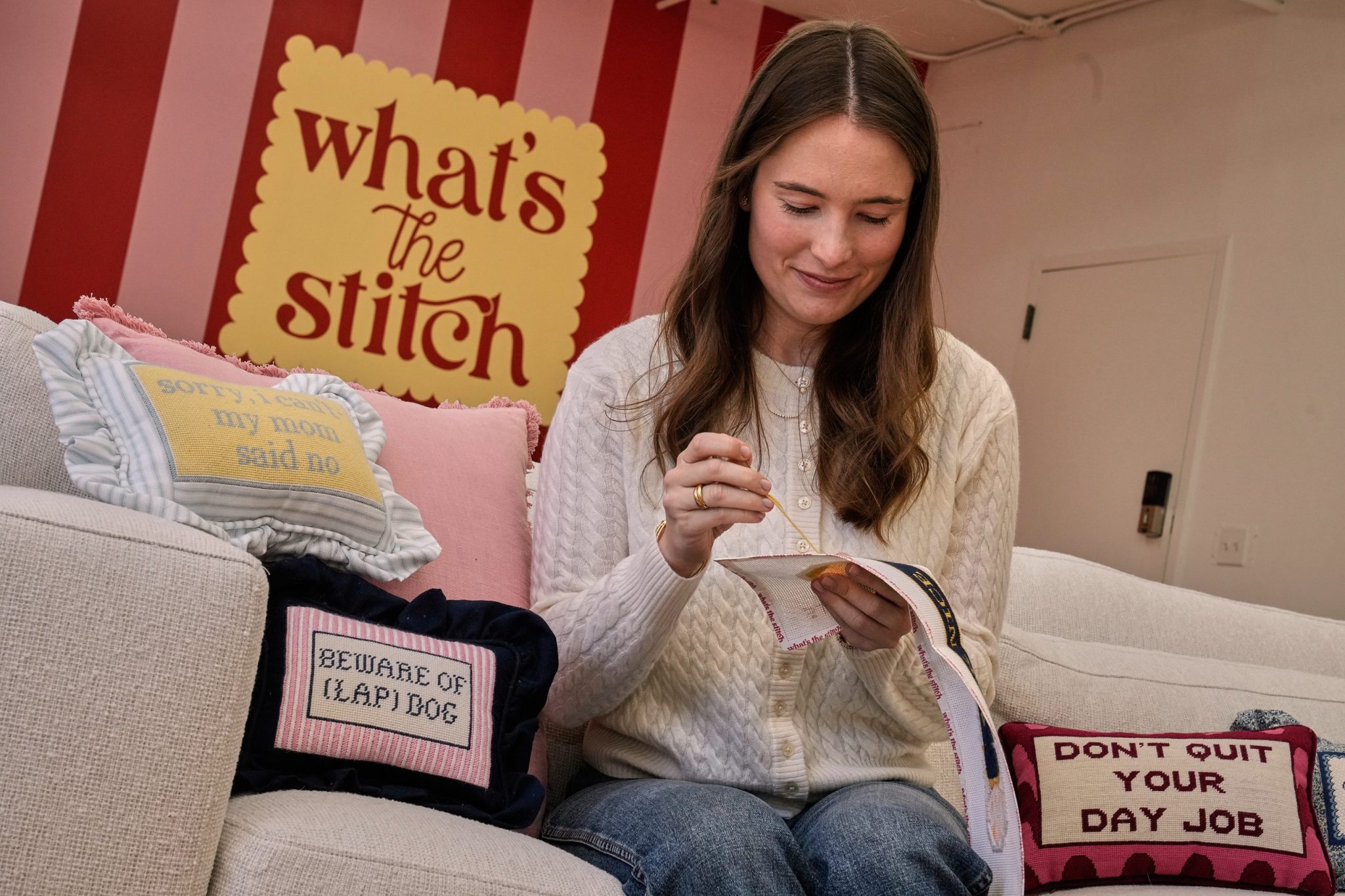
By age 23, Emma MacTaggart was already noticing how rare her free time was — and how it was seldom screen-free.
She was working long hours in investment banking and once she was finally able to log off after work, she would turn to her phone. Along with her roommates, she decided to hunt for a hobby that would replace that habit. They became “hooked” on needlepoint, she said, a practice she had briefly learned from relatives as a child, but one that she hadn’t picked up in years. And she hasn’t turned back since.
“It was a really therapeutic way to kind of distract yourself from either work or stress, but also just do something with your hands instead of doomscrolling,” she said. “We became completely obsessed.”
MacTaggart is part of a throng of young people who are turning to analog hobbies and activities as a means of escaping technology and reconnecting with childlike creativity and exploration. Somewhat ironically, this analog movement has been galvanized by its trendiness on social media.
Some of these hobbies — knitting, gardening and, of course, needlepoint — have been ascribed the term “grandma hobbies” online, referring to the older demographic that’s often been associated with them. But many other offline, tactile hobbies, like pottery, origami and even blacksmithing, have gained traction online with Gen-Z and millennials recently.
A younger crowd embraced such hobbies in 2020 when the pandemic left many with more free time. But “grandma hobbies” have persisted beyond a pandemic fad and some seem to be picking up steam in their popularity online.
While she said she may not consider herself a crafty person, MacTaggart, now 26, founded the needlepoint business What’s the Stitch and runs popular social media profiles of the same name. After seeing growing interest in her content, she began to build up her business and now sells needlepoint canvases, accessories and digital designs. The flair MacTaggart puts into her creations is a touch of cheeky humor and, occasionally, profanity.
“It is such a historically buttoned up craft, so it’s fun to put a young spin on it,” she said.
‘Like a video game, but in real life’
Jaime Kurtz, a professor of psychology at James Madison University whose research focuses on happiness, said many of these activities can also help to reduce anxiety and stress, and provide a sense of accomplishment since they require focus and can be challenging.
“Hobbies are really important, and a lot of us have lost them, or we just don’t prioritize them enough, or we think we’re too busy,” Kurtz said. “But just finding little bits of time to carve out to do these kinds of things is a really wise use of time.”
Clara Sherman, who co-founded the company So Bam Fun to “reinvigorate” the game of mahjong with a younger generation, said when she plays the game with friends, she’s able to reach a “zen state.”
“You kind of feel like you’re existing in this little bubble of just myself, my friends and this game we’re all enjoying together,” she said. “It just really does allow you to shut off the rest of the world.”
Some young hobbyists are not looking to escape their phones through their activity of choice, but are interested in how modern technology can enhance their experience.
Isaiah Scott, a birdwatcher, artist and content creator, said the app eBird is a key part of his experience. It allows birders to log and track their observations while also contributing to scientific research and conservation.
It’s easy to say his generation is “glued to their phones,” Scott said, but that access to technology also “opens so many doors to get involved in hobbies that may have been forgotten about or (are) just difficult to get into otherwise.”
Scott, who is based in Savannah, Georgia, said bird watching is akin to the Pokémon games he loved growing up: “It feels like a video game, but in real life.” Traveling to different regions is like unlocking a new map, he said, and racking up a high number of species seen is like achieving a high score. Scott has seen about 800 different species himself.
Beyond providing him with an enriching hobby, birdwatching set Scott, 22, on a mission to “protect and to conserve our natural world.” He founded the nonprofit Rookery and Roots Conservancy and recently purchased a 16-acre parcel of land in Rincon, Georgia, to safeguard wildlife habitats. The purchase was made possible in part because of the platform he’s built online.
Old-school art finds new life, young people find community
Exposure to global audiences online has helped other analog hobbyists build and operate thriving businesses thanks to their social media popularity. Anna Weare, for one, is a full-time blacksmith and farrier, but she’s also known online as AnvilAnna.
She had already been working successfully with a slew of clients when she started posting videos on TikTok and other social platforms, where she’s got international reach and enthusiasm. Weare thinks some of the shine on blacksmithing and other centuries-old practices could be due to fatigue over a hyper-digitalized world and poorly made products. The waitlist to snag Weare’s coveted one-piece spurs, which are recognized for their durability and rarity, is about a year long.
“People, now more than ever, are realizing that things made in factories or mass produced, they wear out so quickly,” Weare, 27, said. Whether they’re buying products she made or inspired by her content to pick up the hammer themselves, Weare said “people want longevity, and this craft has been around for so long for a reason.”
Many crafters and hobbyists also feel a strong sense of community among their peers.
Kristie Landing created Verse & Sip, a platform and collective for poets and poetry lovers, and she posts videos online of letter writing, letter locking, wax seals and origami, among other paper crafts. Landing, 34, said she constantly gets questions from an “active community” of viewers about the type of paper she uses or where she bought her tools, but they’re also interested in connecting with each other.
She recently started a pen pal matching service after receiving an abundance of comments from followers who expressed that they would like to have someone to swap letters with — particularly someone who would appreciate the care they put into their physical communications, or just admire their penmanship.
Landing also created the Verse & Sip Mail Club, where she sends out an original poem and an accompanying tea monthly to a couple of hundred people across the globe. She hopes her online content will provide viewers with a similar sense of joy and calm as reading a hard copy of a poem over a cup of tea would.
“I am trying to create slower moments on platforms that are based on really quick, short attention span kind of videos,” she said. “These kind of stop you in the scroll.”
Many hobbyists told the AP they don’t see their activity of choice as a fad or a temporary trend, but rather as part of a more intentional embrace of the analog world.
As far as the moniker of “grandma hobbies” goes, MacTaggart, for one, welcomes the label.
“I joke with my friends that I have been a grandma my whole life,” she said, “so it’s only fitting that this is now my career.”
This story was originally featured on Fortune.com