
Elderly people are buying Teslas for the ‘full self-driving.’ This is a problem
 Business Economic Syndicated News
After retiring a few years ago, my parents moved into a wooded retirement community in North Carolina. One of their neighbors is a former physician, now in his 90s, who sensed that his reflexes had deteriorated. He no longer trusted himself behind the wheel, but he valued the independence that a car can provide.
His solution: Get a Tesla. He now relies on Full Self-Driving (Supervised), Tesla’s driver assistance system, to get around.
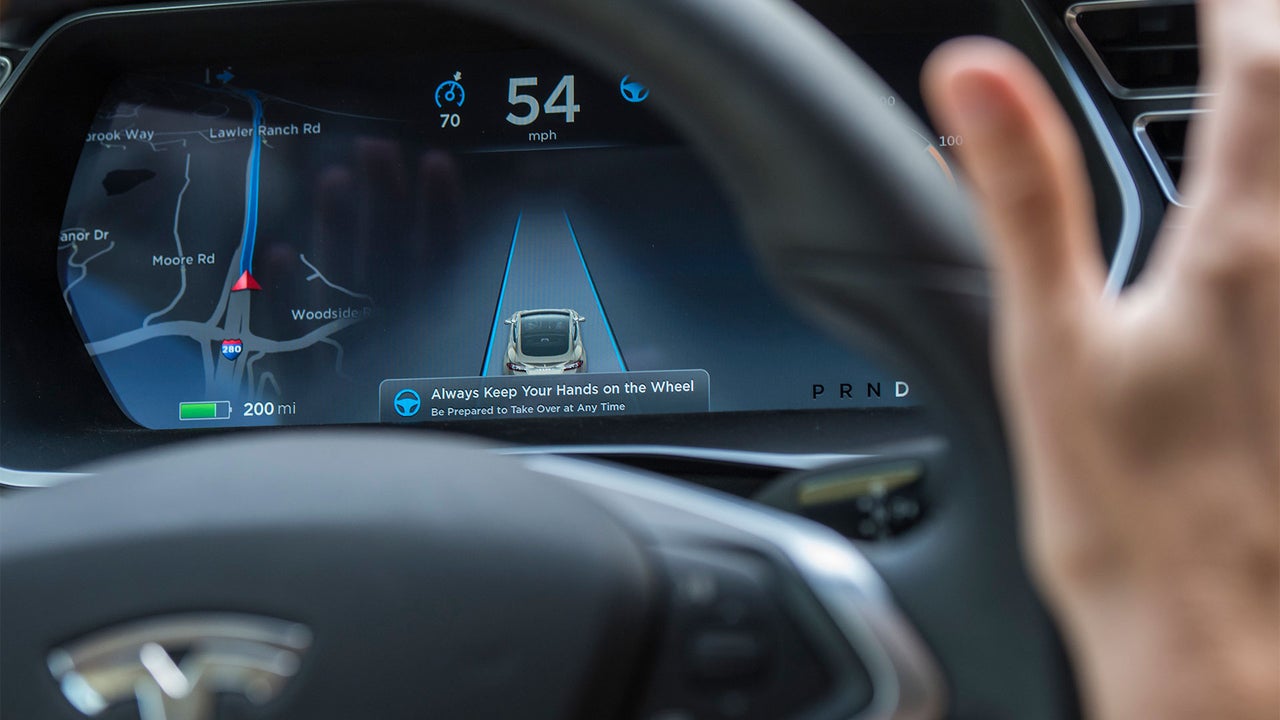
That decision is a dubious one at best. Tesla’s driver assistance system is just that: technology that can make the act of driving less onerous, but cannot replace it. A person operating Full Self-Driving (Supervised)—let’s call it FSD—must be able to intervene immediately if the system makes a mistake, which does happen. If not, their use of FSD endangers themselves along with everyone else on the road.
My parents’ neighbor is far from alone. A quick scan of Facebook or TikTok reveals numerous adults with declining health who depend on FSD to keep driving. And Tesla itself has amplified these narratives—despite officially claiming that drivers, not the company, are responsible for the vehicle while FSD is in operation. A post on X earlier this year featured a 71-year-old man who bought a Cybertruck “because my eyes are getting bad.” Tesla’s North America X account shared the clip with a one-word comment: “Freedom.”
Questions of whether and how older Americans can safely use driver assistance systems like FSD are devilishly tricky. But as the ranks of retired baby boomers expand, finding answers is increasingly urgent.
“The extent to which people are willing to adopt these vehicles, and ways that they’re using them are completely wide open,” said Johnathon Ehsani, an associate professor at the Johns Hopkins Bloomberg School of Public Health. “We know nothing.”
A fraught decision
Although people age differently, virtually everyone who grows old will eventually struggle to drive. Even if they avoid cognitive decline, Ehsani said, “older adults have reduced physical abilities like their reaction time, neck rotation, and ability to check blind spots.”
Many seniors are excellent drivers: Overall, people in their 60s are less likely to be in a deadly collision than the general public, and those in their 70s are about on par with teenagers. But drivers in their 80s are significantly more prone to being involved in a fatal crash. Part of that risk is due to the fragility of their bodies, but research suggests that drivers over 85 are also more likely to be in collisions.
Ehsani said that seniors typically recognize when their driving ability declines, and they are eager to stay safe. Some can do so by avoiding using a car at night or during inclement weather. “A lot of driving as people get older is discretionary,” he said. “They don’t have to get up and be somewhere at 9 a.m. or come home at 5 p.m.”
But relinquishing a car is a move many reject, even if their health is severely compromised. Case in point: Surveys indicate that three in 10 Americans with dementia continue to drive.
Such resistance is understandable, given the general difficulty of doing errands or visiting friends without using an automobile. “In the United States, we take great pride in being able to be independent in our actions,” said Jennifer Crawley, deputy secretary at the Maryland Department of Aging. “The inability to continue to drive can impact people’s view of themselves and the ways they connect with their broader community.”
Ehsani agreed, noting that losing the ability to drive can be mentally devastating. “Families often tell me stories of the day they took mom’s or dad’s keys, and how that was the beginning of their decline,” he said. To his point, researchers at Columbia University found that “older adults experienced faster declines in cognitive function and physical health” after they ceased driving.
Given the stakes, the decision to stop using a car is often fraught. “There’s a grieving process that can occur when people give up the keys,” Crawley said. According to the AARP, its most-clicked site about driver safety is a free webinar, entitled “We Need to Talk,” offering suggestions to family members unsure how to broach the subject.
The choice facing older Americans can be agonizing: Do they continue to drive, putting themselves and others road users at risk, or do they accept the loneliness and dependence that can follow the loss of a car?
Presented with that dilemma, a third option involving a vehicle that safely drives itself would be cause for celebration. But no such option exists. The only autonomous trips currently available to consumers are from robotaxi companies like Waymo and Zoox. No senior—nor anyone else—can acquire their own self-driving car.
But they can buy a Tesla.
A pattern of boosterism
Full Self-Driving (Supervised) is Tesla’s version of what the Society of Automotive Engineers (SAE) calls a Level 2 Advanced Driver Assistance System, akin to Ford’s BlueCruise or General Motors’ Super Cruise. Such systems can handle many driving tasks, including changing lanes, accelerating, braking, and turning.
Convenient though they can be, Level 2 systems rely on active human oversight. In its public guidance, SAE warns that “you are driving whenever these driver support features are engaged—even if your feet are off the pedals and you are not steering.”
Tesla owners can purchase a FSD subscription for $99 per month. Consistent with SAE’s guidance, Tesla’s manual gives owners bold-faced instructions: “You must remain attentive and be ready to take over at all times.”
But in contrast to the manual’s clear messaging, Tesla’s marketing often exaggerates FSD’s capabilities. In May, the company posted a video on social media featuring a FSD-enabled car whose driver is making an espresso—an activity that would seemingly be impossible while focusing on the road.
When asked if most Tesla owners read the manual, Birsen Donmez, an engineering professor at the University of Toronto who specializes in human factors, gave a short chuckle. “No, absolutely not,” she replied. “They don’t know the limitations of these systems.” (Tesla did not respond to a request for comment.)
In fact, the very name Full Self-Driving could confuse consumers. In February, California regulators forced Tesla to append the parenthetical (Supervised) to the feature’s name, but Donmez does not think that move is sufficient. “It still says ‘full self-driving’,” she shrugged. “That could be misleading.”
Tesla has spread misinformation in other ways, too. In September, CEO Elon Musk shared a viral in-car video about Larry, a 98-year-old who waxes euphoric about FSD. After his Tesla clears an intersection, Larry exclaims “Look, I didn’t have to look, you know! I don’t want to look, it’s just doing it.” But according to Tesla’s own manual, Larry does indeed have to look. As the automotive outlet Electrek noted at the time, “this is exactly what the terms forbid.”
Musk’s resharing of Larry’s video is part of a pattern of boosterism. In July, Tesla posted a video on X about Lois, a 93-year-old woman who “noticed how tired she was on her daily drives,” before acquiring a Tesla that allows her to travel by car comfortably. Musk reshared that post, too, adding: “Tesla self-driving enables safer mobility for senior citizens.” Ehsani, the Johns Hopkins public health professor, was skeptical. If anything, the video led him to question whether Lois can safely use FSD. “Her feeling tired is a bit of a red flag,” he said. “She may not be awake while this [Tesla] is in operation.”
And Tesla’s supercharged fan base has amplified the company’s messaging for seniors. On the TeslaModelY subreddit, plaudits poured in for a 90-year-old man who obtained a Model Y because “his kids thought it would be a good fit for him.” One poster called FSD “a digital chauffeur,” a sobriquet that implies self-driving capabilities that the system cannot deliver.
A dearth of data
The relative safety of Level 2 systems like FSD is highly contested. Tesla maintains that cars operating FSD are less crash prone, but Donmez noted that “it’s based on their analysis only” and lacks independent validation. She remains “very suspicious” of Tesla’s FSD claims, because most people struggle to remain vigilant without doing anything for long periods of time.
Joseph Young, a spokesperson at the Insurance Institute for Highway Safety, said that specific features like automatic emergency braking can clearly reduce collisions, but it remains an open question whether combining many of them within a product like FSD provides additional upside. “Level 2 systems should be considered convenience features rather than safety systems,” he said.
For seniors specifically, little is known about the safety of FSD or other Level 2 systems. Several high-profile crashes have involved older Tesla drivers, including a recent one in California, in which a 91-year-old driver killed one and injured five people in a Trader Joe’s parking lot. (Whether the driver was using FSD is unclear.)
Credulous journalists have exacerbated public misunderstanding. A feature story in The Detroit News earlier this year declared that seniors are buying Teslas to “self-drive,” and claimed “FSD helps elderly drivers maintain a cocoon around their car as their confidence in reflexes and eyesight naturally deteriorate”—even though Tesla’s own manual makes clear that the company’s technology is reliant upon the driver, not the other way around. (The author of the Detroit News story did not respond to a request for comment.)
Acknowledging a dearth of data, Ehsani said it is theoretically possible that a Level 2 system like FSD could reduce overall crashes among seniors, if the system—even with compromised oversight—is safer than the counterfactual of their driving themselves. On the other hand, it is also possible that seniors’ use of FSD increases total crashes. If this is the case, it could be because seniors drive more miles, each of which carries a degree of danger, or because they are unable to intervene in an emergency. Worryingly, research suggests that older drivers need more time to react when a Level 2 system’s mishap requires them to respond.
Donmez, the University of Toronto engineering professor, proposed a simple rubric for seniors tempted by Tesla’s pitch. “If you can’t drive yourself,” she said, “you shouldn’t be driving with FSD.”
A safer path forward
A common-sense solution to help seniors—and everyone else—make better driving decisions would be to force Tesla and Musk to stop exaggerating FSD’s capabilities.
European officials recently required Tesla to change the name of the system to Full Assisted Driving, after China had already made a similar move. The United States is “the last [big car market] that doesn’t have a rule saying you can’t say that a system that isn’t self-driving is self-driving,” Ed Niedermeyer, the author of two books about Tesla, observed recently on the Autonocast podcast. “Why is it taking so long to say that up is up and down is down?”
Ascendant leaders in Washington may be thinking along similar lines. Following the midterm election “bluenami,” Senator Ed Markey, Democrat of Massachusetts, vowed “to hold Musk and Tesla accountable for the risk their systems pose to our families and communities.”
But reining in Tesla’s marketing would still leave millions of seniors struggling to maintain their quality of life as they become incapable of driving safely.
If and when genuine autonomous vehicles go on sale, they could be a godsend. Crawley, the Maryland official, is optimistic about their long-term potential—she called autonomy a “new frontier” in elder care—provided that being affluent and tech savvy is not a prerequisite for using them. She also noted that fully autonomous vehicles may need modifications to serve seniors, such as the capability of loading a walker or wheelchair. (Disability advocates have called on robotaxi companies to speed the introduction of wheelchair-accessible robotaxis, which are not widely deployed.)
Given the uncertainties about autonomy’s future, a more foolproof way to enhance senior mobility would be to enable more people to live in places where a car is unnecessary. As an example, the Atlanta exurb of Peachtree City features a separated golf cart network that enables residents to get practically anywhere without using an automobile. Peachtree City benefits from being master planned, but other cities like Long Beach, California, have envisioned roadway retrofits that enable people to travel by Low-Speed Vehicles that are slower and smaller than full-sized cars, and therefore pose less danger.
These are worthy endeavors, even if they will take years to bear fruit. In the meantime, seniors—and all Americans—deserve clear information about what driver assistance systems can and cannot do. There is no excuse for letting a company exploit a vulnerable population and endanger the public by dangling false hope.