






















AI advertising slop is on the rise. The cure? The STFU brand strategy

There’s a statistic that’s been making the rounds for the better part of a decade that says the average person is exposed to about 10,000 ads every day. This has always sounded a tad suspect, as it amounts to an ad every six seconds of our waking day (it has since been debunked).
But maybe the reason it’s persisted this long is because it really feels true.
Our feeds are saturated with ads. The airwaves, TV broadcasts, sports sidelines, team jerseys, and our streamers are full of them. Now artificial intelligence is threatening to make that 10,000 ads a day statistic a reality.
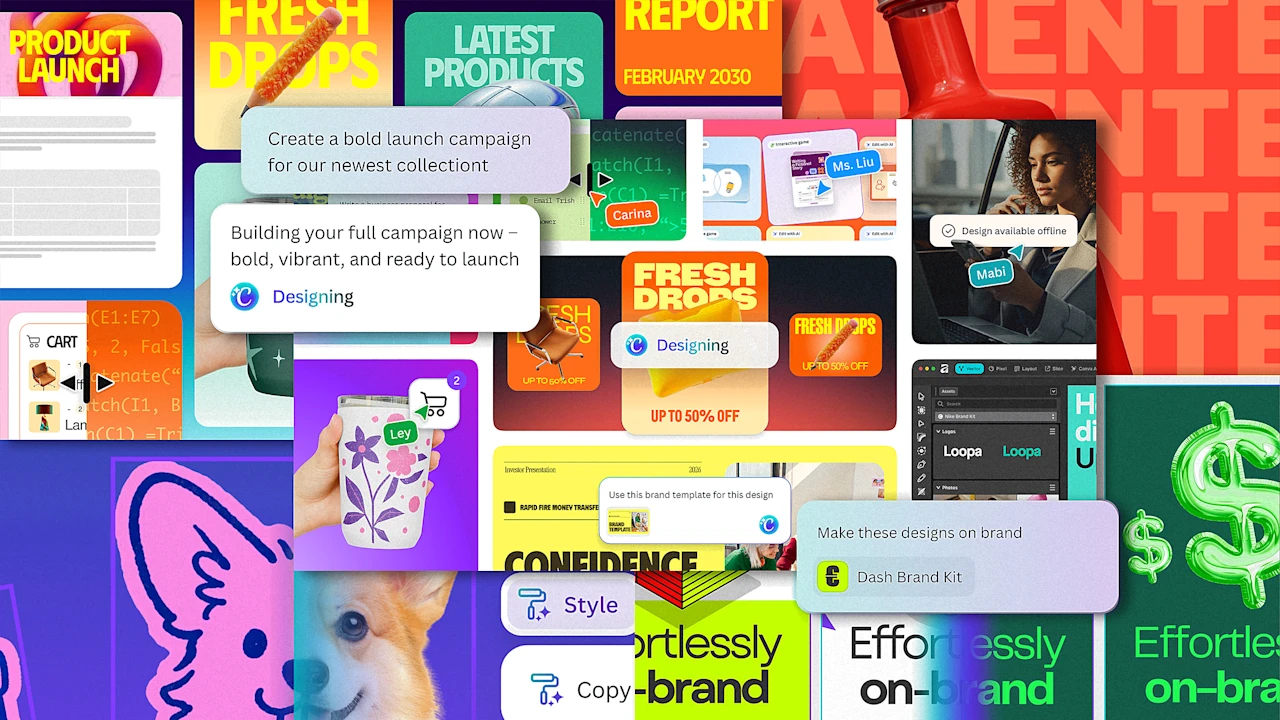
Agency Genre.ai has made AI-generated ads for IM8, Popeye’s, and Qatar Airlines, as well as the viral Kalshi spot that aired during the NBA Finals. When Sora’s latest version dropped back in October, agency founder PJ Ace posted on X, “Brands will need to make an ad every other day to stay relevant.”
Kill me.
Meanwhile, earlier this month, Philip Ho, the founder of the appropriately named AI video production company Absurd, told the TBPN podcast that his company is getting asked for as many as 1,500 videos a month from single clients.
Just set me on fire.
All due respect to Ace and Ho, but the version of commercial culture they’re selling sounds like an AI-generated fever dream in which we’re all forced to remove our own eyeballs with rusty shrimp forks. Even legislation is starting to agree.
Drowning culture in a sea of sameness isn’t good for our eyeballs, nor is it a good investment for brands. If you watch the ads Ace’s company has produced, and compare them to McDonald’s’ recent AI ad (which just got pulled off the air in Europe), or even Coke’s AI holiday ads, they all have that same . . . vibe. The people and scenes all appear to be using the same filter. It feels oddly homogenous. Now take that and increase the number of ads by tenfold. Pure unfiltered nightmare fuel.
If every brand is pumping out a new AI-generated ad every single day, let’s consider what actual differentiation looks like. In 2026, brands should be finding new ways to utilize scarcity, anticipation, and fandom communities to that end. You could call it the less is more approach, but I prefer the STFU Brand Strategy.
The STFU Brand Strategy isn’t about being quiet, it’s about being more strategic in both how and when you talk to your audience. It is the pursuit of work or experiences that are enthusiastically passed around, as opposed to having AI slop fire-hosed down people’s throats every waking moment.
Award-winning ad agency Johannes Leonardo was one of the best practitioners of the STFU brand strategy this past year through its work for brands like Adidas and Oscar Mayer. Cofounder and creative chairman Leo Premutico is a firm believer in the idea that differentiation will come in the form of interesting ideas that real people share with other real people.
“There’s no way that volume is the answer,” says Premutico. “This whole idea that the more AI is generating crap that it is then itself learning from, is just going to snowball to the point where, what are we even looking at? The last thing we need is more quantity. It needs to be something else.”
The types of ads and content initially being produced en masse by AI are the social media video equivalent of banner ads. Performance marketing churn baiting us to click to find out more or shop now. Reports for years have pegged banner ad click-through rates at less than 1%.
Now, AI-generated ads are reportedly performing much better than banner ads ever did. But this is not how brands are built. Or rather, it’s not how long-lasting brands are built. Brands with a very healthy upper funnel utilize these tools to keep the lower funnel wheels turning, but it is (or should be) purely supplemental or supportive of the primary brand work.
At the very moment we’re seeing industry capitulation to AI as a sacrifice to the gods of efficiency (read: cost savings as AI replace humans) we’re seeing this steady drumbeat of audience backlash to AI advertising. Think about that: The very thing people routinely say they hate (ads!) is something they don’t want despoiled. The brands and agencies that creatively heed that call will be the ones to forge the most meaningful connections with consumers.
Pump down the volume
First of all, this is not a revolutionary or particularly unique viewpoint. Let’s take one modern example. The entire streetwear and sneaker economy is built upon scarcity. Limited editions and surprise drops, combined with a very specific point of view, elite communication, and taste have built rabid fanbases. Brands like Supreme, Palace, and Corteiz are not churning out AI slop.
London-based Corteiz is arguably the hottest streetwear brand on the planet. Its founder communicates directly with its audience on social, and its Instagram page was initially private. Its pop-ups are often one-day-only, with the location announced just hours before the event. Its ethos is reportedly “real life only.” Last year in New York, the brand invited fans to exchange other brands of denim for a pair of Corteiz, limited to just 250 pairs. The result of this restraint? Rabid fandom.
The focus on specific moments, and using them as a flywheel of ad material—capitalizing on user-generated content around that moment, producing additional content from it—works to reinforce a brand’s cultural relevance. Take, for example, racing giant hot dog cars in front of 100,000 people.
Earlier this year, Premutico’s agency created the Wienie500 for Oscar Mayer, in which they raced five of the brand’s famed Wienermobiles against each other at the Daytona 500. It streamed live on the Fox Sports app, getting 150 million total views; media coverage and social media attracted nearly seven billion earned impressions. Oscar Mayer saw its biggest Memorial Day sales lift in years.
“I think the opportunity and the way to build a brand today is figuring out how each time you do something that captures people’s imagination, attention, and participation that it’s feeding into something bigger,” says Premutico. “It’s feeding into that brand equity so that it’s not a one-off online thing and then disappears.”
Anti-slop algorithm
Asking brands to STFU isn’t some Luddite plea. That ship has sailed. The good ship Sloppipop is here, and it’s never going away—just like all the programmatic ads that follow you around trying to sell you the shoes you already bought a goddamn week ago. Despite how much we hate those ads, the programmatic ad tech firms are still rolling in billions.
Rich doesn’t mean good. But it could mean better. Instead of using this technology to flood our feeds, brands should be using it to refine them.
Brand strategist and consultant James Kirkham wrote in his newsletter back in October about cracks in our obedience to the algorithm, that a second age of algorithmic culture may be upon us, defined “not by blind submission, but by conscious negotiation.” We’ll still use the machines, but we’ll start interrogating their taste a bit more because we want to know who’s feeding the feed. He said taste is becoming the new trust.
“If the first age of algorithms was about eery prediction, the next will surely be about permission,” writes Kirkham. “Those who build tools that help us understand rather than merely consume, and who restore agency, authorship, and flavor to our choices will own the decade ahead.”
This is consistent with what multiple studies and trends have been telling us: As AI threatens to turn up the volume on the number of ads we see online, more people are seeking ways to avoid the algorithm and have more unique experiences. Studies show that 81% of Gen Z wish it was easier to disconnect from devices, and 54% prefer no AI involvement in creative work. Meanwhile, 84% of ads reportedly go unnoticed or simply aren’t remembered. They are effectively invisible. And now TikTok is giving users some control over how much AI they see in their feeds.
I’ve talked to Yeti CEO Matt Reintjes about the dangers of overexposure, and how his brand’s growth strategy, while ambitious, has always favored depth over breadth. Obviously the outdoors gear brand advertises extensively, but its brand-building work—the stuff that gets people excited, like its films and involvement in sports—is very carefully and strategically built over time.
Back in 2023, he distilled it down to this: “Brands face multiple points in their journey where they can be deep and relevant, but at the expense of growth and expansion, or they can chase growth and they forget about the depth of connections that they had already built,” said Reintjes. “Over time, you erode brand value, you erode uniqueness, you erode support and passion for who you are. And so we’ve been really thoughtful about how we drive breadth, adding on more communities, bringing in more consumers domestically, growing the brand internationally, all while also keeping those deep and connected roots all the way back to our earliest communities.”
Participation value
When any brand can fake content, testimonials, or “viral” moments at an infinite scale, the only real measure of true value may become actual human participation.
Nike is doing it with its soccer work lately. Witness its Manor Palace community space collab with Palace in London, or the latest stop of its Toma El Juego street soccer tournament event series at Art Basel in Miami last week.
But real human participation can also extend to content. Just look at State Farm’s Gamerhood series. Part game show, part reality show, featuring gaming creators like Kai Cenat, and its latest season has more than 27 million views.
One of the best examples of this past year was how Adidas effectively became the sixth member of Oasis for the band’s massive reunion tour last summer. The omnipresent merch, retail events, and even an ad—created by Johannes Leonardo—that ran at the start of every show.
Premutico says that creative marketers can no longer be asking themselves, “What content do I make?” but “What community do I build?” with the challenge of creating ideas worthy of consumer participation.
“We need to create an outcome for a brand that is bigger and better than the outcome that’s going to be guaranteed by the algorithm,” says Premutico. “That’s our central challenge as a creative industry.”