
























24 million fewer vehicles: One year of congestion pricing in New York City

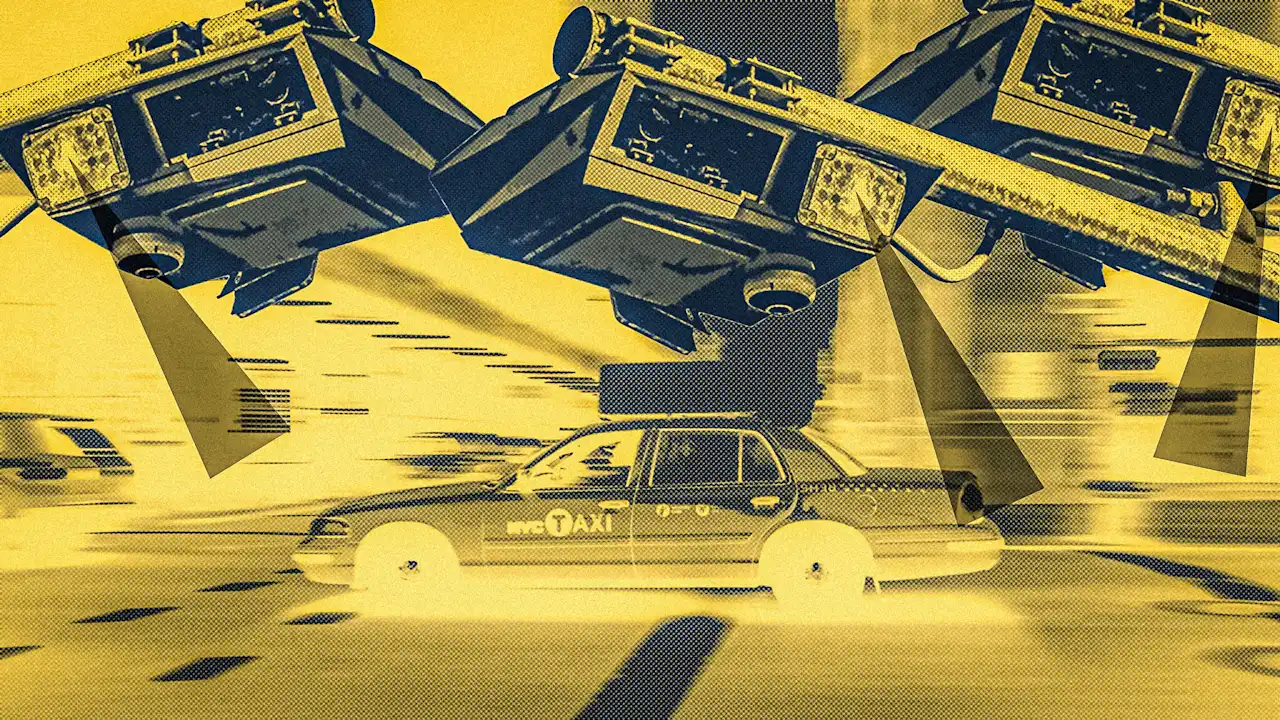
It’s been one full year of congestion pricing in New York City, and downtown Manhattan looks markedly different: 23.7 million fewer vehicles, traffic delays down 25%, and a 22% drop in air pollution, to start.
And that’s just within the “congestion relief zone.” The program, which implements tolls on drivers who enter certain, once often-gridlocked areas of Manhattan, is even having positive effects outside of the streets that are subject to the toll.
Congestion pricing had a rocky start in New York City, and it continues to face lawsuits. But courts have consistently ruled in its favor.
One year in, it’s clear the program is “overwhelmingly successful,” says Kate Slevin, executive vice president of the Regional Planning Association, a nonprofit that pushed for congestion pricing. Here’s a look at how congestion pricing has changed New York.
First, what is congestion pricing?
Congestion pricing is a way to mitigate traffic, and when it was implemented in New York City on January 5, 2025, it was the country’s first such program. Congestion pricing plans have been rolled out in cities around the world, though, including London, Stockholm, and Singapore.
The program covers a “congestion relief zone” that spans almost all of Manhattan below 60th Street and includes major routes like the Lincoln, Holland, and Hugh L. Carey tunnels and bridges that go into both Brooklyn and Queens.
Passenger cars with an E-ZPass that travel through that zone face a $9 toll during peak hours—which are 5 a.m. to 9 p.m. on weekdays and 9 a.m. to 9 p.m. on weekends—and a $2.25 toll overnight.
Tolls are more expensive for commercial traffic, and vehicles without E-ZPass are charged a 50% premium.
Those tolls are meant to both reduce traffic congestion in the city and raise funds for the Metropolitan Transportation Authority (MTA), the city’s public transit system.
Environmentalists also backed the plan for its ability to reduce pollution by cutting traffic and ushering in more commuters.
How congestion pricing has impacted commuters
Since January 5, 2025, 23.7 million fewer vehicles have entered the city’s congestion pricing zone, compared to 2024. The number of drivers entering the zone is down 12%, meaning about 71,000 fewer vehicles every day.
Those numbers came in in December, and so they may be even higher now. (At the program’s one-month mark, it already meant one million fewer vehicles on those streets.)
Between January and April, traffic delays inside the congestion relief zone dropped 25%—and region-wide, including parts of New Jersey, declined 9%—compared to the same period the year prior.
This has translated to quicker commutes. Morning commutes are:
- 36% faster through the Holland Tunnel
- 10% faster through the Lincoln Tunnel
- 21% faster across the Queensboro Bridge
- 23% faster across the Williamsburg Bridge
Commuters are saving as much as 21 minutes on a one-way trip. Some bus routes in the congestion relief zone have gotten as much as 25% faster, and school buses are facing fewer delays: They’re on time 72% of the time, up from 58%.
Some residents had concerns that congestion pricing could push traffic from lower Manhattan into other areas like the South Bronx, and parts of New Jersey and Staten Island, making congestion (and air pollution) worse for those residents.
But “none of those traffic impacts [came into] to effect,” Slevin says. “Traffic is actually lower regionally, even beyond the congestion relief zone . . . that means this is a policy that’s not only good for the five boroughs of New York. It’s also a regional policy.”
Slevin does warn that in other congestion pricing cases, the traffic reduction benefits don’t necessarily last. In London, after an initial dip, traffic crept back up, mostly from ride-hailing drivers and delivery trucks.
If traffic bounces back, the program will still raise money for public transit. New York City does have a plan to escalate the tolls as well, raising them from $9 to $12 in 2028 and then to $15 in 2031.
How congestion pricing is benefiting public transit
Along with easing New York’s infamous gridlock, a goal of congestion pricing was to raise $15 billion for the MTA, which would go to new subway cars, buses, station accessibility, and so on.
Already, the state has allocated $1.75 billion of congestion pricing revenue to transit projects, including modernizing subway signals. Outdated signals are a major cause of subway delays.
The MTA is also already working on getting more than 400 new subway cars and 300 commuter rail cars, among other projects.
Public transit throughout the region is already dealing with more commuters: Subway ridership is up 9% year-over-year, and bus ridership up 13%. Regional rail has benefited, too, with the Long Island Rail Road seeing a 10% increase in riders, and the Metro-North up 7%.
It was pretty obvious that congestion pricing would reduce traffic and raise money for transit. But it’s been a bit surprising, Slevin says, “how close it has come to the projections that were laid out over the years of planning, in the environmental documents and in the MTA studies. It’s validating.”
Less traffic means safer streets, cleaner air
New Yorkers are even breathing easier thanks to congestion pricing. A Cornell University study released in December found that air pollution dropped 22% in the congestion relief zone.
That’s specifically concerning PM2.5, meaning particles that measure 2.5 micrometers or less. These tiny particles can enter our lungs and lead to an array of health issues, including cardiovascular, respiratory, and neurological impacts.
A 22% drop means PM2.5 concentrations declined by 3.05 micrograms per cubic meter. If congestion pricing had not been implemented, researchers projected those lower Manhattan streets would see an average of 13.8 micrograms per cubic meter. (The Environmental Protection Agency recommends an annual exposure limit of 9 micrograms per cubic meter.)
Air quality improved outside of that zone, too, with average declines of 1.07 micrograms per cubic meter across the city’s five boroughs and 0.70 micrograms per cubic meter in the broader region.
“This tells us that congestion pricing didn’t simply relocate air pollution to the suburbs by rerouting traffic,” Timothy Fraser, one of the study’s authors, said in a statement. “Instead, folks are likely choosing cleaner transportation options altogether, like riding public transportation or scheduling deliveries at night.”
Less traffic has also meant safer streets when it comes to injuries and fatalities. Within the congestion relief zone, traffic injuries are down 15%, and pedestrian fatalities have dropped at least 15%. That’s on par with levels last seen in 2018.
New York City’s streets are even a bit quieter: Honking and vehicle noise complaints to the city are down 45%.
What’s next for NYC congestion pricing?
Congestion pricing faced an array of hurdles to get to this point.
Small business owners rallied against it, at least eight lawsuits from plaintiffs including New Jersey Governor Phil Murphy and the Trucking Association of New York contested it, and New York Governor Kathy Hochul even delayed its start.
Things were still challenging once the tolls began; after Donald Trump took office for his second term as president, he rescinded its federal approval, and ordered the city to halt the program.
The city fought back, winning court orders to soldier on.
The legal battles aren’t completely over. Some cases against congestion pricing are still pending, and in November, Trump said he’d once again ask Transportation Secretary Sean Duffy to consider killing the program.
Slevin remains positive, though.
For one, public approval is up. A March Siena College poll found that 42% of New York City residents want congestion pricing to stay, while 35% supported Trump’s efforts to end it.
Compare that to December 2023, before the program started: Siena College had found then that just 32% New Yorkers supported the toll, and a whopping 52% were against it.
This is a pattern for congestion pricing programs around the world. People often resist them at the start, but once they see the benefits first hand, support grows.
Slevin even says anecdotally, she knows a few people who used to be against it in New York City, but are now congestion pricing fans.
Another reason to be optimistic is the fact that so far, all the courts have ruled in favor of congestion pricing.
“I think at this point it will be hard to remove it, because it is delivering benefits for people. The money is going back into the public transit network. And our region absolutely needs the transit network to work for our economy to thrive,” Slevin says. “I don’t think eliminating hundreds of millions of dollars for public transit spending is going to be very popular.”
New York City’s streets could even see more improvements. With less traffic thanks to congestion pricing, that gives the city space to create more public plazas or improve bus service.
The city’s new mayor, Zohran Mamdani, already made fast, free buses and safer streets a key part of his platform, and so he may build on congestion pricing’s success.
The entire country has watched New York City implement congestion pricing and fend off Trump’s attacks against it. Now, they’re seeing its success, and that could spur other cities to take similar action.
The Regional Planning Association has already fielded calls and interests from other cities, both in the U.S. and internationally.
“It shows that cities can do big things to deal with their problems,” Slevin says. “And it gives inspiration to other cities across the country.”