What was it like the last time the U.S. hosted the World Cup? ‘Men in Blazers’ creator Roger Bennett recalls his experience
 Business Economic Syndicated News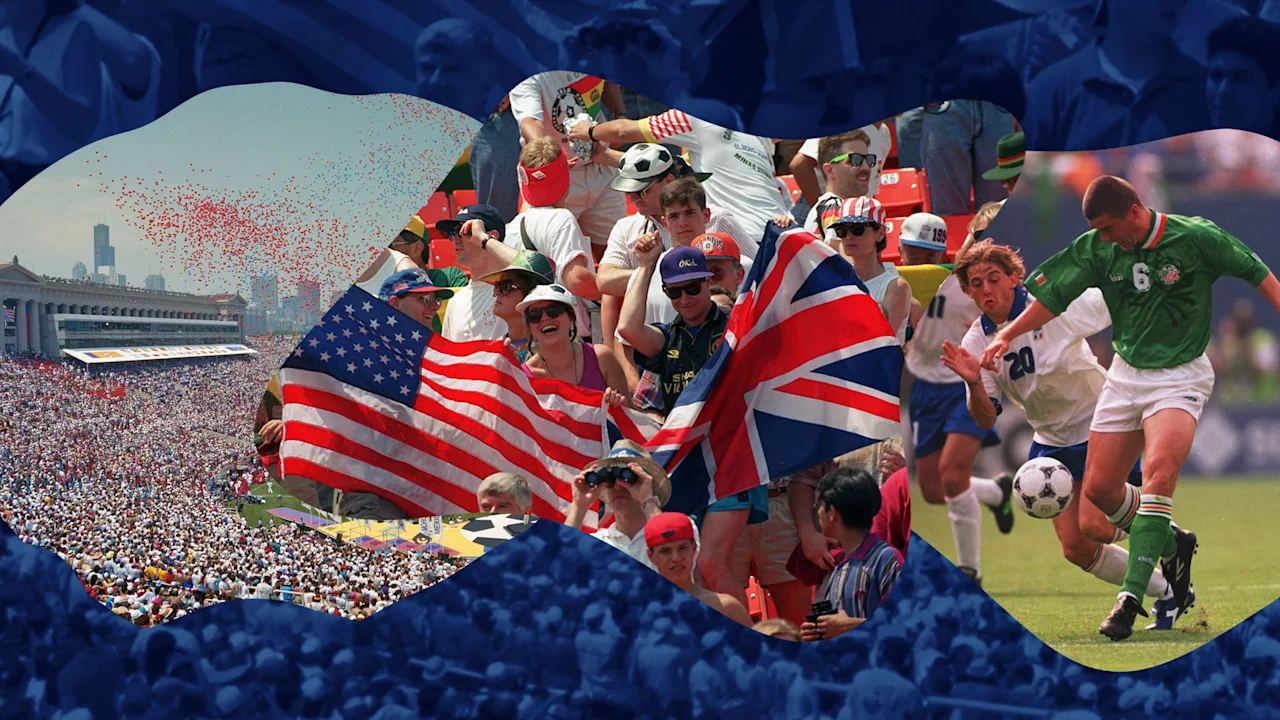
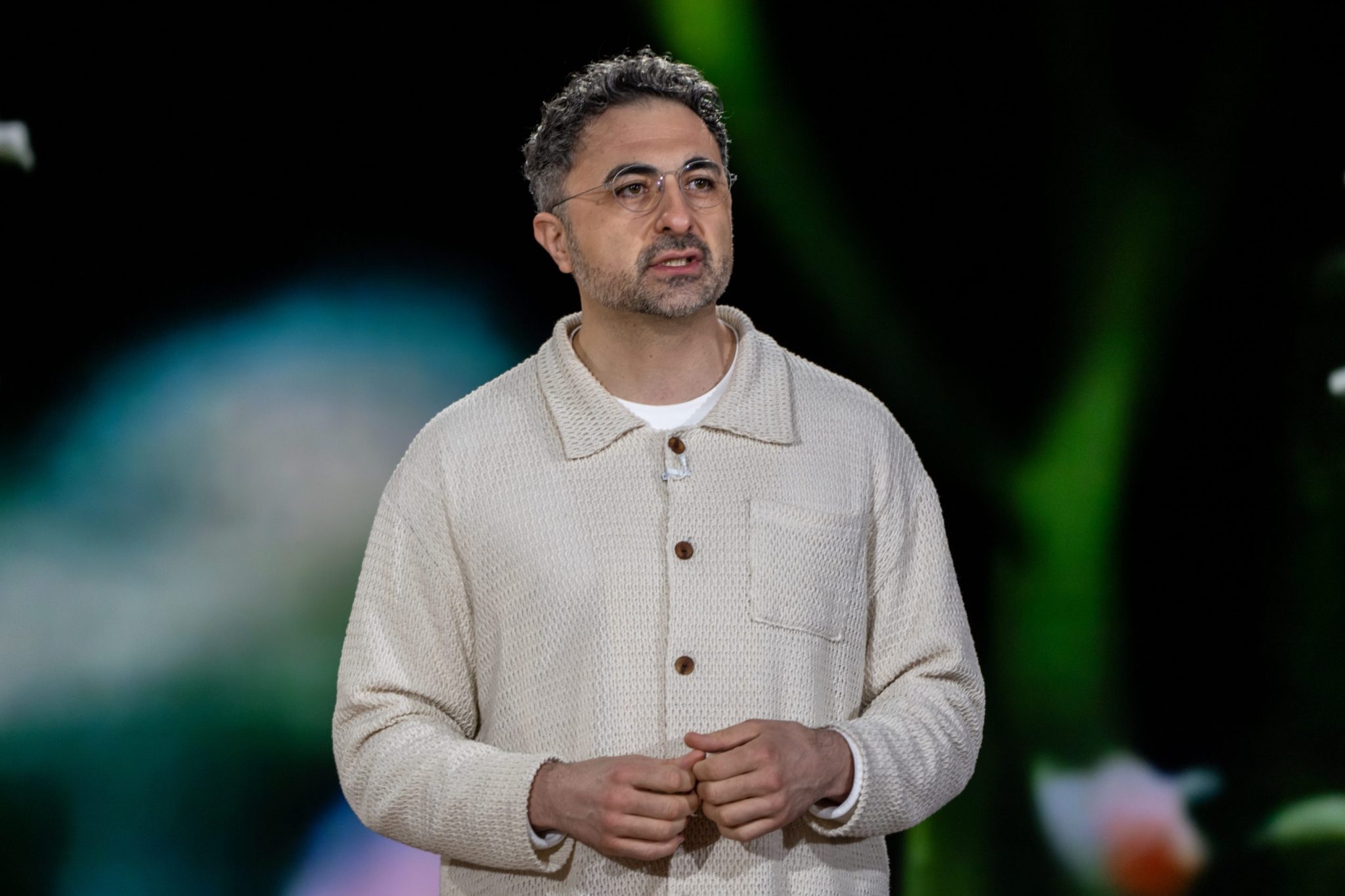
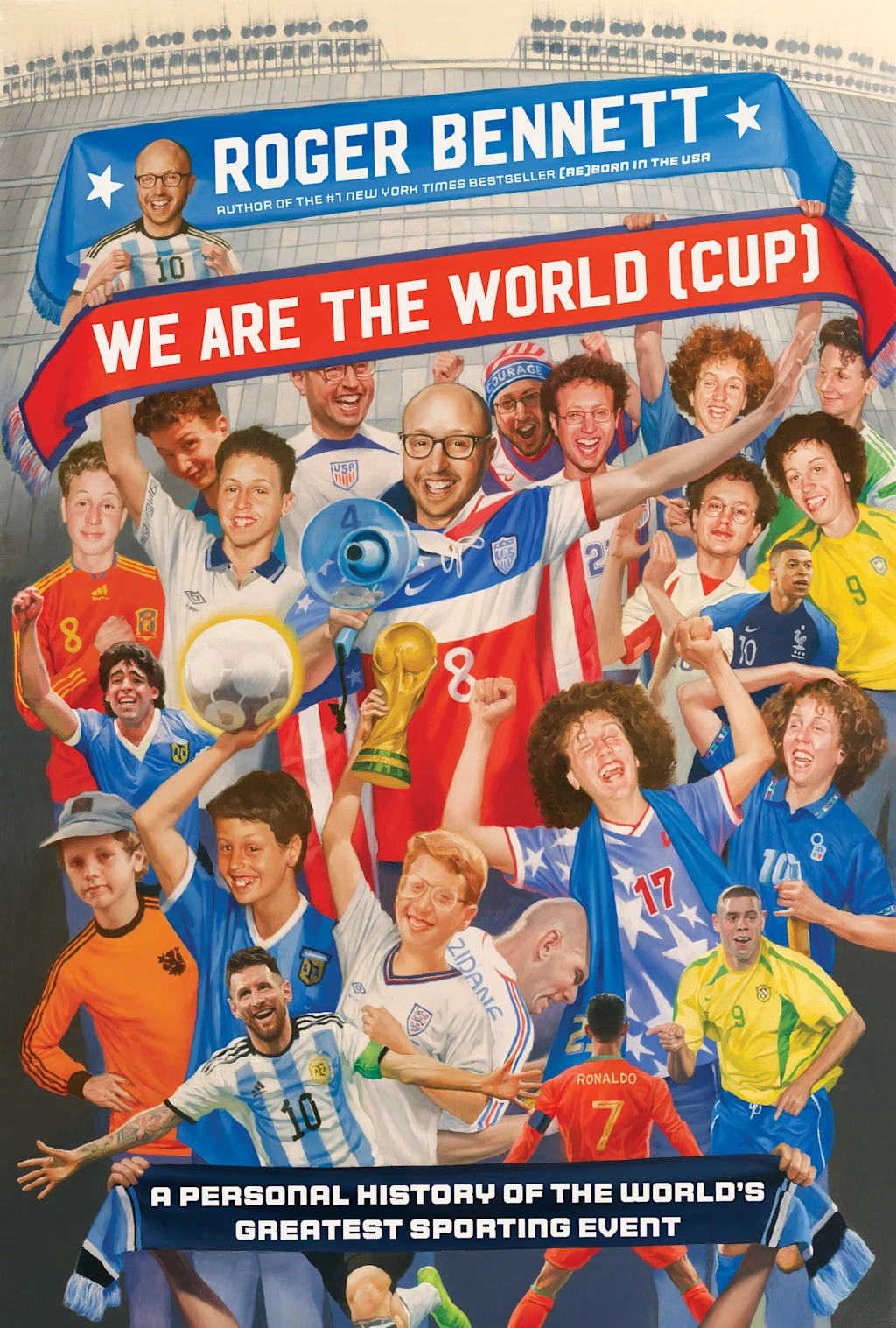
Roger Bennett is the witty and charismatic co-host of the popular “Men in Blazers” soccer media network. Born in Liverpool, England, he moved to the United States and has since helped popularize the sport in this country through podcasts, television shows, and books, including his best-selling memoir Reborn in the USA. His new book, WE ARE THE WORLD (CUP), is a personal history of what he calls “the world’s greatest sporting event.” In the following excerpt, he chronicles his experience of the 1994 World Cup, the last event held in the U.S prior to this summer’s tournament. 1994 was also the year Bennett moved to the U.S.
The 1994 World Cup brought football to the United States of America. And also me. Straight after university, I moved to Chicago, finally completing a three-generational odyssey. According to our family myth, my “great-grandfather the butcher” had originally intended to move to Chicago, the great “Hog Capital of the World,” when he boarded a boat in Odessa and headed for the promised land at the turn of the twentieth century. When that boat docked to refuel in Liverpool, he, and several hundred of the other, clearly lower IQ travelers, saw the three tall buildings on the Merseyside skyline, believed they were in New York City and disembarked.
Eighty years and two generations later, I completed my family’s journey. When the plane landed at O’Hare Airport, I felt the urge to mark the weight of the moment and dropped to my knees dramatically on the tarmac, a move I had seen Pope John Paul II execute many times upon arrival in a foreign land. I was momentarily overcome by a surge of adrenaline but, unsure what to do next, quickly became self-conscious as the other passengers pushed their way impatiently around me with their carry-ons. I peeled myself up and tried to play it cool as I joined them on the shuttle bus, attempting to ignore the fact I now had acquired a sticky oil stain on the left knee of my jeans that I could never quite remove.
It is one thing to land at an airport as a tourist ready to tear up the city for a time-bound period. It is an entirely different feeling to arrive in a place with no return ticket, and the hope and fear that accompanies any leap into the unknown. I was a twenty-two-year-old quasi-man landing with big dreams in the American Midwest. An area I was largely unfamiliar with and in which I lacked any kind of support network of family or friends. The only things I had brought with me were a law degree I had miraculously managed to secure, a vague grasp on rudimentary life skills, an enormous ’fro, and little in the way of financial resources. My father had been unimpressed by the woeful lack of direction I had demonstrated after graduation and became irritated at my vague talk of signing up to be an air steward or doing a postgraduate degree in peace studies. Late one night after I had come back inebriated from the local pub in Liverpool, he informed me that he was cutting me off. “A man can think and think in life, Roger,” he said with equal measures of exasperation and contempt, “but sometimes he simply has to learn to do.” That decision forced my hand and spurred me into “doing.” Picking up my life and heading to Chicago, then overstaying my tourist visa was the sum total of my plan.
Under the table and off the books
Upon arrival, I looked at a map of the city, saw there was a neighborhood in the far northside named Rogers Park, and, based solely on its name echoing my own, elected to set up shop there. My immediate challenge was to make some money. Lacking a work visa, I hustled like Tony Montana in the early scenes of Scarface, throwing myself into any opportunity that would pay me illegally under the table and off the books. For the first year, I made just enough to live, as a truly clueless yet enthusiastic baker on the early morning shift in a local French pâtisserie and a well-meaning but utterly bewildered waiter at a soul food restaurant at night. In between, I picked up shifts restocking books in a local library, which really meant me sleeping in the stacks. I cobbled together just enough to rent my small, totally empty apartment. If I scrounged food from the restaurant, I could occasionally put my surplus tip money toward treating myself to a $4 bottle of Kentucky Gentleman bourbon whiskey.
The soul food restaurant—Orly’s in Hyde Park on the South Side of the city—provided an eye-opening initial glimpse of America. The cooks were all elderly African American South Siders, the busboys young Latinos from the West Side, the barman and manager were a pair of white suburban bros who ruled the place and largely spent their nights crassly hitting on the other servers who, besides me, were all attractive young female students at the University of Chicago. I bonded most of all with the kindly Mexican busboys, who loved to talk football while poking fun at my long, curly hair and round spectacles, alternating between two nicknames they quickly coined for me: “lady” and “Juan Lennon.” Two of the dishwashers were a pair of brothers from Mexico, and they took time to show me how to game the system and set up the basics any illegal alien needs to survive: a black market Social Security number, healthcare, and a bank account; teaching me how to furnish an empty apartment for free by scavenging for couches, desks, and kitchen tables dumped in alleyways across the city on the last day of any month, aka moving day.
Arby’s, Michael Jordan, and Lake Shore Drive
The extent to which I missed my family back in Liverpool surprised me. This was before AOL became omnipresent and when long-distance phone calls were still prohibitively expensive, so we corresponded like Victorians, by letter. I would stay late at night, alone, in the library’s office, typing out long letters to my parents with just my pointer fingers, determined to convey the minutiae of my work and the details of America that exhilarated me. The celestial taste of Arby’s; the intensity of the bruising NBA playoff series between the Michael Jordan–less Chicago Bulls and the boastful New York Knicks of Patrick Ewing, which felt like a high-stakes collision in which the future of good and evil were at stake; the thrill of driving down Lake Shore Drive in a cab at night, and speeding past illuminated skyscraper after skyscraper, an experience which made me feel like I was living on the set of a sci-fi movie.
The mundanity of the letters they mailed back to me in return, 90 percent of which revolved around complaints about the perpetually damp, rainy weather, reinforced my confidence that the journey I was on was the right one. The only thing I truly and achingly missed was football. Soccer. As thrilling as it was for me to be able to immerse myself in the new American sporting traditions of Bears, Blackhawks, White Sox, and Notre Dame gamedays, English football was my foundational text. It was how I understood and made sense of the world. My ballast in life’s stormy sea. I was well aware that the sport had outsider status in the United States. Yet, I was still shocked by just how hard it was to follow in my new home. This game that thrilled the rest of the world, had stopped wars, and spurred revolutions barely made a dent on the American sporting subconscious. In a national survey of favorite spectator sports released shortly after my arrival, it ranked 67th. Tractor-pulling was 66th.
‘Holding a major skiing competition in an African country’
To be clear, Americans were not just apathetic toward the game I loved. They seemed to take a perverse delight in actively and openly despising it in the 1990s. Most nations would have announced a national holiday if FIFA awarded them the hosting rights to the tournament. Yet, when the United States was given the honors, their decision was received with a general tenor of bewilderment. On the floor of Congress, Representative Jack Kemp, a former professional quarterback, felt the need to defend his nation’s honor by saying, “I think it is important for all those young men out there who someday hope to play real football, where you throw it and kick it and run with it and put it in your hands, that a distinction should be made that football is democratic capitalism whereas soccer is a European socialist sport.”
One journalist compared the honor of hosting the biggest sports event in the world to “holding a major skiing competition in an African country.” A sense of contempt reinforced by rumors that began to abound that FIFA were attempting to “Americanize” the sport by splitting the game into four quarters rather than two halves to increase the amount of advertising they could jam into the broadcast. I was baffled by the lack of noise around the whole affair. The World Cup was something I had always counted down to, with a sense of joyous anticipation, but that sense began to be replaced by a gnawing feeling of unease that the Americans were going to blow this—to transform the most celebrated event in the world into the equivalent of a Weird Al cover song. The tournament draw, which took place in December 1993, live from Caesars Palace on the Las Vegas Strip, dialed my sense of disquiet up to eleven. The football world had never seen the likes of a veritable night of a thousand stars including Barry Manilow, Julio Iglesias, and Faye Dunaway. Few seemed to know what they were doing there. ESPN’s host, that veritable broadcasting legend Bob Ley, declared the spectacle to be akin to “Salvador Dalí producing a state lottery.” Fittingly for such a surreal occasion, it was Robin Williams who stole the spotlight. First, the comedian described the draw bracket as “the world’s biggest Keno game,” then proceeded to refer repeatedly to FIFA’s General Secretary, Sepp Blatter, as “Sepp Bladder” even after the Swiss administrator testily corrected him, insisting, “This is not a comedy!”
Beneath the pizzazz, the significance for the future of the sport could not have been higher. US midfield star Tab Ramos was one of the pitifully few American players who had managed to find a pathway to play club football in Europe, and he worried aloud, “I think this will be the last chance, the last go-round for soccer to make it big here.” If those were the stakes, it did not seem to be going very well. New York Times columnist George Vecsey noted: “The United States was chosen, by the way, because of all the money to be made here, not because of our soccer prowess. Our country has been rented as a giant stadium and hotel and television studio for the next thirty-one days.” Panic truly kicked in when a national poll undertaken three weeks before the tournament’s kickoff discovered that 71 percent of Americans were still not aware it was about to be played in their country. The prospect of empty stadiums felt very real. In the weeks running up to the kickoff, a late flurry of marketing materials featuring images of Reggie Jackson and Michael Jordan pretending to juggle the football were unfurled in a last-ditch effort to create excitement. That did not exactly inspire confidence, as if athletes from other sports were needed to give heartland Americans permission to watch the foreigners’ game.
An unshakable terror that no one would show up
The moment of truth came June 17, 1994, when the opening match was held, by chance, at Soldier Field in my adopted hometown of Chicago. The night before the tournament began, my mood ricocheted between the dizzying sense of childish anticipation I always experienced on World Cup eve, and an unshakable terror that America was throwing a party for the sport I loved, and that no one would turn up. In my destitute state, there was no chance I could afford a ticket for the opener, which featured reigning World Cup champions Germany against Bolivia, yet I felt a need—more than that, a responsibility—to travel down to the stadium to pay witness to the scene. Partially to respect the moment and come as close to this tournament in the flesh as I had ever been. But mostly to help fill in as an extra, and create the sense of a crowd, hoping to build the fiction of America caring in the worst-case scenario, as so many doomsayers were saying, that the venue was deserted.
I need not have worried. With a searing sense of relief, I found Soldier Field to be as overwhelmed as if the Bears were playing the Packers. Yes, it felt like half of Baden-Württemberg had traveled to cheer on Germany, and every Bolivian in the vicinity of Chicago had massed by Lake Michigan. But there were also thousands of families, congregating around the ticket gates, with the kind of crackling sense of anticipation emitted when entering the circus. In truth, this was unlike any football crowd I had experienced before. There was little noise. No audible chanting. Few team colors. Yet I soaked in the scene with relief and wonder. America had turned up. The fact that many of those in attendance seemed to know little about what was about to happen felt like nitpicking. This emotion was reinforced by a big-screen television near the gate broadcasting a short video in which iconic baseball manager Tommy Lasorda of the Los Angeles Dodgers declared his unshakable belief that even if the country had no idea what the World Cup was, America would win it.
Ticketless, I raced home on the L to catch the razzamatazz-filled opening ceremony on my television, which, like the rest of my furniture, had been rescued from the alleyway behind my apartment. I had jerry-rigged an antenna out of a clothes hanger, so the picture was scratchy, but visible enough to witness the spectacle that managed to blend a message of American good intentions, celebrity pageantry, and gesturing at heartfelt passion for soccer.
A nearly sold-out crowd, including President Clinton, was privy to a ceremony that began with emcee hometown hero Oprah Winfrey screaming, “Let’s celebrate!” before tripping off the stage and seemingly maiming herself just seconds after welcoming a worldwide television audience of a billion. That slapstick opening set a tone the rest of the celebrity guests then strove to one-up. Singer Jon Secada suffered a dislocated shoulder when a trapdoor from which he was meant to emerge onto the stage misbehaved, forcing him to sing with just his head and shoulders protruding from a hole in the floor. Richard Marx, a Chicago native with a spectacular mullett, sang the national anthem. Diana Ross added to the surreal display by prancing around and lip-syncing, “I’m Coming Out,” a performance capped by her slicing a penalty quite wide of a goal from less than five yards out. Nonetheless, the crossbar still split into two, as if she had shot with accuracy and potency. A clumsy piece of footballing choreography gone wrong amidst glamor and glitz, which felt like a cruel metaphor for all that was to come.
The psychedelic out-of-place, out-of-body celebrity moment was echoed, and eclipsed, later that night, by the breaking news of O.J. Simpson’s infamous white Bronco chase. An earth-shattering celebrity cultural moment, which even preempted the NBA final and easily overshadowed the day’s football, the personal highlight of which came just a minute into the opener when the ball flew into the stands, and the game was held up while the fan who caught it was ordered to throw it back, after being told this was not Wrigley Field and you were not allowed to keep that ball as a memento.
A Peroni- and Guinness-fueled epic gang rumble
It took twenty-four hours before the fuse was truly lit on the World Cup, driving it straight to the front of America’s sporting cortex. A game billed as “the Showdown in the Swamp” pitched Italy against Ireland in the crackling heat of Giants Stadium in New Jersey. A confluence of time and context. Thirty-two million Americans claim Irish descent, roughly half have Italian roots, and the greater New York area had largely been built by their ancestors and thus overflows with both hyphenated identities. This game felt like the type of Peroni- and Guinness-fueled epic gang rumble Scorsese would have directed in one of his early movies. A fight for pride born of echoed pasts taking place in the swamplands near the Hudson.
The Italian team had long been a traditional footballing superpower. Handsome, slick-haired footballers like the iconic Roberto Baggio and Paolo Maldini played for the biggest clubs in the world. Ireland was a mob of scrappy, bar-brawling upstarts in comparison. A Dirty Dozen–esque mob—many of whom were English-born but had chosen to represent Ireland because of their own familial lineage. They were managed by a charismatic, beer-drinking, straight-talking former English World Cup winner, Jack Charlton, who was so beloved, he achieved honorary Irishman status and was christened “St. Jack.” The English National Team had yet again failed to qualify, so a lot of English fans spent the early days of the tournament desperately trying to discover secret Irish roots of their own.
I watched this game in a packed bar in Rogers Park, stuffed with Irish Americans and a ton of non-Irish Americans who just felt a vicarious kinship courtesy of their Notre Dame fandom. As I entered, a large old man dressed as a leprechaun kissed me on the top of my head while screaming to no one in particular, “Our boys are on the craic with it!”
As Jameson-inflected as these words smelled, they turned out to be prophetic. My leprechaun friend may have passed out before kickoff, but had he been conscious, he would have loved what he saw. The fearless Irish snatched the lead with a euphoric strike from midfielder Ray Houghton, a Glasgow-born son of an Irishman, who audaciously clipped the ball past the despairing fingers of the Italian goalkeeper. The collective defensive intensity Charlton had instilled did the rest, as a green-and-white-cloaked Giants Stadium rocked to the sound of bagpipes and the thump of bodhráns as a chant of “You’ll never beat the Irish!” resounded. The final scoreline, chaotic energy of the occasion, and medical miracle that 75,000 Irish fans somehow survived nasty cases of sunburn drove the event into the hearts of the American viewing public. This tournament had kicked off for real.
Maradona the villain
This being a World Cup, Diego Maradona of course grabbed center stage. The golden street urchin had been the hero of the 1986 win. He played the role of villain in this one. Having worn out his welcome in Italian football, “El Pibe de Oro” fled Europe with his career imploding and personal life in meltdown. A fifteen-month ban earned in 1991 for testing positive for cocaine was the least of his problems. Maradona had been charged with smuggling $840,000 worth of blow into Rome’s Fiumicino Airport in 1990, and his reputation was further pockmarked by rumors of paternity suits, tax charges, and intimate connections to Naples’s Camorra crime family.
A beleaguered, overweight Maradona returned home to Buenos Aires in search of sanctuary. As he arrived, the notion the player was physically or mentally ready to lead the national team to the 1994 World Cup appeared as believable as a storyline from a Philip K. Dick fantasy. Yet, the star resurfaced sensationally on the eve of the tournament, having somehow shed twenty-six pounds in a month. His message was one of redemption. “I am tired of all those who said I was fat and no longer the great Maradona,” he proclaimed. “They will see the real Diego at the World Cup.” The icon did not know how true those words would prove to be.
Aged thirty-three, the little warhorse prepared to drag his tattered body into battle one more time. His fourth World Cup would begin against Greece at Foxboro Stadium in Foxborough, Massachusetts. A light aircraft buzzed above the field pulling a banner that proclaimed “Maradona–Prima Dona” ahead of the game, and the star lived up to his billing. In the 60th minute of the 4–0 victory, Diego received the ball in the box, jinked to his left, and rifled the ball into the top corner, then celebrated the achievement in hopped-up style, charging a sideline television camera and flashing his maniacal mug toward it. Tight-lipped after the game, Maradona would only declare, “I’m letting my actions speak for themselves.”
Four days later, the player was selected for random drug testing after a 2–1 win against Nigeria. FIFA quickly announced the Argentine had tested positive for five variants of ephedrine. The Guardian would later note the way Maradona had celebrated his goal against Greece was as conclusive as any drug test: “Broadcast around the world, his contorted features made him look like a lunatic, flying on a cocktail of adrenalin and every recreational drug known to man.”
Faced with the disgrace of being expelled from the tournament, Maradona first sought pity from Argentinian television. “They killed me,” he said. “They have retired me from soccer. I don’t think I want another revenge, my soul is broken.” He then proceeded to appeal to his nation’s easily fired-up paranoia, adamantly declaring, “They didn’t beat us on the pitch. We were beaten off the pitch and that is what hurts my soul.”
As his team moved on to meet Bulgaria in the Cotton Bowl, Maradona loyalists in the Argentine media seized on Dallas’s reputation as the cradle of conspiracy theories. “In this city, where thirty years before Kennedy was assassinated, the theories surrounding footballer Maradona will now be explained. Was he ‘randomly’ selected for a drug test?” they asked.
Not embarrassing themselves
FIFA dispatched Sepp Blatter to smother any doubts. “The king is dead, we play on,” he declared. A shattered Argentinian squad mustered the requisite sound bites about “winning it for Diego.” But leaderless and disoriented, they proceeded to wilt against Bulgaria and were finally sent home by Gheorghe Hagi, Ilie Dumitrescu, and the elegant Romanians in the Round of 16. Even Maradona’s fall from grace could not dampen the American energy now building up around the tournament. The stadiums were packed, never more than when the US team first strolled onto the field in Detroit’s Pontiac Silverdome. I knew so little about the team. Few Americans did to be honest. Hosting duties meant their qualification had been automatic, a mixed blessing as a woefully inexperienced squad faced four long years in which it had been deprived of the one thing that could battle-harden the players: competitive matches that mattered. This challenge was reinforced by the reality that only a handful of American soccer players had found professional opportunities in Europe. American soccer players had as much credibility in the eyes of European scouts as aspirational English quarterbacks would have received in the NFL. A couple of players including the cocky gunslinger John Harkes and physically gifted striker Eric Wynalda had gained the attention of minor clubs in England, Spain, and Germany. The rest were left struggling to make a living playing indoors or on a local team, which provided the salary equivalent of an internship.
The personal stakes could not have been higher for these men. The focus was on not embarrassing themselves. They were not just playing for their nation; they were fighting for the very future of their sport. Desperate to avoid the humiliation of becoming the first home team in history unable to emerge from the World Cup’s opening round, the United States Soccer Federation had undertaken a bold experiment, establishing a residential training center for its team to live together, essentially living off a tiny stipend and their enormous shared dreams, for eighteen months in Mission Viejo, California. Crap the bed, and the profile of soccer in the United States would never recover. The mission was simple. They had to get out of the group stages.
Their draw had been tough. In the opening round, they would face a robust Switzerland, dark horse Romania, and sandwiched in between, the truly fearsome Colombians, who had just whipped Argentina 5–0 in qualifying and whom Pelé himself had picked to win the entire tournament.
First up were the Swiss, who had drawn and beaten Italy in qualifying. I watched from the futon on the floor of my boxy Rogers Park apartment, nervously adjusting the wire hanger to try and coax a clearer signal. The blurry images on my television made it look like the US team were swaggering onto the field wearing a faux stonewashed denim jersey. Then the commentator mentioned that the US team were indeed wearing faux stonewashed denim jerseys and that was the very second I fell in love with this team of goatee- and mullet-sporting risk-takers, dreamers, and pioneers.
Sweatbox conditions
Tellingly, kickoff was slated for 11:30 a.m. so that broadcasters ABC did not have to cut into their coverage of the US Open, an event they deemed to be far more important. At that time, Midwest temperatures topped 106 degrees, and so this, the World Cup’s first-ever indoor game, was played in sweatbox conditions. I felt enormous empathy for the players as I could not afford air-conditioning in my Chicago apartment and was sweating up a storm myself as I watched in just my underpants and T-shirt. The Swiss looked like they were poised to melt. In contrast, the American players looked utterly amped. So few of them had ever played before a truly large crowd—never mind one that was 100 percent pro-American. As the cameraman panned their eyes during the national anthem, they looked like a group of men who knew this was their time to show the world that American football was about something more than a bold choice in football jersey design. That carried through once the opening whistle blew. The Americans were not the most sophisticated in tactic or touch. But what they clearly lacked as footballers, they compensated for with collective fitness, ferocity of tackle, and an unshakable team spirit embodied by the sheer number of high fives they doled out to each other in-game.
Rock ’n’ roll hustle, idiosyncratic style, and can-do spirit wrapped in frosted denim
A beanpole ginger center back, Alexi Lalas, caught my eye. A gangly mix of lanky leg and flowing red hair. He looked less like a footballer and more like a guy who worked behind the counter at a record store in some suburban Detroit mall, turning kids on to Van Halen’s latest album one sale at a time. But on the field, in the global spotlight that day, Lalas appeared as if he embodied America itself. All rock ’n’ roll hustle, idiosyncratic style, and can-do spirit wrapped in frosted denim. As if David Lee Roth had taken the World Cup stage. Both shirt and athlete unlike anything I had seen play football before.
When Switzerland opened the scoring off a free kick, it fleetingly felt like the sum of the American players’ fears was about to become real. But just five minutes later, the US won a free kick of their own, 28 yards out. Up stepped Eric Wynalda, the maverick, hotheaded striker who looked like an extra ripped from a beach scene in Baywatch. Wynalda composed himself, then swung his foot to strike as casually as if he were on the Californian fields in which he had mastered the game as a kid in Orange County. That ball seemed to be in the air forever, silencing the stadium as it flew, spinning away from the goal-keeper’s panicked dive straight into the corner, greeted with a crescendo of noise like that experienced by a diver breaking the waterline and resurfacing. Wynalda was as shocked as anyone watching at home.
The goal was a relief. It not only enabled the US to hold on for a draw and a point, but it also validated the sense that their quest to qualify was in the realms of the possible. The fearsome Colombians awaited four days later in the Rose Bowl, Pasadena, California. Again, I watched alone in my apartment, cowering as the South Americans in their ecstatic yellow attempted to blow their opponents away from the opening kickoff, attacking with hunger and intensity. It felt like a borderline miracle when the game was still scoreless five minutes in. The Colombians hit the post, and American defender Fernando Clavijo scooped the ball off the line in a way which defied science.
But football—especially World Cup football, with its international squads who are essentially as practiced as All-Star teams—is a game of moments. And in the 35th minute, the United States forayed upfield. John Harkes, the cocksure son of Kearny, New Jersey, who had played in England for four years and had instantly adopted a fake Cockney accent, whipped in a cross. Colombian defender Andrés Escobar, a fine man widely known as “The Gentleman of Football,” made the unfortunate decision to stretch out a leg and block it, but he only succeeded in redirecting the ball past his own flat-footed goalkeeper into his own net.
Escobar’s own goal is what is remembered from the game. Ten days later, he would return home and was shot to death while leaving a Medellín nightclub in the early morning hours. The assassin fired half a dozen times, yelling “Goal!” after every shot. But in the moment, when that ball bobbled off his foot into the back of the net, the American players felt only ecstasy. Even though I was watching alone in my apartment, I was moved to shake up a bottle of Budweiser and spray it around the room, creating a beer puddle that sat in the middle of the floor long after the tournament was a memory. I was to housekeeping what Diego Maradona was to legal weight loss.
‘Miracle on Grass’
Emboldened, the United States conjured a second goal right after halftime, a stunning moment of real counterattacking football, finished off by the speed freak Earnie Stewart, a Dutch-born dual-national with an American serviceman father. The celebrations were an astonishing moment for the team. You could tell by their rapturous reactions; this was a group of men proving themselves to themselves with the world watching. Now they knew, as American footballers, they could face a big team in a big game and win. To me it all felt transcendent. An epiphany akin to witnessing a baby being born, only with 90,000 people in the delivery room.
At the final whistle, the Americans soaked in their moment, walking around the Rose Bowl—the historic American sporting shrine—shirts off, American flags draped round their shoulders, with the delirious crowd bellowing, “USA! USA! USA!” After all their work and sacrifice, these men had just shown that American footballers could belong in the game with the rest of the world. The next day, headline writers gave the performance the ultimate sports accolade, hailing the victory as a “Miracle on Grass!”
Miracle or not, the third game did not go as planned. A 1–0 loss to the canny Romanians. The United States finished third in their group with four points, scraping into the knock-out stages by virtue of being one of four third-placed teams who advanced into the sixteen-team second round. Next, they would face Brazil, the fiercest of opponents and number 1 team in the world. The match was to be played in Stanford, California, on July Fourth to boot. Could they do it? I watched the players’ interviews, and it was clear by listening that having qualified from the group and achieved their goal—avoiding humiliation—all the pressure was off. Anything felt possible.
Once again, I watched the game alone in my apartment. I did not have a lot of money and, in reality, I did not have a lot of friends. In truth, I felt immensely lonely, but I loved this team of try-hards. I connected with them. When I watched them, they seemed to embody a sense of hope that I needed in my own life at the time. If a group of footballing duffers in stone-wash shirts could take on the powerful Brazilians in the World Cup and win, I too might find my way to glory. Or at least a television without a coat hanger for an antenna.
A moral victory
However, there was no way to mask the gulf in class between these two teams. It was evident the moment they walked side by side onto the pitch. Brazil’s deadly striking duo Romário and Bebeto, feared around the world, took the field alongside Cobi Jones, a twenty-four-year-old legal student from California.
This Brazil team were different from past iterations. The battering they had received from the European teams over the past decade had forced them to add defensive steel to their offensive flamboyance. Their jerseys were still the traditional golden yellow, but this was a pragmatic, functional, almost soulless squad who advanced on the strength of their physicality, which peaked on the stroke of halftime. American midfielder Tab Ramos attempted to nutmeg his opponent, Leonardo, who retorted by headhunting, with cruel, blunt application of his elbow to Ramos’s skull. A shocking moment of violence that earned the Brazilian a red card and left the American in agony on the ground, knocking him out of the game with a fractured skull.
Theoretically, the Americans now had a one-man advantage, but you could not tell from the way they responded. Their players’ focus was utterly broken by that moment of savagery, which had knocked out their creative heartbeat. The Brazilians became relentless. In the bright sunlight that would melt lesser men, they glimmered like a shoal of fighting fish sensing the weakness of their prey. The Brazilian goal, when it came in the 74th minute, was almost a relief. A precise Bebeto shot driven low, callously and cruelly through the desperate legs of Alexi Lalas and past a despairing goalkeeper into the corner of the net.
Despite the loss, the US mood at the final whistle was far from despondent. Even in defeat, this young, raw team of American nobodies had earned a moral victory. They had not soiled themselves with the nation watching. Television ratings were high. The US boys had proven they could go toe-to-toe with the world’s best by harnessing a collective spirit, exiting with millions of T-shirts and celebratory tchotchkes sold, and the feeling of a match lit and something powerful loosened deep in the nation’s consciousness. Sitting in my shit Chicago apartment, I thought of all the American icons that had drawn me to the United States in the first place, patriots who glowed with bold self-confidence. Ferris Bueller, the Super Bowl–winning Chicago Bears, the Beastie Boys. This American football team now fit in that pantheon. They were the rare US sporting entity who were scrappy underdogs. A gaggle who acted as if they willed themselves to believe something, it was no fantasy.
Brazil’s spiritless football became a symbol of the entire tournament. Below the celebrity glitz and American naivete, the play was mediocre, and the games pockmarked by overzealous refereeing that broke up play. Fittingly, the final was one of the most soul-crushing the tournament has ever witnessed. I had not wanted to watch alone and went out solo to take it in, draining a generous stranger’s pitchers of beer, at a packed Hyde Park bar, Jimmy’s Woodlawn Tap. The energy, which was at Mardi Gras levels at kickoff, soon burned off as the Brazilians’ cocked fist was negated by Italy’s smothering play. As the two teams conspired to provide every soccer cynic’s worst nightmare—the first goalless final, 120 minutes of dreary soccer followed by penalties—the bar became quieter and emptier. I could almost imagine the teeth-gnashing of every investor who had just stepped up to own a team in the soon-to-be-launched American club league: Major League Soccer.
‘Divine ponytail’
One of the reasons I love football is that even in the dullest of spectacles, a moment of human revelation can occur on an almost biblical scale. Italy had been carried to the final by the wizardry of one man: Roberto Baggio, an almost mystical figure, known for his signature “Divine ponytail” (Il Divin Codino), his conversion to Buddhism, and the way he seemed to float just above play, beyond the grasp of the mere mortals with whom he was sharing the field. Baggio’s five goals in the tournament had propelled his team to the final. In the fifth and final round of penalties, with Brazil leading 3–2 and Italy needing to score to keep hope alive, it was Baggio who stepped to the spot. It had been his tournament. Now, the hopes of all Italy rested on his shoulders. With just the goalkeeper to beat from a mere 12 yards, he proceeded to sky the ball 3 feet over the crossbar. At the pub I was in, it felt like we had just witnessed a human tragedy. Screams accompanied the replays of the ball soaring into the Pasadena sky, as Baggio, that quasi-holy man, doubled over in astonished agony, hands on knees in private mourning. A hallowed figure who so often appeared to rise above the limits of what was humanly possible, frozen in a moment of mortality. It was fitting that two diabolical penalties bookended the tournament. Diana Ross’s showbiz miss opened it, and Baggio’s elegiac catastrophe brought it to an emotional close and handed Brazil a fourth World Cup win, at last. Their first in twenty-four long years.
Many Americans had their lives changed by the tournament. European teams deigned to welcome a handful into their teams, most noticeably Alexi Lalas, who played fleetingly in Italy, a cameo in which his greatest achievement may have happened off the field when he was invited to strum his guitar as a support act on a leg of a Hootie & the Blowfish tour. Most of the players were reduced to jester-like side-hustles with Tony Meola accepting a chance to try out as a kicker for the New York Jets, which reeked of a PR stunt, as did his being attacked by “soccer-playing pitbulls” on Jay Leno.
In the end, the legacy of this World Cup was mixed. Records had been broken in terms of attendance, but those who expected American fans’ sporting appetites to be transformed instantly and forever by the tournament would be disappointed. The spike in interest in football soon burned off as if the World Cup had been a giant circus, which momentarily thrilled before leaving town. A year later, when my beloved club team Everton reached the semifinal of a major tournament, I was unable to find a single cable channel that could summon a broadcast, despite a frantic search of Chicagoland sports bars. Utterly defeated, I ended up calling my father in Liverpool and persuaded him to hold his telephone against the radio so I could hear the local broadcast and follow the action. A long-distance connection that was worth every cent, even though the bill was so eye-bulgingly expensive, it took me seven months to pay off in installments. Each time I chipped away at my football-induced telecom debt, I felt a numbing angst as if the World Cup in America had never happened.
‘The long cut’
Deprived of my football fix, my American life continued to progress, relying on hustle, grind, and the kindness of strangers. Professionally, I astonished myself by finding utility in the law degree I had somehow earned. I gained work as a welfare rights advocate. This was the height of the Clinton Welfare debate in which the safety net had been shredded. Working with a nonprofit who agreed to apply for a visa for me, I trained homeless men to talk to the media, telling the story of their descent into the streets and highlighting the vast number of hidden challenges that existed between them and job security.
The homeless guys I worked with were sweet and earnest. They lived on the streets south of the city in the area around Robert Taylor Homes. A vast, bleak public housing project that consisted of dozens of identical, hulking buildings spread out in a line for two miles. Having grown up in Liverpool, I thought I was used to grim neighborhoods awash with hopelessness. The Robert Taylor Homes were another level altogether. This was a heart-wrenching island of abject poverty. The work was fulfilling and soul-destroying in equal measure. Lacking football in my life, I threw myself into the Chicago music scene for solace. Uncle Tupelo’s album Anodyne had just been released. I saved up enough to watch the band play gigs at the legendary Lounge Ax. Their track “The Long Cut” was my anthem, and I listened to its message of struggle and eventual promise on repeat on my Discman:
Come on let’s take the long cut I think that’s what we need
If you wanna take the long cut We’ll get there eventually.
The lead singer, Jeff Tweedy, was singing about his fraught relationships with his bandmates, but the lyrics always held a double meaning for me, reflecting the journey I hoped soccer had just begun in my chosen home.
Excerpted from the book WE ARE THE WORLD (CUP) by Roger Bennett. Copyright © 2026 by In Loving Memory of the Recent Past 2 Inc. From Dey Street Books, an imprint of HarperCollins Publishers. Reprinted by permission.