





























Quantum computing momentum grows: D-Wave announces first major breakthrough of 2026

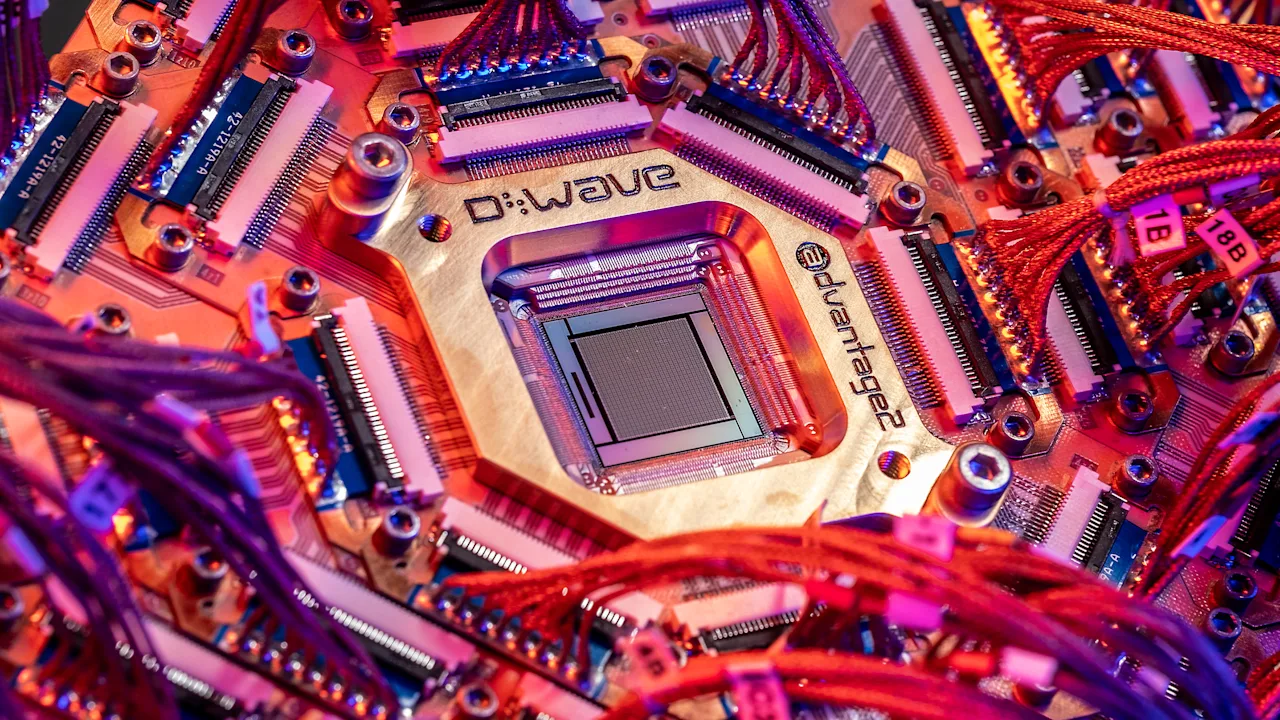
A new year, a new quantum computing breakthrough: D-Wave, one of the quantum industry’s rising stars, announced “an industry-first breakthrough” on Tuesday as it works to make quantum computing commercially viable.
The company says it has demonstrated “scalable, on-chip cryogenic control for gate-model qubits,” claiming it is the first in the industry to do so, and that the breakthrough helps overcome “a long-standing obstacle to building commercially viable and scalable gate-model quantum computers.”
The issue, as Trevor Lanting, D-Wave’s chief development officer, tells Fast Company, is that adding qubits to a quantum system requires additional resources, such as control lines. That involves more space, material, and an overall increase in complexity for the entire system. But D-Wave has found a way to reduce that complexity, opening the door for scalability.
“You can think of it as a chip in your phone or laptop,” Lanting says. “The CPU has transistors in it, and there are billions in a modern CPU or logic chip, but only a small number of connections that go from the motherboard and get the information on and off the chip. You don’t have individual wires going to each transistor; you need to multiplex that control.”
That, in a corollary to classical computing, is what D-Wave is claiming to have demonstrated. Again, this means that additional quantum computing power can be controlled with fewer resources, or “scalable control,” as Lanting puts it.
For D-Wave, it’s the latest major announcement among several over the past year, as the company continues to push the envelope in the burgeoning quantum computing field. Last March, the company claimed to have achieved “quantum supremacy” after it was able to “successfully simulate the properties of magnetic materials” using its Advantage2 annealing quantum computer. In October, it struck a $12 million deal to bring its computers to Europe.
All of that has sent D-Wave’s stock to the moon. Over the past year, shares have increased by more than 200%. Two years ago, shares were trading for less than $1; as of January 5, they were trading at nearly $31.
Lanting, who has been with the company for nearly two decades, says it’s been a long time coming. “We’ve been intensively investing in this technology for a decade, and now we’ve been able to harness it for a gate-model program. This was the step we needed to get the control technology working,” he says, adding, “We’re very excited. This really is a differentiating technology for D-Wave. [And] our customers are excited because they get to work on cutting-edge hardware.”