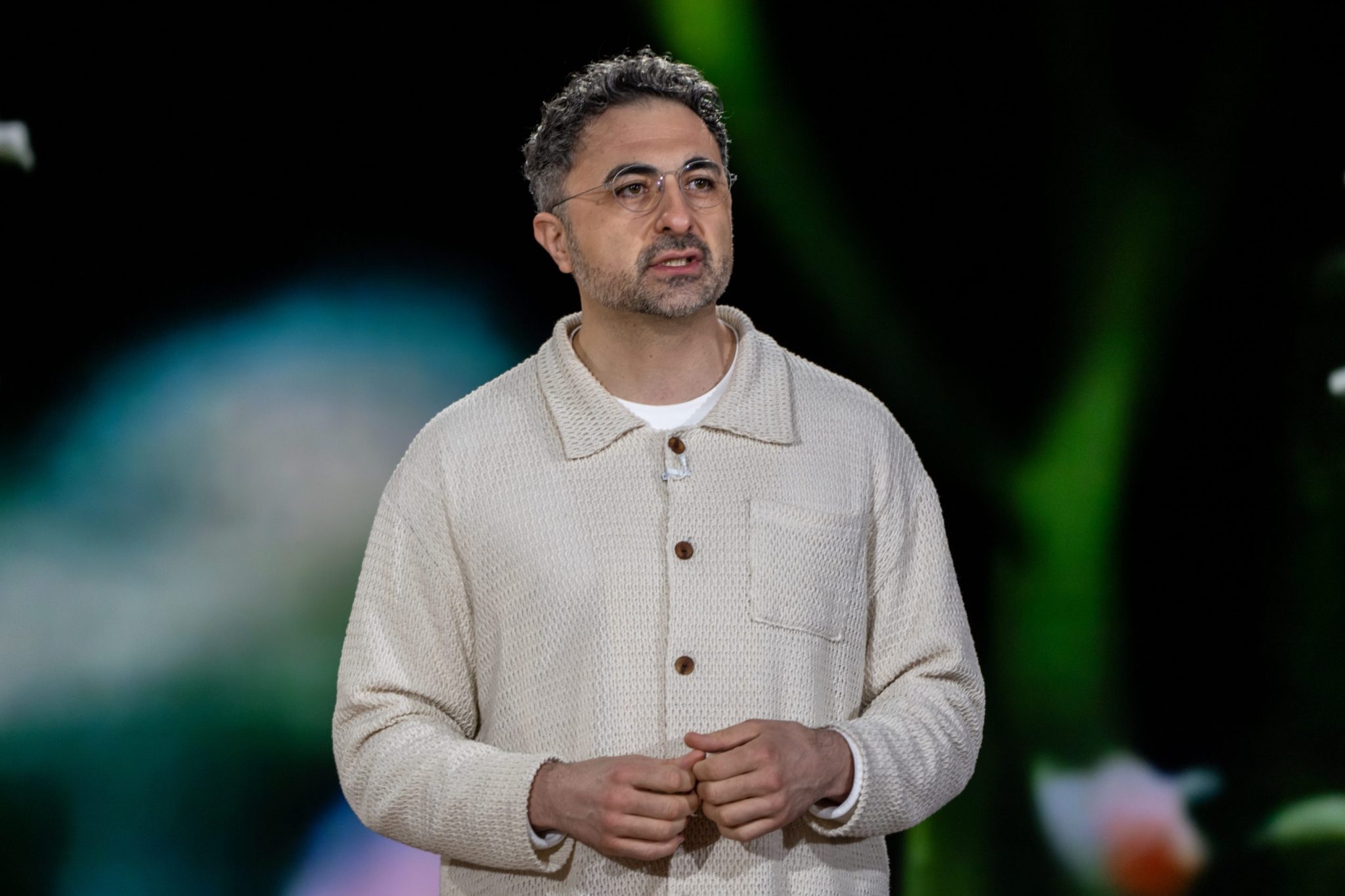

Blend’s post-IPO reset: CEO Nima Ghamsari bets that AI can turn it all around
 Tomas Kauer
Blend’s CEO Nima Ghamsari wants to talk less about the past decade’s fintech sugar high and more about recovering from the crash.
The company, founded in 2012 by Ghamsari, set out in the wake of the financial crisis to make applying for a mortgage “as easy as buying something online.” It now builds white‑label software that powers digital loan applications at major U.S. banks and credit unions across mortgages and other consumer banking products. The company rode the last boom to a 2021 IPO and a market cap north of $4 billion, but then rising rates crushed mortgage volumes and exposed how much of its growth had been surfing a once‑in‑a‑generation tailwind. Now, that market cap is hovering at $437.10 million.
“It probably gave me an inflated sense of how well I was executing,” Ghamsari told Fortune of that era. His biggest realizations post‑IPO: “I had overestimated my operating ability” and had to “go back to first principles” as multiples, mortgage volumes, and key banking customers like First Republic disappeared.
For Blend, which went public (and remains so) near the peak of both fintech multiples and mortgage demand, that meant a “double whammy” of shrinking origination volumes and falling software valuations. The downturn became a multi‑year test for Blend of whether the underlying business—and its CEO’s operating chops—could withstand a very different market. Today, Blend’s shares trade in the low single digits, down more than 90% from their debut. But the company has returned to profitability for at least five consecutive quarters.
Privately, Blend had been a classic fintech VC magnet, raising money from Greylock Partners, Emergence Capital, 8VC, Founders Fund, Andreessen Horowitz, Lightspeed, Nyca, Temasek, and General Atlantic on its way to unicorn status. Those investors backed an expansion beyond digital mortgage origination, a broader platform pitch that helped large lenders digitize everything from mortgage applications to other consumer‑credit products.
When the market turned, that sprawl became a liability, and Ghamsari says he learned a painful lesson: “I made the company take on too many things,” prompting a reset toward being “really, really great at one thing.”
That “one thing” for 2026 is Autopilot, Blend’s new AI agent announced in early March. Autopilot reads borrower documents, checks them, updates the file, and kicks off follow‑ups—turning work that took days into seconds, while humans and existing systems still make the final call. Ghamsari frames it as a way to attack the roughly $11,000 in human cost and “hundreds of hours” that lenders currently spend per mortgage. Roughly 20% of Blend’s customers adopted the tech within the first month, Ghamsari told Fortune.
After several rounds of layoffs and restructuring, culture has been another test for the company. “The hardest thing about the layoffs is you still believe in the business, you just feel like you did the wrong things that led us to the point of the layoffs,” he says, arguing that owning those decisions is key to rebuilding trust—and completing the turnaround.
P.S. Elon Musk’s rocket company, SpaceX, confidentially filed to go public Wednesday, as reported by Bloomberg, Reuters, and The Wall Street Journal. This could be the defining test of the IPO market in 2026, if OpenAI doesn’t get there first.
See you tomorrow,
Lily Mae Lazarus
X: @LilyMaeLazarus
Email: lily.lazarus@fortune.com
Submit a deal for the Term Sheet newsletter here.
Joey Abrams curated the deals section of today’s newsletter. Subscribe here.
This story was originally featured on Fortune.com