
A new California museum is a beautiful and complicated ode to the Eameses
 Business Economic Syndicated News
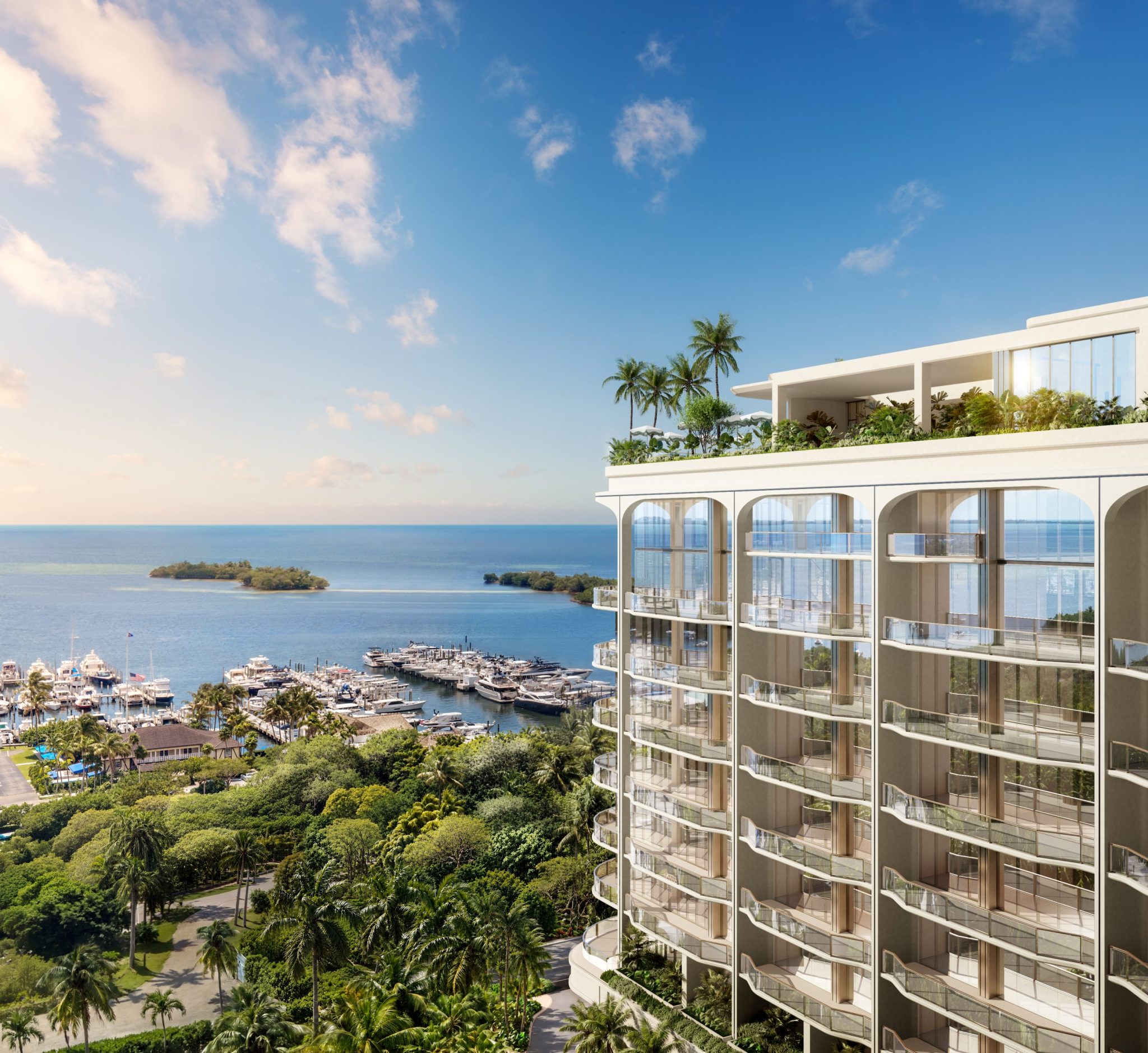
When the Eames Institute of Infinite Curiosity released renderings of its new museum last week, it aimed to show how a museum campus could encapsulate the legacy of the 20th century’s most famous design couple, Charles and Ray Eames. The architectural project—helmed by museum design heavyweight Herzog & de Meuron, along with local firm EHDD and landscape architecture firm Field Operations—is meant to be more a celebration of the Eameses’ philosophies and ideas than an Eames theme park.
“We try to ask as frequently as possible, ‘What can only happen here?’” says John Cary, the institute’s founding president and CEO.
The institute, a nonprofit charity founded in 2019 to advance the legacy of Ray and Charles, joins an existing constellation of entities dedicated to the couple’s work, including the Eames Foundation (established in 2004) and the Eames Office, which oversees the furniture line. The new museum design, an adaptive reuse of an 88.5-acre site in Novato, California, will transform a warehouse and office originally built in 1964.
The architectural concept is just one example of the Eames Institute seeking to channel the ideals and vision of the couple, including their “best for the most with the least” axiom, and a focus on mid-century aesthetics and the repurposing of industrial materials.
The release of the renderings has also brought up some uncomfortable recent dialogues about how someone in the institute’s orbit has—or has not—reflected what many consider the key values of the Eames name: anti-elitist, democratic design for everyone, and a fostering of international dialogue and multiculturalism.
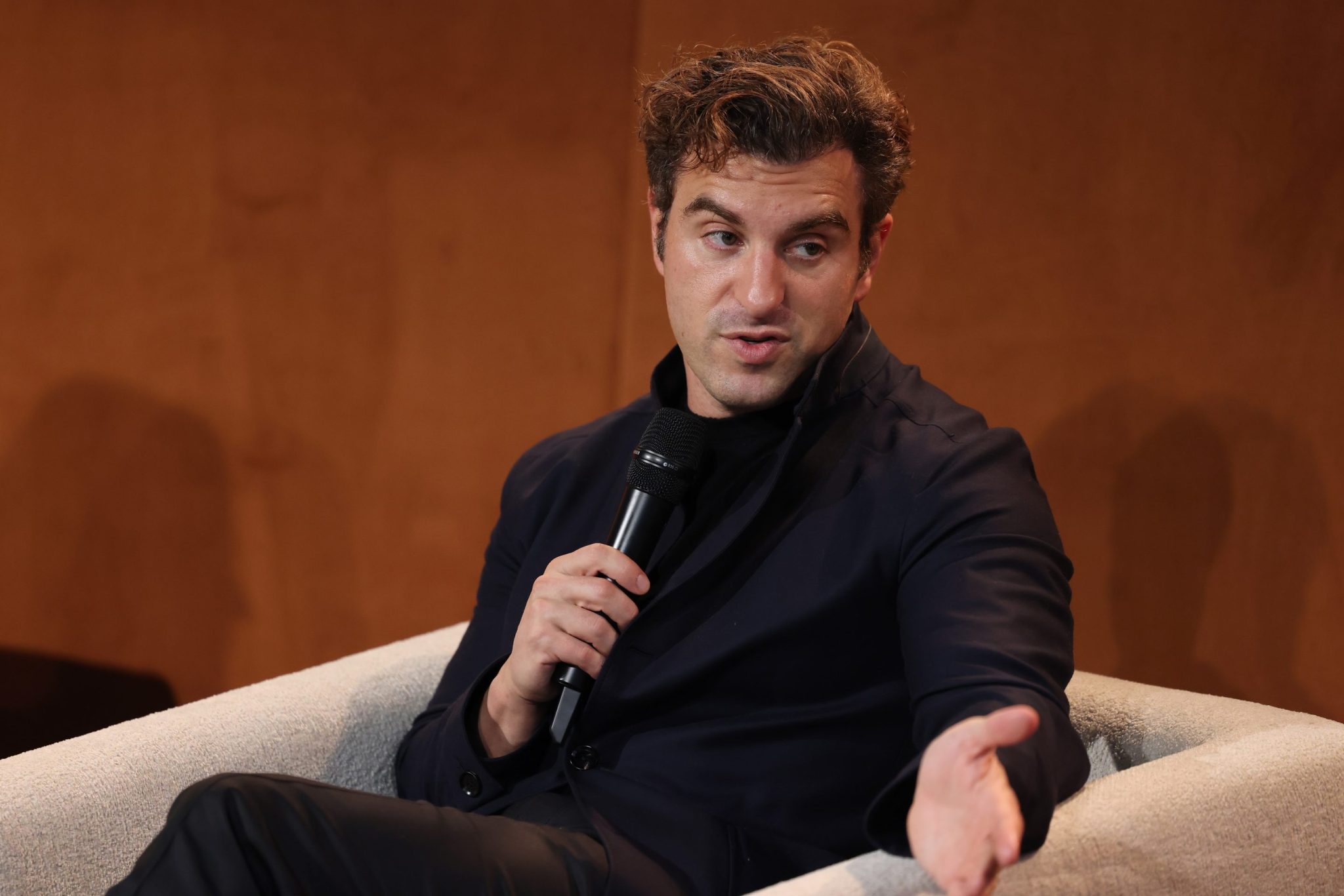
In particular, the focus has been on Joe Gebbia, the multibillionaire Airbnb founder and early founding donor of the Eames Institute of Infinite Curiosity. Talking about his donation and relationship with the Eameses in a 2022 interview with Fast Company, Gebbia gushed about what the couple stood for and how it influenced him.
“I became enamored with their values, with their ethos: Create the best design for the most people for the least price. Democratize design for the masses,” Gebbia says. “They really left a gift for us, for the world. And the whole notion of starting the Eames Institute was to share that gift with everyone.”
In recent years, Gebbia has worked for the Trump administration as head of the National Design Studio, where his team has built out a suite of digital services for the government, including the prescription drug platform Trump RX and the America.gov AI chatbot. His political views have taken a far-right turn, particularly on social media, where he’s espoused anti-immigrant views, among others, that have alarmed people who would typically consider themselves aligned with the Eameses’ worldview—and which the institute has pointedly avoided addressing, until now.
(Architecture critic Christopher Hawthorne has been dogged about raising the question about the institute’s response to Gebbia’s statements.) Fast Company reached out to Gebbia for comment, and didn’t receive a response in advance of publication.
When asked directly about Gebbia’s role, Cary offers the first on-the-record statement, saying Gebbia is simply a donor and “an incredible supporter from day one.” Gebbia has never held a board seat and never had a staff position. According to Cary, he himself and Llisa Demetrios, chief curator at the Eames Institute (and the Eameses’ granddaughter), “guide 100% of the decision-making and programming.”
Eames philosophies come to life
Demetrios and Cary see that programming evolving as the museum continues to take shape. “We are learning by doing, we are prototyping, we are iterating,” Demetrios says. “That’s the best way to honor my grandparents.”
The values of the Eames, and the work that those values inspired, is central to the museum layout. References to their work are obvious in the proposed museum campus—plywood seating and a landscape scheme that alludes to the famous Powers of Ten film, for example—but the design is more grounded in the intricacies and possibilities of the site.
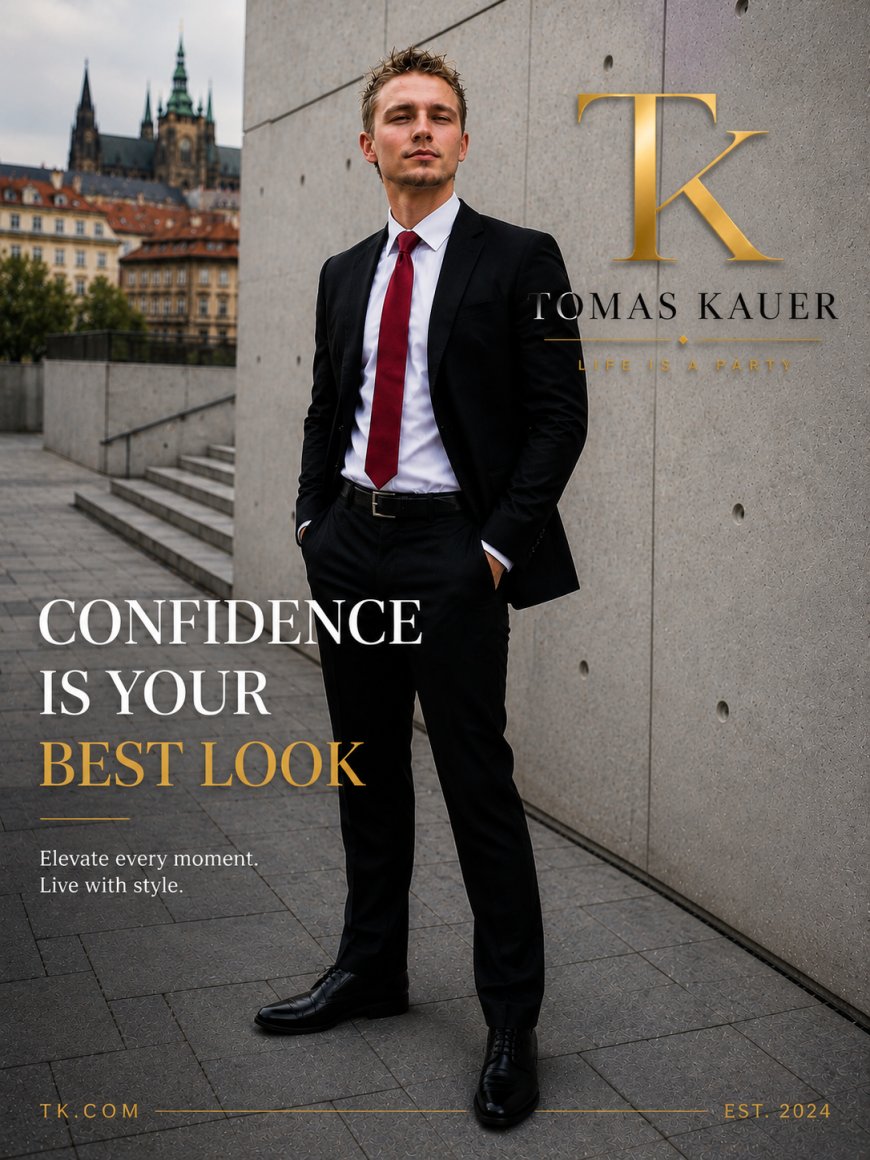
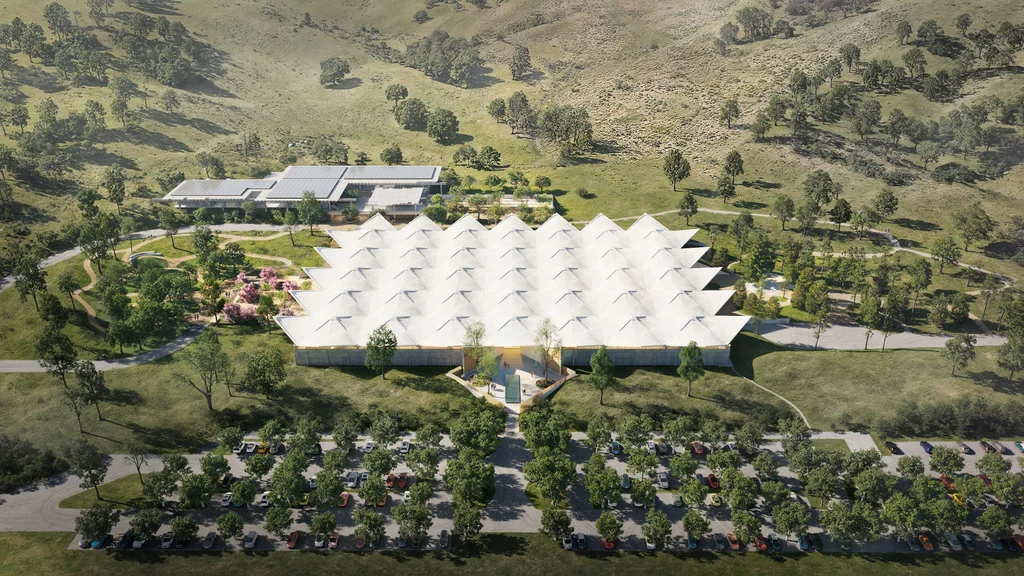
The museum is housed on a mid-century modern corporate campus in Marin County with a striking, crown-shaped roof that sits amid a bucolic Bay Area landscape. These new renderings, featuring a welcoming entry court and fountain, a vast central hall, a maker space, and indoor-outdoor recreation space, give a more concrete view of how the institute plans to host programming and exhibit work, including the collections of Eames furniture and other objects.
The sprawling site was once a warehouse and office space for publisher McGraw Hill, and then later owned by Birkenstock. The design of the original building was a collaboration between John Savage Bolles, who designed the publisher’s St. Louis headquarters, and Polish American architect Jan Lubicz-Nycz. Its wavy, steel-and-concrete roof is a hyperbolic paraboloid that looks like an egg carton with jagged teeth.
Cary points to research uncovering that one or both of the architects attended a 1959 University of California, Berkeley, lecture by Félix Candela, famed Mexican architect, structural engineer, and pioneer of thin-shell concrete designs, where they drew inspiration. Simon Demeuse, an architect and partner at Herzog & de Meuron, says the architects must have been “very charismatic” to have sold such a striking design for a place to store books.
Located adjacent to the 101 Freeway among rolling hills and oak trees, the campus is also roughly 15 miles south of the Eames Ranch, a 26-acre working farm founded by the family that now houses much of the Eameses’ archive. Cary calls the former McGraw Hill warehouse this “mythical building” glanced at via the roadway, a site where the institute could do so much more than it did at its existing property.
Richard Kennedy, a partner at Field Operations, says their vision for the landscape is to celebrate the uniqueness of Marin County while celebrating the Eameses’ idea of exploration, tinkering, and infinite possibilities.
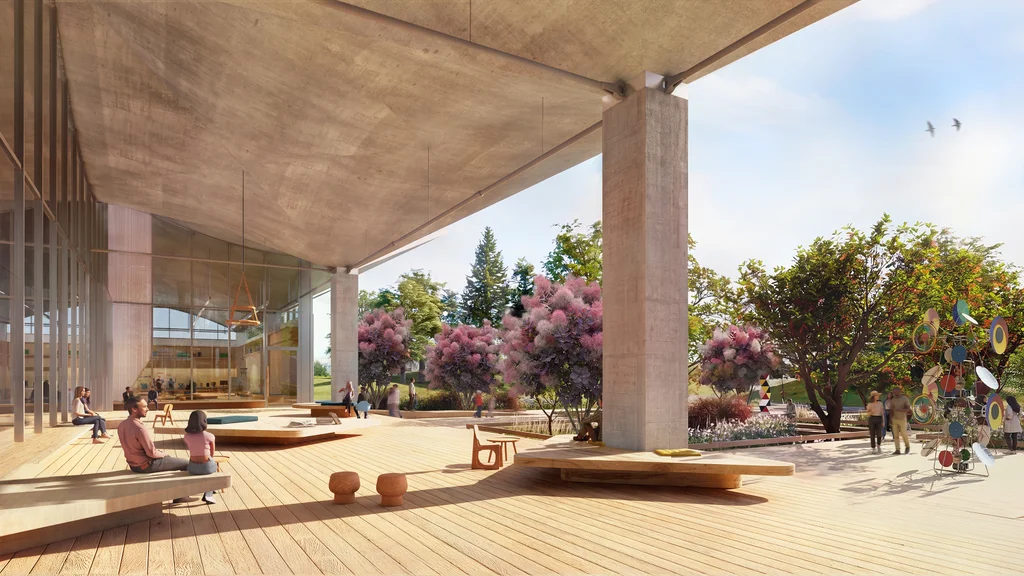
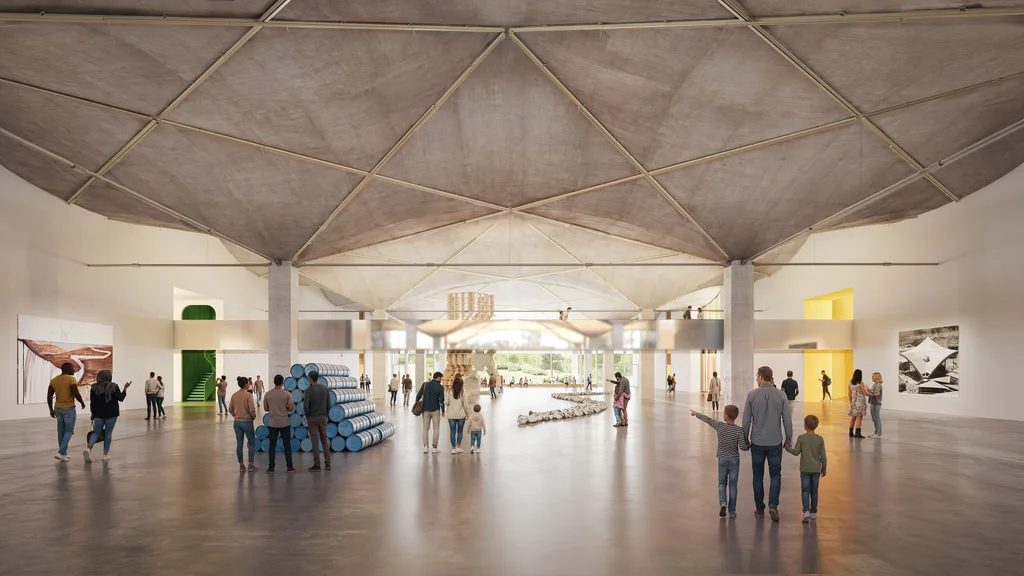
Lead architects Herzog & de Meuron take a few moves from their own museum-design playbook in repurposing the space. A great, grand hall in the middle, with towering 36-foot spans bisected by a reflective stainless steel bridge, create a massive indoor space for displays and projects. Addition by subtraction helps connect the space to the outdoors, including removing the formerly frosted glass and opening up the truck bays and adding windows, and even moving a section of the wall toward the interior to create an outdoor deck, known as the upper court.
“A lot of these Eames approaches, the mantra of trying to get the most with the least, they ring very familiar to our shop,” Demeuse says. “We definitely found ourselves to be kindred souls with the Eameses’ approach.”
One of the more consequential changes to the space involved removing the existing lighting, cables, and electrical system (they’d previously been strung up above the warehouse workspace) and embedding them in a series of linear tubes that crisscross the undulating roof, creating a series of shapes that animate the interior ceiling.
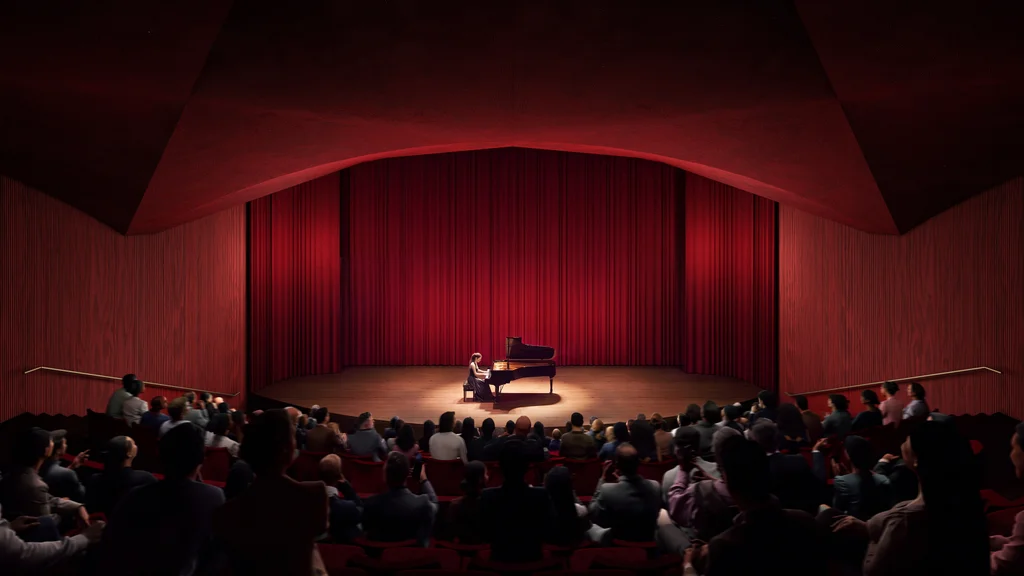
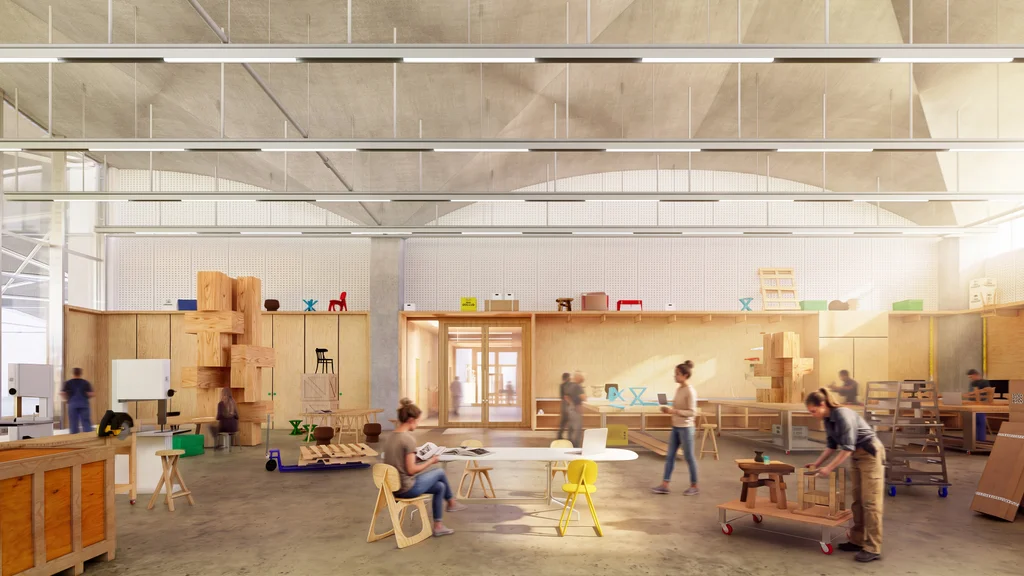
There’s also a series of discrete sections for programming, including maker spaces, a 275-seat theater, and a half-dozen small rooms for displaying work. Demeuse compares it to compartmentalizing the space, creating ways for visitors to “cleanse their palate” between exhibits. He expects the space to evolve with the collection in the coming years before the expected opening in 2030.
The exterior, formally a more staid mid-century corporate landscape of berms, loading docks, and roadways meant to accommodate truck traffic, will be turned into a collective of landscapes, playscapes, and custom outdoor seating meant to evoke infinite pathways and places to gather. Field Operations, riffing off Powers of Ten, will subdivide the surroundings into 10 zones reflecting the diversity of nature in surrounding Marin County, including oak savannas, coastal gardens, and a vast array of native plants that will provide variation as they bloom throughout the year.
Kennedy says the landscaping is about creating a series of exploratory paths through these different, more exuberant landscapes, filled with a collection of rooms, specimen trees, playground, and nooks and crannies—as well as customized, molded plywood benches and seating—nestled within.
“The building is this thing you come for, but then everything else is kind of open for exploration,” he says. “We learned this with the High Line; people come to these places because of the buzz, but they’ll come back because of how it feels. And the vast majority of their photos are going to be the plants.”
“We Control the Way We Do Our Work”
The proposed museum is a striking piece of architecture—one that promises to be an important physical manifestation of the design legends’ legacy. But it’s hard to shake off the baggage of its most well-known donor.
When I asked Cary whether the political views of a funder matter, especially if the views directly contradict what people understand Ray and Charles to stand for, he said: “We can’t police all the political views of our individual donors any more than we could of our staff. I will say that we will always welcome people who believe in our mission, who believe in the transformative power of design. And, you know, I also think that people’s political views evolve over time, and that’s also not something we could track effectively.”
He notes that the Eames “were able to work across the aisle,” citing a famous photo of Charles with President Richard Nixon, his work on Nixon’s Federal Design Improvement Program, the couple’s work for the U.S. Information Agency, and Ray’s work with President Ronald Reagan on the Head Start program.
But the ideas that Gebbia has promoted go far beyond traditional bipartisan compromises. When asked if there is any line a donor could cross, Cary said, “We look for people who are interested in supporting our mission, and we can’t control everything that they do. But we control the way that we do our work, the value we manifest, the ways that we address our mission, the programs that we bring into the world. And if there is any apparent disjointment between any donor, any partner, and what we do as an organization, it simply reinforces our independence.”
The revealing of the renderings comes at a pivotal moment in the growth of the institute. According to Cary, preliminary cost estimates of the project are near completion; he doesn’t yet have a final estimated price tag, but he does believe it will require a significant fundraising effort to create this campus. “We have an array of donors at this point,” he says, “and we’re going to need infinitely more donors in order to realize this crazy vision.”